
 Home
Home About Us
 Services
 Website Development Services
 PHP Website Development Services
 CakePHP Website Development Services
 Laravel Website Development
 Winery Website Development Services
 Jewellery Website Development Services
 Automotive Website Design Services
 Real Estate Website Design
 Hospital Management Software
 CMS Devlopment Services
 Wordpress Website Development
 Drupal Website Development
 Joomla Website Development
 Webflow Development Services
 Hubspot Development Service
 Framer Website Development Services
 WIX Development Services
 Squarespace Development Services
 AngularJS Website Development
 ReactJS Development Services
 Mobile App Development
 IOS Apps Developmnet
 Native Apps Developmnet
 Cross Platform App Development
 Flutter App Development
 Windows App Developmnet
 Phonegap Apps Developmnet
 Ionic Apps Developmnet
 Xamarin Apps Developmnet
 Progressive Apps Developmnet
 Ecommerce Services
 Shopify Development Services
 Bigcommerce Development Services
 Magento Development Service
 Prestashop Development Service
 Neto (Maropost) Commerce Development Service
 Opencart Development Services
 Woocommerce Development Services
 Shopify Plus Agency
 Shopify Cro Services
 Hyvä Development Services
 Digital Marketing Services
 Search Engine Optimization
 Social Media Marketing
 Paid Media Advertising
 Google Ads Services
 Pay Per Click Service
 SEO Services India
 Content Marketing Services
 Email Marketing Services
 SEO Pricing
 Web Design Services
 Website Design Services India
 Website Design Services USA Canada
 Website Design Services British Columbia
 Graphics Design Services
 Logo Design
 Figma To HTML5
 FAQ's
FAQ's CMS Development Services
 Hubspot Development Services
 Hire Remote Developers
 Technology
 Wearable App Development
 Javascript Services
 ReactJS Development Services
 VueJS Development Services
 Virtual Employee Services
 Case Studies
 Insights
 Contact Us


 Akriti Singh
AI-Powered Personalization in E-commerce: How AI Is Creating Smarter Shopping Experiences
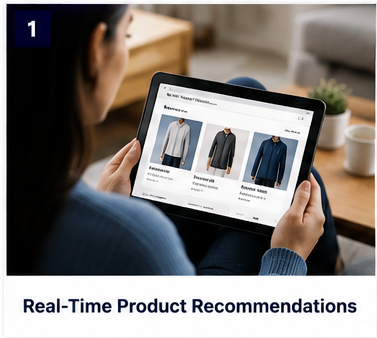
Imagine a customer visits an online store looking for running shoes.
Instead of seeing the same products displayed to every visitor, the store immediately understands that this shopper previously viewed lightweight shoes, prefers a particular price range, and regularly purchases fitness products.
The homepage changes.
The product recommendations change.
The search results become more relevant.
Even the promotional message can change according to the shopper’s interests.
That is the difference between a traditional online store and an AI-powered personalized e-commerce experience.
Today, customers have thousands of products and hundreds of online stores to choose from. If they cannot quickly find something relevant, they can leave with a single click. For e-commerce businesses, this creates a serious challenge: attracting visitors is no longer enough. Businesses need to understand what each shopper wants and make the buying journey easier.
This is where AI-powered personalization in e-commerce becomes commercially valuable.
AI can analyze browsing behavior, previous purchases, product searches, cart activity, customer preferences, and other signals to deliver more relevant experiences. When implemented correctly, personalization can help businesses improve engagement, increase conversions, encourage repeat purchases, and generate more revenue from existing traffic.
Why E-commerce Personalization Has Become a Revenue Priority
The biggest problem facing many online stores is not always a lack of traffic.
It is irrelevant traffic and poor customer experiences.
A visitor may arrive through Google, an advertisement, social media, or an AI assistant. But if the website shows the same products, offers, and content to everyone, the customer still has to do all the work.
That creates friction.
A customer may think:
- “Which product is right for me?”
- “Is there a better option?”
- “Why am I seeing products I don’t need?”
- “Does this store understand what I’m looking for?”
- “Should I compare this with another website?”
Every unanswered question increases the possibility of losing the sale.
Personalization addresses this problem by making the shopping experience more relevant to the individual.
Adobe research has found that 76% of consumers are more likely to consider purchasing from brands that personalize the customer experience. The same research identifies relevant recommendations, tailored messaging, targeted promotions, and behavior-based communication as important personalized experiences.
For an e-commerce business, that matters because personalization is not simply about making a website look smarter.
It is about removing obstacles between customer intent and purchase.
What Is AI-Powered Personalization in E-commerce?
AI-powered personalization uses artificial intelligence and customer data to adapt an online shopping experience according to individual shopper behavior and preferences.
Traditional personalization might use simple rules.
For example:
“If a customer buys men’s shoes, show men’s socks.”
AI-powered personalization can go much further.
It can identify patterns across thousands or millions of interactions and use those patterns to predict what a particular customer may want next.

An AI system can consider signals such as:
- Products viewed
- Search queries
- Previous purchases
- Cart activity
- Purchase frequency
- Product categories visited
- Price preferences
- Location
- Device behavior
- Customer lifecycle stage
- Engagement with emails
- Products frequently purchased together
The result is a shopping experience that can adapt as the customer interacts with the website.
Someone visiting for the first time may receive popular recommendations.
A returning customer may see products related to previous purchases.
A high-intent shopper may receive comparisons or complementary products.
A loyal customer may see personalized offers based on their buying history.
This is why e-commerce AI solutions are becoming increasingly important for businesses that want to turn customer data into practical buying experiences.
The Real Business Problem: Customers Do Not Want to Search Forever
Think about a physical retail store.
If a customer walks in and says, “I need a laptop for video editing under $1,500,” a good salesperson does not point toward an enormous warehouse and say, “Everything is over there.”
Ask relevant questions.
Narrow down the choices.
Explain the key differences.
They recommend suitable products.
Help the customer make an informed decision.
Online stores need to provide a similar experience digitally.
The difference is that an AI system can help perform this process across thousands of customers simultaneously.
That makes AI e-commerce personalization particularly valuable for large product catalogs.
Instead of forcing every shopper to navigate hundreds of categories and product pages, intelligent systems can help surface the products most relevant to that individual.
And when customers find relevant products faster, the path toward conversion becomes much shorter.
10 Ways AI Personalization Can Increase E-commerce Revenue
1. Personalized Product Recommendations
Product recommendations are one of the most visible applications of AI personalization.
Instead of displaying random or universally popular products, AI can recommend products based on individual behavior and relationships between products.
For example:
A customer purchases a camera.
The system may recommend:
- Compatible lenses
- Memory cards
- Camera bags
- Tripods
- Extra batteries
The recommendation is not simply an advertisement.
It is connected to the customer’s purchase intent.
Adobe has reported that approximately 30% of e-commerce revenue can come through product recommendation paths, highlighting why personalized product discovery deserves serious attention from online retailers.
For businesses, this can create opportunities to increase:
Average Order Value (AOV)
and
Revenue per Customer.
Want better product discovery on your store?
A professionally developed recommendation experience can connect customer behavior with relevant products without making the website feel complicated.
CTA: If your store has a large catalog and customers struggle to find the right products, consider an AI-powered e-commerce development solution designed around your customer journey.
2. Smarter E-commerce Search
Search is one of the most important moments in an online shopping journey.
A customer who searches for:
“black running shoes for women under $100”
does not necessarily want pages of products containing those exact words.
They want products that match the meaning behind the search.
AI can help interpret natural-language searches, customer preferences, previous behavior, and product attributes to provide more relevant results.
This can reduce the frustration caused by irrelevant search results.
Adobe has reported that users of its AI-powered Live Search saw a 15% lift in conversion rates, while its product recommendation technology has been associated with a 25% increase in average order value for Adobe Commerce users.
That makes intelligent search more than a convenience feature.
It can become a conversion tool eCommerce website development
3. Personalized Offers That Encourage Purchases
Not every customer responds to the same offer.
A first-time visitor may respond to free shipping.
A repeat customer may be more interested in loyalty rewards.
A price-sensitive shopper may respond to a discount.
Another customer may not need a discount at all.
AI can help identify these differences and support more relevant offers.
Adobe research found that 61% of consumers surveyed said personalized promotions make them more likely to purchase, while 67% said they wanted personalized promotions or offers based on their spending habits.
The commercial opportunity is clear:
Instead of discounting products for everyone, businesses can make promotions more relevant to specific customer groups.
That can help protect margins while improving the likelihood of conversion.
4. Reduce Cart Abandonment With Behavioral Personalization
A customer adds a product to the cart.
Then they leave.
For an e-commerce business, this is one of the most frustrating moments in the sales funnel.
The customer showed buying intent, but something interrupted the purchase.
AI can analyze behavioral patterns and help businesses understand when shoppers are at risk of abandoning their carts.
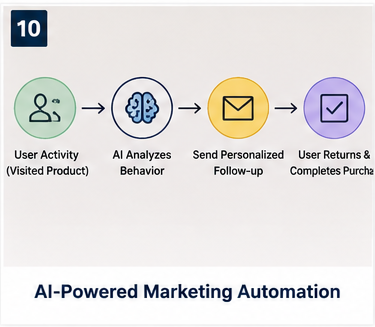
Personalized follow-ups can then be used through channels such as:
- SMS
- Push notifications
- On-site messages
- Personalized recommendations

The message can also be more relevant.
Instead of:
“You left something in your cart.”
A personalized experience could remind the shopper about the exact product, relevant benefits, availability, or complementary products.
The objective is not to repeatedly chase customers.
It is to remove the reason they hesitated.
5. Personalized Experiences for Returning Customers
Getting the first purchase is only part of the e-commerce journey.
The bigger opportunity can come from encouraging customers to return.
AI can help businesses recognize returning shoppers and personalize the experience according to their previous interactions.
For example, an online beauty store may recognize that a customer frequently purchases skincare products.
When that customer returns, the website can prioritize:
- Recently purchased products
- Replenishment reminders
- Compatible products
- New products within the same category
- Relevant promotions
This creates a sense that the store remembers the customer.
And that feeling matters.
Adobe’s research shows that consumers increasingly expect brands to anticipate their needs with relevant information or offers. In Adobe’s 2025 retail research, 69% of consumers said anticipating their needs with relevant offers or information at the right moment was important, while only 35% felt brands were delivering effectively.
That gap represents an opportunity for e-commerce businesses willing to improve personalization.
6. AI Can Turn Customer Data Into Buying Signals
Most e-commerce businesses already have enormous amounts of customer data.
The problem is knowing what to do with it.
A store may have information about:
- Thousands of purchases
- Millions of product views
- Search activity
- Customer reviews
- Cart events
- Email interactions
- Repeat purchases
- Product returns
Without intelligent analysis, much of that information remains underused.
AI can identify patterns that are difficult to detect manually.
For example:
Customers who purchase Product A may frequently purchase Product B within 30 days.
Repeated views of Product C can indicate strong purchase intent, especially when customers receive additional product information.
Customers who purchase a particular product may need a replacement after a certain period.
These insights can support more intelligent marketing and merchandising decisions.
The result is a move from guessing what customers want toward using behavioral evidence to make better decisions.
7. Personalized Content Can Improve Customer Engagement
Personalization is not limited to products.
It can also apply to content.
An e-commerce website can personalize:
- Homepage content
- Product descriptions
- Promotional messages
- Email campaigns
- Recommendations
- Educational content
- Product comparisons
- Loyalty messages
For example, a customer interested in premium products may see content emphasizing quality and long-term value.
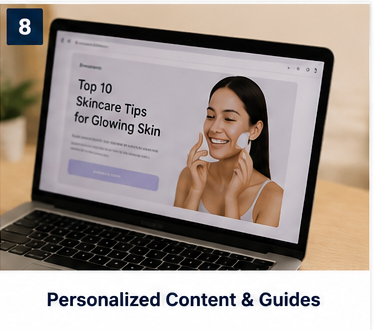
A price-conscious customer may see savings, bundles, or value-focused messaging.
The product can remain the same.
The message changes according to customer intent.
This is where AI-powered content and personalization can work together.
8. AI Can Help Create Better Cross-Selling and Upselling
Cross-selling is about recommending complementary products.
Upselling encourages customers to consider a higher-value option.
The challenge is relevance.
If a customer buys a laptop and immediately sees unrelated kitchen products, the recommendation feels random.
But if the customer sees:
- Laptop accessories
- A larger storage option
- A compatible monitor
- A laptop bag
- Extended warranty
the recommendation makes sense.
AI can analyze relationships between products and customer behavior to determine which recommendations are more relevant.
The objective should not be:
“How many products can we show?”
It should be:
“Which additional product genuinely makes this purchase more useful?”
That distinction creates a better customer experience and a stronger commercial opportunity.
9. AI-Powered Personalization Can Improve Customer Experience Across Channels
Customers rarely interact with a brand through only one channel.
They may discover a product through Google, research it on a website, see an advertisement on social media, receive an email, and eventually purchase through a mobile device.
If every interaction feels disconnected, the customer experience becomes frustrating.
Adobe’s 2025 retail research found that 75% of consumers considered a consistent experience across websites, mobile apps, email, social media, and physical stores important, but only 41% said brands were delivering effectively.
AI can help connect customer signals across these touchpoints.
A shopper who viewed a product on one device may later receive relevant recommendations.
A customer who already purchased an item should not continue receiving aggressive acquisition messages for the same product.
A returning shopper should see content that reflects their relationship with the brand.
This creates a more connected customer journey.
10. AI Can Help E-commerce Businesses Prepare for AI-Led Shopping
There is another important reason businesses should invest in personalization.
Customers themselves are starting to use AI during the buying journey.
Adobe reported in 2025 that generative AI traffic to U.S. retail websites increased 4,700% year over year in July 2025. Its research also found that 38% of surveyed consumers had used generative AI for online shopping, with 52% planning to do so that year.
More recent Adobe research shows the trend continuing: 86% of shoppers use AI during retail journeys, while integrated AI experiences such as “recommended for you” sections and image search are already used by 52% of shoppers surveyed.
This changes the way businesses should think about digital commerce.
The customer may no longer begin with:
“Which website should I visit?”
They may begin with:
“Which product is best for my needs?”
and ask an AI assistant to help them decide.
That means e-commerce businesses need strong product information, structured data, useful content, relevant recommendations, and technically sound websites that can support increasingly intelligent shopping experiences.
How AI Personalization Moves Customers Through the Sales Funnel
A strong personalization strategy can support every stage of the buying journey.
Awareness
AI helps businesses deliver more relevant content and product discovery experiences.
Consideration
Personalized recommendations, comparisons, reviews, and educational content help shoppers evaluate options.
Decision
Relevant offers, product information, availability, and personalized messaging can reduce hesitation.
Purchase
AI can recommend complementary products and improve the checkout journey.
Retention
Post-purchase recommendations and replenishment reminders can encourage repeat purchases.
Loyalty
Customer behavior can help businesses create more relevant loyalty experiences.
This is why AI e-commerce personalization should not be treated as a single website feature.
It should be considered part of the complete customer journey.
What Data Does AI Need for E-commerce Personalization?
AI personalization works best when businesses have useful customer and product data.
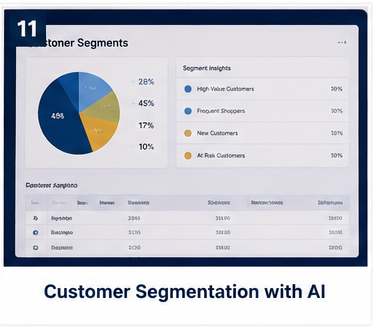
Common inputs include:
Behavioral data:
Pages viewed, searches, clicks, carts, and purchases.
Product data:
Categories, attributes, prices, availability, brands, and product relationships.
Customer data:
Purchase history, preferences, loyalty information, and customer segments.
Contextual data:
Device, location, time, referral source, and current browsing session.
Engagement data:
Email clicks, promotional interactions, reviews, and previous campaign activity.
The goal is not to collect every possible piece of information.
The goal is to use appropriate data responsibly to provide a better experience.
Privacy and Trust: The Part E-commerce Businesses Cannot Ignore
Personalization can increase relevance, but poor implementation can damage trust.
Customers want businesses to understand their needs without feeling that their privacy has been ignored.
Adobe’s 2025 retail research found that 87% of consumers considered responsible and secure handling of personal data important, while only 46% believed brands were delivering effectively on that expectation.
That means businesses need to think about:
- Data security
- Consent
- Transparency
- Responsible AI usage
- Data minimization
- Clear privacy policies
- Appropriate personalization
Good personalization should feel helpful.
Bad personalization can feel intrusive.
The difference is trust.
Common E-commerce Personalization Mistakes
AI does not automatically create a better shopping experience.
Poor implementation can produce the opposite result.
Showing Too Many Recommendations
More recommendations do not necessarily mean more sales.
Customers need useful choices, not an endless product wall.
Using Old Customer Data
If recommendations are based on outdated behavior, customers may receive irrelevant products.
Personalizing Without a Strategy
Installing an AI tool without defining the business objective can create complexity without meaningful results.
Ignoring Product Data Quality
AI cannot produce consistently relevant recommendations when product information is incomplete, inconsistent, or poorly structured.
Forgetting Mobile Shoppers
A personalization strategy that works on desktop but creates friction on mobile can lose potential customers.
Treating AI as a Replacement for Customer Understanding
AI should support business decisions, not replace human judgment.
The strongest results come from combining technology with a clear understanding of customers and business goals.
How to Build an AI-Powered Personalized E-commerce Store
Businesses considering personalization should start with the customer journey rather than immediately choosing an AI tool.
Step 1: Identify the Revenue Problem
Determine where customers are leaving.
Is the problem:
- Poor product discovery?
- Low conversion?
- Cart abandonment?
- Low average order value?
- Few repeat purchases?
- Weak customer engagement?
Step 2: Analyze Available Data
Review customer, product, behavioral, and transaction data.
Step 3: Choose High-Value Personalization Opportunities
Start with areas where personalization can have a measurable commercial impact.
Examples include:
- Product recommendations
- Intelligent search
- Personalized offers
- Cross-selling
- Email personalization
- Replenishment reminders
Step 4: Integrate AI With the E-commerce Platform
The AI layer should work with the website, product catalog, customer data, analytics, eCommerce Development Services, CRM, and marketing systems.
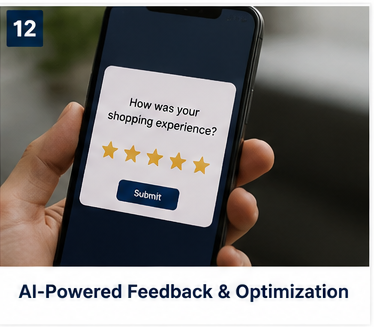
Step 5: Test Customer Experiences
Do not assume a personalization strategy will work simply because it uses AI.
Test different recommendations, messages, layouts, and offers.
Step 6: Measure Business Results
Track metrics such as:
- Conversion rate
- Average order value
- Revenue per visitor
- Repeat purchase rate
- Customer lifetime value
- Cart abandonment
- Engagement
- Revenue from recommendations
This turns personalization from a technology project into a measurable business initiative.
AI Personalization Is Becoming a Competitive Advantage
The e-commerce businesses that understand personalization early can create an experience that feels significantly more helpful than a generic online store.
Customers do not want to spend 20 minutes searching through products that do not match their needs.
They want relevant options.
Expect brands to remember their preferences.
They want quick answers.
Value useful and relevant recommendations.
And increasingly, they expect digital experiences to understand context.
Adobe’s recent research shows that shoppers are already using AI as part of their buying journeys, with AI-driven shopping becoming increasingly integrated into product research and discovery.
For e-commerce businesses, the message is straightforward:
Personalization is no longer simply a “nice-to-have” website feature. It is becoming part of the way customers discover, evaluate, and purchase products online.
Why Businesses Should Invest in AI-Powered E-commerce Development
Buying an AI tool is easy.
Creating a personalized e-commerce experience that actually contributes to revenue is much harder.
The technology needs to work with the store’s architecture, product catalog, customer data, search functionality, analytics, marketing systems, and conversion strategy.
This is where choosing the right eCommerce Development Company can make a significant difference.
A professional development team can help businesses evaluate their existing e-commerce infrastructure, identify personalization opportunities, integrate AI capabilities, improve product discovery, and create a smoother buying journey.
Instead of adding AI simply because it is trending, businesses can focus on practical applications that support measurable commercial goals.
CTA: Planning to make your online store more intelligent and customer-focused? Explore ourContact an e-commerce development team to discuss how AI, personalization, intelligent search, and modern e-commerce technology can be integrated into your store.
The Future of E-commerce Is Personal
The next generation of online shopping will not be built around showing every customer the same storefront.
It will be built around relevance.
A shopper searching for a specific product should find the right options faster.
A returning customer should see products connected to their interests.
A customer ready to buy should receive information that removes hesitation.
And a loyal customer should receive experiences that recognize their relationship with the brand.
AI makes this level of personalization more achievable by turning customer behavior and product information into actionable recommendations.
But the technology itself is not the final objective.
The real objective is more useful shopping experiences, stronger customer relationships, better conversions, and more revenue.
For e-commerce businesses ready to move beyond generic shopping experiences, AI-powered personalization can become one of the most valuable components of a modern digital commerce strategy.
Ready to build a smarter e-commerce experience? Contact an experienced e-commerce development team and turn customer data into more relevant shopping journeys and stronger business results.









Leave a Reply