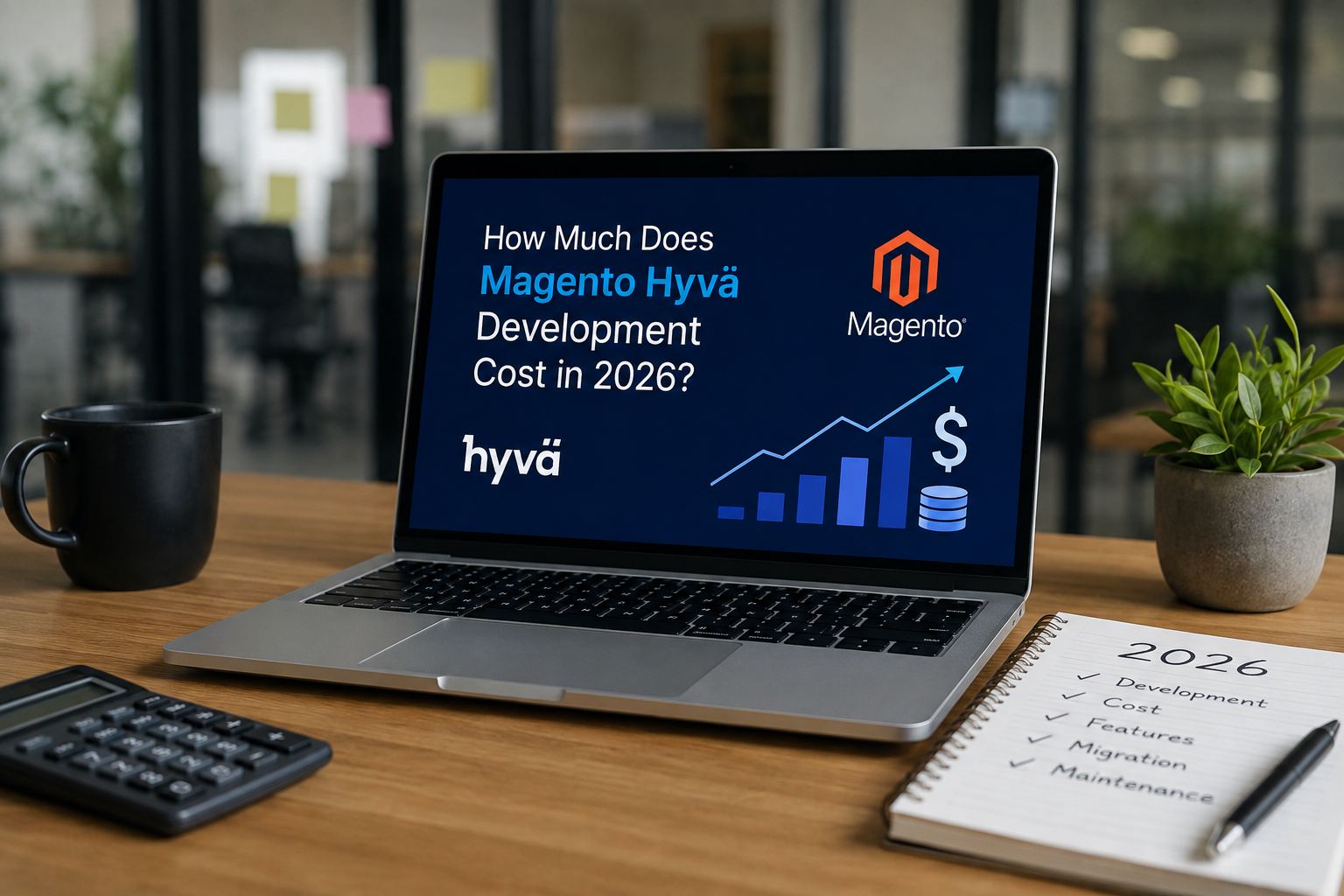
How Much Does Magento Hyvä Development Cost in 2026?

If your Magento 2 store feels slow, difficult to maintain, or expensive to optimize, you may already be considering Hyvä Theme development.

But one question usually comes first:

How much will a Magento Hyvä development project actually cost?

In 2026, the answer depends less on simply installing a theme and more on what your ecommerce business needs from its storefront.

A small catalog with limited customization is very different from a large Magento store running ERP integrations, payment gateways, custom extensions, B2B functionality, advanced search, and a highly customized checkout.

That is why two businesses can receive completely different Magento Hyvä development costs for what appears to be the same project.

And there is another question worth asking:

Is the cheapest Hyvä implementation really the cheapest option for your business in the long run?

A poorly planned migration can create compatibility issues, redesign expenses, unexpected development work, and lost time. A properly planned Hyvä migration can instead become an investment in speed, user experience, maintainability, SEO, and conversion performance.

Magento Hyvä Development Cost in 2026: What Should You Expect?

There is no universal Hyvä development price.

For budgeting purposes, ecommerce businesses can think about projects in broad categories:

Project TypeTypical Budget Direction
Basic Hyvä implementationLower investment
Existing Magento store migrationModerate investment
Custom Hyvä storefrontModerate to high investment
Hyvä + extensive third-party integrationsHigher investment
Enterprise Magento + Hyvä developmentProject-specific
Hyvä + complex B2B functionalityHigher investment
Hyvä Checkout customizationAdditional development cost

These aren’t fixed market prices. They are budgeting categories, because the final quote depends on the store’s technical requirements.

A serious Hyvä development company should first examine your existing Magento installation rather than quote a number based only on the number of pages.

What actually determines the price?

Your development cost can change depending on:

  • Magento version and architecture
  • Number of storefronts
  • Product catalog complexity
  • Existing theme
  • Custom design requirements
  • Third-party Magento extensions
  • ERP and CRM integrations
  • Payment and shipping integrations
  • B2B features
  • Custom product functionality
  • Search and filtering requirements
  • Hyvä Checkout requirements
  • Data migration
  • Testing requirements
  • Mobile optimization
  • Ongoing maintenance

That is why a store owner asking, “What does Hyvä cost?” should really be asking:

“What does my Magento store need to become a high-performing Hyvä storefront?”

The Biggest Cost Driver: Your Existing Magento Store

Imagine two Magento businesses.

Store A has 300 products, a relatively standard catalog, five extensions, and one storefront.

Store B has 40,000 SKUs, multiple customer groups, B2B pricing, ERP integration, custom product logic, multiple languages, and dozens of extensions.

Both want Hyvä.

Their development requirements are nowhere near the same.

This is why Magento Hyvä migration cost is strongly influenced by what already exists inside your store.

Before development starts, your team should audit:

Theme → Extensions → Integrations → Customizations → Checkout → Catalog → Performance → SEO

Skipping this stage can create expensive surprises later.

Hyvä Theme License Is Only One Part of the Budget

One common mistake is treating the Hyvä Theme license as the complete project cost.

It isn’t.

The license gives you access to the Hyvä solution, but your ecommerce store may still require:

  • UX/UI implementation
  • Frontend development
  • Custom components
  • Extension compatibility work
  • Integration development
  • Magento configuration
  • Migration
  • QA testing
  • Performance optimization
  • Deployment
  • Post-launch support

Think of the license as one component of the project—not the entire investment.

For the current license and product information, always verify pricing directly with the official Hyvä source because commercial terms can change.

Why a Cheap Hyvä Migration Can Become Expensive

Here’s a situation ecommerce businesses frequently underestimate.

A developer quotes a low migration price.

The store owner agrees.

Then development begins.

An important Magento extension isn’t compatible.

The checkout needs customization.

The ERP integration breaks.

Some custom functionality from the old theme isn’t reproduced.

Mobile layouts need additional work.

SEO redirects need attention.

The original estimate starts growing.

Suddenly, the “cheap” migration isn’t cheap anymore.

This is why Hyvä migration planning matters.

A professional project should identify technical risks before development—not after launch.

Hyvä Development Cost vs Long-Term Store Performance

The better question isn’t simply:

“How much does Hyvä cost?”

Ask:

“What can better frontend performance potentially be worth to my ecommerce business?”

Google’s Core Web Vitals focus on real user experience through metrics including LCP, INP and CLS. These metrics matter because shoppers don’t experience your website as a technical project—they experience it as every click, scroll and interaction.

A slow product page can create friction.

A complicated checkout can create hesitation.

A poor mobile experience can push customers away.

And every unnecessary delay can become a business problem.

Hyvä is designed around a much leaner Magento frontend architecture than Magento’s traditional Luma frontend, which is one reason performance is such a major part of the Hyvä conversation.

The Statistics Behind the Hyvä Business Case

The performance argument becomes more interesting when you look at real-world examples.

Hyvä’s published case studies include examples of substantial performance and conversion improvements. One 2026 case study reports a 54% increase in conversion rate alongside a 64% improvement in page speed after moving to Hyvä.

Another Hyvä case study describes a B2B ecommerce store with more than 40,000 SKUs, demonstrating that the technology is being used beyond small ecommerce websites.

These are vendor-published case-study results, not guarantees for every Magento store. Your results will depend on your implementation, traffic, UX, infrastructure, extensions, products and customer journey.

But they demonstrate why businesses shouldn’t evaluate Hyvä development cost solely as a design expense.

It can be part of a broader Magento performance and conversion strategy.

What Does a Custom Hyvä Store Cost?

A custom Hyvä Theme development project generally requires more work than applying a ready-made design.

Why?

Because the development team may need to translate your brand’s entire ecommerce experience into a custom Magento frontend.

That can include:

  • Homepage
  • Category pages
  • Product pages
  • Search
  • Filters
  • Mini cart
  • Cart
  • Customer account
  • Wishlist
  • Login/register
  • CMS pages
  • Custom landing pages
  • Mobile layouts
  • Custom components

If your business depends on a distinctive shopping experience, custom development can be worth the additional investment.

The goal isn’t simply to make Magento look different.

The goal is to make the storefront work better for your customers.

Hyvä Extension Compatibility Can Change Your Budget

This is one of the most important questions to ask before hiring a Magento Hyvä development company:

Are all of my current Magento extensions compatible with Hyvä?

Your existing store might depend on:

  • Advanced search
  • Product configurators
  • Reviews
  • Layered navigation
  • Payment modules
  • Shipping tools
  • Subscription systems
  • Product feeds
  • Customer-specific pricing
  • B2B functionality

If an extension isn’t compatible, your development team may need to use an existing compatibility solution or build/customize functionality.

That work can affect the final Hyvä development cost.

Don’t wait until development starts.

Create an extension compatibility list before signing off on the project.

That’s one of the easiest ways to reduce unexpected development expenses.

Hyvä Checkout Can Add Another Layer of Development

Your storefront doesn’t end at the product page.

The checkout is where the customer makes the final decision.

If your business requires Hyvä Checkout, the project may involve additional configuration, customization and compatibility work.

This becomes particularly important for stores with:

  • Multiple payment methods
  • Complex shipping rules
  • B2B checkout requirements
  • Customer-specific pricing
  • Custom fields
  • Tax requirements
  • Multiple countries
  • Subscription functionality

A faster storefront is valuable.

But a faster storefront with a frustrating checkout still leaves money on the table.

Magento Hyvä Migration Cost: Where Businesses Often Spend More

Migration isn’t simply:

Old Theme → New Theme

A proper Magento 2 Hyvä migration can involve:

Discovery → Compatibility Audit → UX Planning → Development → Integration → Testing → Performance Optimization → SEO Validation → Launch

Each stage protects your investment.

For example, SEO validation should check:

  • Existing URLs
  • Redirects
  • Metadata
  • Canonical tags
  • Structured data
  • Internal links
  • Indexability
  • XML sitemap
  • Robots directives
  • Core Web Vitals

A beautiful new storefront that accidentally loses valuable organic traffic is not a successful migration.

7 Questions to Ask Before Hiring a Hyvä Development Company

Before accepting a quote, ask:

1. Have you audited my existing Magento extensions?

If not, your quote may not reflect the actual project.

2. What is included in the migration?

Clarify whether UX, development, integrations, QA, SEO and deployment are included.

3. Will you preserve existing SEO value?

Ask specifically about URLs, redirects, metadata, structured data and indexing.

4. How will you test Core Web Vitals?

Don’t accept “the website will be fast” as a technical strategy.

5. Can you handle custom Magento functionality?

Your store may contain functionality that isn’t available in a standard implementation.

6. Is Hyvä Checkout included?

If not, ask what additional work your checkout requires.

7. What happens after launch?

Ask about Magento maintenance, bug fixes, security updates, compatibility work and ongoing optimization.

How to Reduce Your Hyvä Development Cost Without Cutting Quality

Saving money doesn’t necessarily mean choosing the lowest quote.

You can control costs through better planning.

Start with an audit

Identify compatibility issues before development.

Prioritize high-value pages

Focus first on the pages that influence revenue.

Avoid unnecessary custom functionality

If a standard Hyvä-compatible solution works, don’t build something from scratch without a business reason.

Prepare your content early

Late content changes can create additional development work.

Define integrations upfront

ERP, CRM, payment, shipping and marketing integrations should be documented before development begins.

Protect SEO during migration

Organic traffic is an asset. Treat it that way.

When Is Hyvä Worth the Investment?

Hyvä can make particular sense if your Magento store is experiencing several of these problems:

  • Slow frontend performance
  • Poor mobile experience
  • High frontend complexity
  • Expensive theme maintenance
  • Difficult customization
  • Luma-related performance limitations
  • Poor Core Web Vitals
  • High development overhead
  • Growing ecommerce traffic
  • Increasing conversion expectations

If your store is already generating meaningful revenue, the decision shouldn’t be based solely on development cost.

Consider the potential business impact of:

Faster experience + better UX + easier maintenance + stronger mobile experience + improved conversion opportunities

That’s the real financial conversation.

When Hyvä May Not Be the Right Choice

A responsible Magento development company shouldn’t recommend Hyvä simply because it’s popular.

If your current Magento frontend already meets your performance, UX and business requirements, a migration may not be immediately necessary.

Likewise, if your store has highly specialized functionality, you should first evaluate:

Compatibility → Development effort → Business benefit → Expected ROI

The right technology decision is the one that solves your actual business problem.

Hyvä Development ROI: Look Beyond the Initial Quote

Suppose a business receives two proposals:

Option A: Lower upfront development cost but limited planning, weak extension compatibility analysis and minimal post-launch support.

Option B: Higher initial investment with proper discovery, custom development, testing, SEO migration and ongoing support.

Which is cheaper?

You can’t answer that from the proposal price alone.

You need to consider:

  • Development rework
  • Lost organic traffic
  • Conversion losses
  • Downtime
  • Maintenance
  • Performance optimization
  • Extension conflicts
  • Future development requirements

A lower initial quote can become a higher total cost of ownership.

Get a Magento Hyvä Cost Estimate Based on Your Store

Your store doesn’t need a generic Hyvä package.

It needs a development plan based on its actual architecture.

At IOGOOS, a practical starting point is to evaluate:

Magento version + current theme + extensions + integrations + catalog + custom functionality + checkout + SEO requirements

From there, you can determine which work is essential, which is optional and where the biggest performance opportunities exist.

Planning a Magento 2 Hyvä migration?

Don’t guess your budget from a generic pricing table.

Request a Magento/Hyvä project assessment and get a clearer understanding of the development requirements before committing to the migration.

Talk to a Magento Hyvä Development Expert →

Frequently Asked Questions

How much does Magento Hyvä development cost in 2026?

There is no fixed price. Hyvä development cost depends on your Magento architecture, customization, extensions, integrations, design requirements, migration complexity and checkout requirements.

Is Hyvä Theme expensive?

The theme license is only one part of the overall investment. Custom development, migration, extension compatibility, integrations, testing and optimization can make up a significant portion of the project cost.

Is Hyvä better than Magento Luma?

For many Magento merchants focused on frontend performance, maintainability and modern UX, Hyvä can be a strong alternative to Luma. However, the right choice depends on your store’s requirements and extension ecosystem.

How much does Magento 2 Hyvä migration cost?

Migration pricing depends heavily on the existing Magento store. A store with many customizations and integrations will generally require more development work than a relatively standard installation.

Does Hyvä improve Magento SEO?

Hyvä can support a technically efficient frontend and better performance, but SEO results aren’t guaranteed simply by installing Hyvä. Technical SEO, content, architecture, backlinks, structured data, Core Web Vitals and overall site quality still matter

Is Hyvä suitable for large ecommerce stores?

Yes. Hyvä is used in larger Magento ecommerce implementations, including a published case study involving a B2B store with more than 40,000 SKUs.

Should I migrate from Luma to Hyvä?

If your Magento store is experiencing frontend performance, UX, maintenance or development challenges, a Hyvä migration assessment can help determine whether the potential benefits justify the investment.
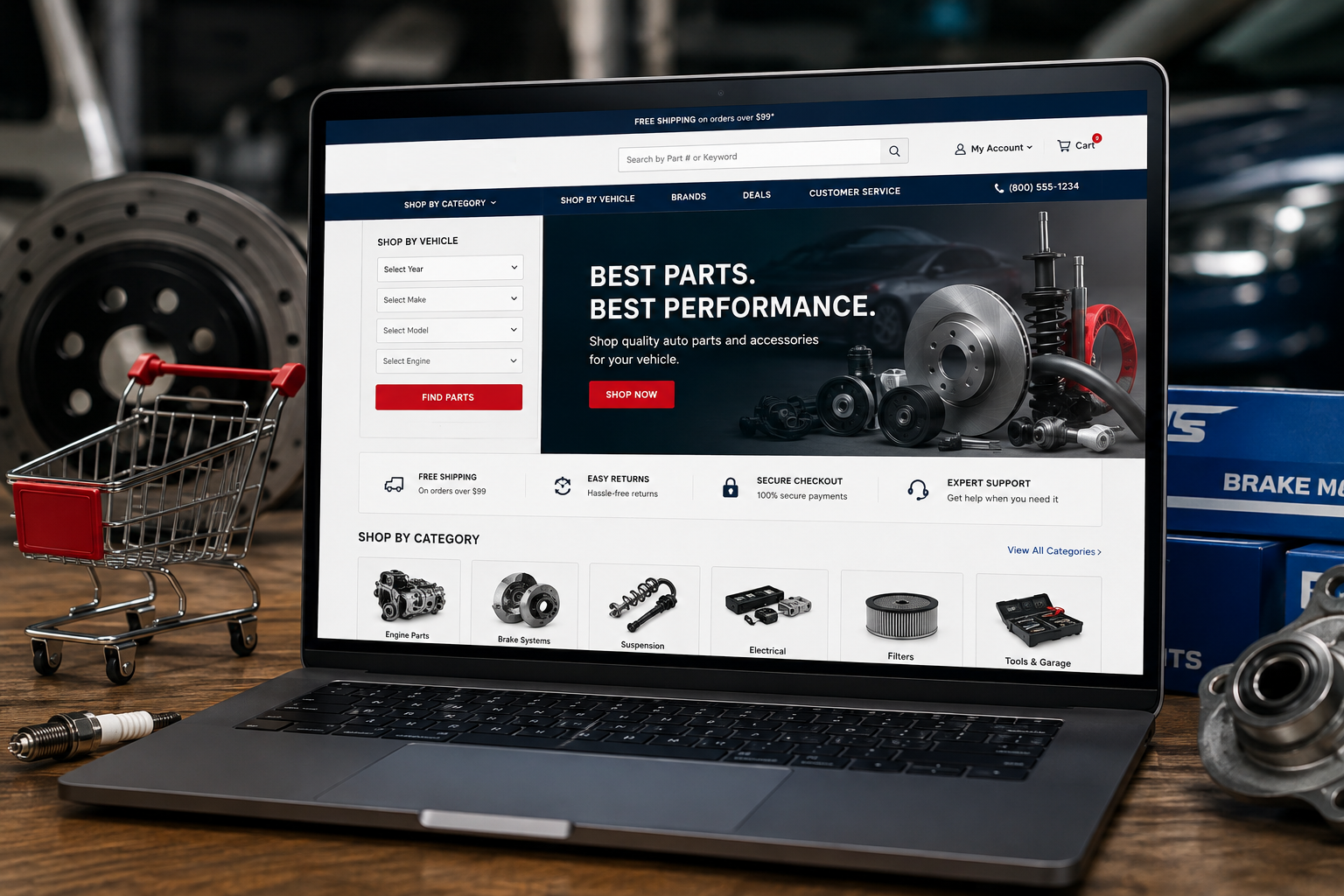
Key Features Every Automotive Ecommerce Website Should Have

A customer searching for a brake pad, engine component, alloy wheel, battery, filter, or replacement part usually has one question in mind:

“Will this part actually fit my vehicle?”

If your automotive ecommerce website cannot answer that question quickly, clearly, and confidently, the customer has a reason to leave.

That is why selling auto parts online is very different from selling ordinary ecommerce products. An automotive buyer may need to check the vehicle year, make, model, engine, part number, specifications, compatibility, delivery availability, warranty, and return policy before placing an order.

One confusing product page can mean a lost sale. One inaccurate fitment result can damage customer trust. One slow checkout can turn a ready-to-buy visitor into an abandoned cart.

A successful automotive ecommerce website therefore needs to do much more than display products. It needs to help shoppers find the right part, remove purchase anxiety, demonstrate credibility, and make checkout effortless.

Baymard Institute’s latest research puts average ecommerce cart abandonment at 70.22%. Its research also identifies extra costs, slow delivery, lack of payment trust, forced account creation, and complicated checkout as major abandonment factors.

For automotive businesses, those problems can become even more expensive because customers often have many technical questions before they buy.

So what should a high-performing automotive ecommerce website development strategy include?

Let’s look at the features that can turn an online auto parts store from a simple product catalog into a genuine sales channel.

1. Vehicle Fitment Search That Helps Customers Find the Right Part

Imagine a customer searching for a replacement brake rotor.

They know their vehicle is a 2021 Ford F-150, but they don’t know the exact manufacturer’s part number.

If your website simply shows thousands of brake rotors, the customer has to figure out which one fits.

That creates friction.

A better automotive ecommerce website allows the shopper to select:

Year → Make → Model → Engine → Part Category

The website can then display compatible products instead of forcing the customer to search through hundreds of potentially incorrect options.

This type of vehicle fitment functionality is one of the most valuable features an auto parts ecommerce website can offer because it directly addresses the biggest concern in online automotive purchasing: compatibility.

Why fitment matters for conversions

Automotive customers are not just buying a product. They are buying confidence that the product will work with their vehicle.

Your website should therefore provide:

  • Year/make/model/engine selection
  • Vehicle-specific product results
  • Compatibility indicators
  • Part-number search
  • OEM/reference number search
  • Fitment notes
  • Vehicle garage functionality
  • “Fits your vehicle” messaging
  • Clear compatibility warnings

A properly designed vehicle fitment search can reduce uncertainty before the customer reaches the cart.

Conversion CTA:
If your current website makes customers manually search for compatible parts, it may be time to rethink the buying journey. Contact our automotive ecommerce development team to discuss a fitment-focused ecommerce experience.

2. Advanced Auto Parts Search That Understands What Buyers Mean

Automotive shoppers do not always search using perfect product names.

One person may search for:

“2019 Honda Civic brake pads”

Another may type:

“Civic 2019 front brakes”

Someone else may enter an OEM number.

Another customer may only know the symptom:

“oil filter for Toyota Camry”

Your website search should accommodate these different search behaviors.

A powerful automotive ecommerce search system should support:

  • Product names
  • SKU numbers
  • OEM numbers
  • Part numbers
  • Vehicle information
  • Categories
  • Brands
  • Product attributes
  • Synonyms
  • Relevant filters

The goal is simple:

Help the customer reach the right product with fewer clicks.

This also creates an important SEO opportunity. Your product categories, vehicle pages, brand pages, and part-specific landing pages can target highly relevant commercial searches rather than relying only on broad keywords such as “auto parts.”

Commercial search intent matters

Someone searching “what are brake pads?” is still researching.

Someone searching “buy brake pads for 2019 Honda Civic” is much closer to purchasing.

Your automotive ecommerce website development strategy should account for both audiences.

Informational content attracts visitors.

Commercial landing pages convert them.

3. Product Pages That Answer Buying Questions Before Customers Ask

A weak automotive product page might contain:

Product Name + Image + Price + Add to Cart

That is rarely enough for technical automotive products.

Customers want to know:

  • Will it fit?
  • Is it OEM or aftermarket?
  • Who manufactures it?
  • What are the specifications?
  • What vehicles does it fit?
  • Is it in stock?
  • When will it arrive?
  • Is there a warranty?
  • Can I return it?
  • What do other buyers think?

Your auto parts ecommerce website should answer these questions directly on the product page.

A high-converting automotive product page should include:

  • High-quality product images
  • Multiple product views
  • Product specifications
  • OEM/reference numbers
  • Brand information
  • Vehicle compatibility
  • Dimensions
  • Material information
  • Installation information
  • Warranty details
  • Shipping information
  • Return policy
  • Stock status
  • Customer reviews
  • Ratings
  • Related products
  • Frequently bought-together products
  • Clear Add to Cart button

This is where SEO and conversion optimization work together.

A detailed product page gives search engines more useful information while giving customers more reasons to trust the purchase.

4. Clear Compatibility Information to Prevent Expensive Mistakes

A customer who receives the wrong part does not simply become unhappy.

You may also face:

  • Returns
  • Refunds
  • Negative reviews
  • Customer support costs
  • Shipping expenses
  • Lost repeat business
  • Lower customer trust

That makes compatibility more than a convenience feature.

It is a revenue-protection feature.

Your automotive ecommerce website should make compatibility highly visible.

Instead of forcing users to search through technical descriptions, show clear messages such as:

✓ Fits your 2020 Toyota Camry

or

⚠ Verify compatibility before ordering

This small piece of information can have a significant psychological impact.

The customer sees that your website understands the vehicle—not just the product.

5. Mobile-First Design for Customers Shopping on the Go

Automotive shoppers may search for products from a garage, workshop, driveway, parking lot, or while speaking with a mechanic.

That means mobile usability cannot be an afterthought.

A mobile-friendly automotive ecommerce website design should make it easy to:

  • Search for parts
  • Select a vehicle
  • Filter products
  • Compare options
  • View specifications
  • Check availability
  • Add products to cart
  • Contact support
  • Complete checkout

Speed matters too.

Google research has previously found that 53% of mobile visitors leave a page when it takes longer than three seconds to load. While that research is older, the underlying lesson remains important: unnecessary loading friction can cost potential customers.

For an automotive business spending money on SEO, advertising, social media, or content marketing, sending traffic to a slow mobile website is an expensive mistake.

Traffic only becomes valuable when the website can convert it.

6. Powerful Filters That Make Thousands of Products Easier to Buy

Imagine an online store selling 50,000 automotive products.

Showing all 50,000 products at once is not helpful.

Customers need a way to narrow the selection quickly.

Your automotive ecommerce development strategy should include intelligent filtering based on factors such as:

  • Vehicle
  • Make
  • Model
  • Year
  • Engine
  • Product category
  • Brand
  • Price
  • Availability
  • Condition
  • Product type
  • Material
  • Specifications
  • Ratings

For example:

Brake Parts → Toyota → Camry → 2020 → Front → In Stock

Now the customer is no longer searching through thousands of products.

They are looking at relevant options.

That is a much better path toward a sale.

7. Product Comparison for Customers Who Need Technical Confidence

Automotive customers often compare products before purchasing.

A professional auto parts ecommerce website development solution should make that comparison easy.

For example, customers could compare:

FeatureProduct AProduct B
BrandBrand ABrand B
MaterialCeramicSemi-Metallic
PositionFrontFront
Warranty2 Years3 Years
CompatibilitySelected VehiclesSelected Vehicles
Price$XX$XX

Comparison functionality is particularly useful for higher-value products where customers need more information before committing.

Instead of making shoppers open multiple product pages and remember specifications themselves, let your website do the work.

8. Customer Reviews and Trust Signals That Reduce Purchase Anxiety

When customers buy automotive parts online, trust matters.

They want evidence that:

  • The product is genuine
  • The part works as described
  • Other customers have purchased it
  • The seller is reliable
  • The website is secure
  • The product fits the stated vehicles

That is why customer reviews, ratings, verified-purchase labels, warranty information, secure payment indicators, shipping information, and transparent return policies should be visible throughout the buying journey.

Do not hide trust signals at the bottom of the website.

Put them where customers make decisions.

Useful trust elements include:

Verified Customer Reviews

Real customer experiences can answer questions that product descriptions cannot.

Product Ratings

Ratings give shoppers an immediate indication of customer satisfaction.

Warranty Information

A clearly explained warranty can reduce perceived purchase risk.

Secure Payment Indicators

Customers need confidence before entering payment information.

Transparent Returns

A clear return policy removes uncertainty.

Business Information

Company details, contact information, support options, and physical business information can strengthen credibility.

Trust is not decoration.

Trust is part of the conversion process.

9. Real-Time Inventory and Availability Information

Few things frustrate customers more than discovering that an apparently available product is actually out of stock after they have spent time researching it.

Your automotive ecommerce website should make product availability clear.

Useful inventory information includes:

  • In stock
  • Limited stock
  • Out of stock
  • Pre-order
  • Expected availability
  • Warehouse availability
  • Estimated shipping date

For businesses operating multiple warehouses, inventory integration can make the experience even more useful.

Instead of simply saying:

“Available”

you can potentially show:

“In stock — ships from Dallas”

or

“Available for dispatch within 24 hours.”

The more confidently customers understand availability, the easier it becomes for them to make a buying decision.

10. Shipping Information That Removes the “When Will I Get It?” Question

Automotive customers frequently need parts because something needs to be repaired.

That creates urgency.

If a vehicle is sitting in a garage, customers may not want to wait several days just to discover the delivery estimate.

Your ecommerce website should communicate:

  • Estimated delivery
  • Shipping options
  • Shipping charges
  • Free shipping thresholds
  • Delivery regions
  • Order tracking
  • Dispatch time
  • Local pickup options, if available

Baymard’s latest cart-abandonment research identifies slow delivery and unexpected costs among the leading reasons shoppers abandon purchases.

For an automotive ecommerce store, shipping information should therefore appear before the final checkout stage—not as a surprise after the customer has entered their details.

11. A Checkout That Does Not Make Ready-to-Buy Customers Leave

Getting a customer to the checkout is an achievement.

Losing that customer because checkout is confusing is avoidable.

Baymard’s research currently places average ecommerce cart abandonment at 70.22%, and its research indicates that checkout design improvements alone can produce substantial conversion opportunities.

Your automotive ecommerce website development strategy should therefore focus on reducing unnecessary friction.

A strong checkout should provide:

  • Guest checkout
  • Clear order summary
  • Transparent shipping costs
  • Multiple payment methods
  • Address autocomplete
  • Mobile-friendly forms
  • Secure payment experience
  • Promo-code functionality
  • Delivery estimate
  • Easy cart editing
  • Clear error messages

Do not ask customers for information you do not actually need.

Every unnecessary field creates another opportunity for hesitation.

Conversion CTA:
If your website receives product traffic but customers frequently abandon carts, a checkout and conversion audit could reveal where revenue is being lost. Contact our team to discuss your automotive ecommerce website requirements.

12. Multiple Payment Options for Different Types of Buyers

Customers have different payment preferences.

Depending on your target market and business model, your website may need:

  • Credit/debit cards
  • Digital wallets
  • PayPal or similar payment services
  • Buy-now-pay-later options
  • Bank transfers
  • Financing
  • Purchase orders for B2B customers

For automotive businesses serving workshops, dealers, distributors, and individual consumers, payment flexibility can become particularly important.

A B2B automotive ecommerce website may also require account-based pricing, purchase orders, credit limits, tax handling, and customer-specific payment terms.

That is why payment functionality should be planned around the actual business model rather than added as an afterthought.

13. B2B Features for Wholesalers, Distributors, and Automotive Suppliers

Not every automotive ecommerce customer is an individual car owner.

Many businesses sell to:

  • Auto repair shops
  • Mechanics
  • Dealerships
  • Automotive distributors
  • Fleet operators
  • Resellers
  • Workshops
  • Commercial buyers

These customers may need different functionality.

A professional automotive ecommerce development company can build features such as:

  • Customer-specific pricing
  • Bulk ordering
  • Wholesale accounts
  • Minimum order quantities
  • Tiered pricing
  • Purchase orders
  • Account-based discounts
  • Reorder functionality
  • Saved product lists
  • Multiple shipping addresses
  • Business tax information
  • Approval workflows

For B2B automotive ecommerce, convenience can directly influence repeat purchasing.

If a workshop orders the same filters, brake components, fluids, or service parts every month, a simple Reorder function can save time and encourage repeat sales.

14. Smart Cross-Selling That Actually Makes Sense

Cross-selling should not feel random.

If a customer purchases brake pads, recommending unrelated accessories can create distraction.

Instead, your website should recommend products that logically complement the purchase.

For example:

Brake Pads

→ Brake Rotors
→ Brake Hardware Kit
→ Brake Cleaner
→ Brake Fluid

This is where product relationships and recommendation logic become valuable.

Relevant recommendations can increase the value of each transaction while helping customers discover products they may genuinely need.

The key word is relevance.

15. “Frequently Bought Together” and Complete-the-Repair Suggestions

Automotive purchases are often part of a larger repair job.

Someone buying a component may also need installation accessories or related parts.

Your website can use sections such as:

Complete Your Repair

Frequently Bought Together

Compatible Parts

Recommended Accessories

Customers Also Purchased

These elements can turn a single-product transaction into a larger order without aggressively pushing irrelevant products.

That is a better approach to increasing average order value.

16. SEO-Friendly Automotive Category and Vehicle Landing Pages

A beautiful ecommerce website will not generate organic traffic if search engines cannot properly understand its structure.

Your automotive ecommerce SEO strategy should create logical, crawlable pages around search intent.

Potential landing pages include:

  • Auto Parts
  • Brake Parts
  • Engine Parts
  • Suspension Parts
  • Electrical Components
  • Toyota Parts
  • Ford Parts
  • Honda Parts
  • BMW Parts
  • Chevrolet Parts
  • Vehicle-specific parts
  • Brand-specific products
  • Product-category pages

For example:

Auto Parts → Toyota → Camry → 2020 → Brake Parts

This structure can help users navigate the website while creating opportunities to target highly specific search queries.

17. Structured Data to Help Search Engines Understand Your Products

Technical SEO is another important part of automotive ecommerce website development.

Where appropriate, your product pages should use structured data to communicate information such as:

  • Product name
  • Brand
  • Price
  • Availability
  • Reviews
  • Ratings
  • SKU
  • Product identifiers

Correct implementation can help search engines better understand product information and may support eligible search-result enhancements.

But structured data should never be treated as a shortcut to rankings.

It works best alongside:

Useful content + strong technical SEO + search intent + quality products + good user experience.

18. Technical SEO Built Into the Ecommerce Architecture

SEO should not begin after the website is developed.

It should be considered during development.

A strong automotive ecommerce website development project should address:

  • Clean URLs
  • Canonical tags
  • XML sitemap
  • Robots.txt
  • Breadcrumb navigation
  • Internal linking
  • Mobile responsiveness
  • Page speed
  • Indexation control
  • Duplicate product pages
  • Filter URL management
  • Pagination
  • Image optimization
  • Metadata
  • Structured data
  • 404 handling
  • Redirect management

This becomes especially important for automotive stores with thousands—or potentially hundreds of thousands—of products.

Without proper architecture, ecommerce filters and product variations can create unnecessary URL combinations and indexation problems.

19. Content That Answers Questions Before Customers Contact Support

SEO traffic is valuable, but helpful content can also move visitors toward purchasing.

Create content around questions such as:

How do I know which brake pads fit my car?

What is the difference between OEM and aftermarket parts?

How often should brake rotors be replaced?

Which oil filter fits my vehicle?

How do I find the correct engine part number?

These articles can attract informational searches.

Then connect them naturally to relevant product and category pages.

This creates a path like:

Google Search → Helpful Article → Relevant Category → Product → Cart → Checkout

That is how informational SEO can support commercial revenue.

20. Lead Generation for Visitors Who Are Not Ready to Buy

Not every visitor will purchase during their first session.

Some are researching.

Some are comparing prices.

Some need to speak with a specialist.

Some need help identifying a part.

Instead of allowing these visitors to disappear, your automotive ecommerce website should create opportunities to capture them.

Consider:

  • Request a Quote
  • Ask an Expert
  • Find My Part
  • Talk to a Specialist
  • Bulk Order Inquiry
  • Dealer Inquiry
  • Wholesale Account Request
  • Newsletter signup
  • Price-drop alerts
  • Back-in-stock notifications

For B2B customers, Request a Quote can be especially valuable.

For individual buyers, Find My Part or Check Compatibility may be a stronger lead hook.

The CTA should match the customer’s problem.

21. Click-to-Call and Fast Customer Support

Sometimes customers do not want to read another product description.

They want an answer.

A prominent phone number, live chat, WhatsApp option where appropriate, support form, or expert consultation feature can help customers move forward.

For expensive or technically complex products, human assistance can be the difference between:

“I’ll think about it.”

and

“I’ll place the order.”

Your website should make it easy to ask for help without forcing customers to search for contact information.

22. Vehicle Garage Functionality for Repeat Customers

A vehicle garage allows customers to save their vehicle information.

For example:

My Vehicles

  • 2020 Ford F-150
  • 2018 Honda Civic
  • 2022 Toyota RAV4

When the customer returns, the website can prioritize compatible products.

This reduces repetitive searching and creates a more personalized buying experience.

It can also support repeat purchases because customers can quickly find products relevant to their saved vehicles.

For businesses selling replacement and maintenance parts, this can become an important retention feature.

23. Reorder and Purchase History for Repeat Revenue

The first purchase is valuable.

The second purchase tells you the customer may trust your business.

Your automotive ecommerce website should make repeat purchases easy.

Useful account features include:

  • Order history
  • Reorder button
  • Saved vehicles
  • Saved products
  • Recently viewed products
  • Downloadable invoices
  • Saved addresses
  • Saved payment methods
  • Repeat-order reminders

A customer who previously purchased an oil filter should not have to search the entire website again six months later.

Make the next purchase easier than the first.

24. Analytics That Show Where Revenue Is Being Lost

A website should not only collect orders.

It should generate useful business data.

Your analytics setup should help answer questions such as:

  • Which products receive the most traffic?
  • Which pages generate the most leads?
  • Where do customers leave?
  • Which search terms generate sales?
  • Which vehicles are most frequently searched?
  • Which categories have high traffic but low conversions?
  • Which products have high views but low add-to-cart rates?
  • Which marketing channels generate revenue?
  • Which customers return?

These insights can guide future automotive ecommerce website development, SEO, advertising, merchandising, and conversion optimization decisions.

Without measurement, you are guessing.

With measurement, you can improve based on actual customer behavior.

25. Security and Reliability Are Part of the Buying Experience

Customers are trusting your website with:

  • Personal information
  • Vehicle information
  • Addresses
  • Payment details
  • Order information

Your website therefore needs strong security practices and reliable infrastructure.

Important areas include:

  • HTTPS
  • Secure payment processing
  • Strong authentication
  • Regular updates
  • Backup systems
  • Access controls
  • Fraud prevention
  • Monitoring
  • Secure integrations

Security should also be communicated clearly enough that customers feel comfortable completing their purchase.

What Happens When These Features Work Together?

The real value does not come from adding features randomly.

It comes from connecting them into one customer journey.

Imagine this:

A customer searches Google for “brake pads for 2020 Honda Civic.”

They land on an SEO-optimized automotive page.

The website asks them to select their vehicle.

The fitment system confirms compatibility.

The customer sees several relevant products.

They compare price, brand, warranty, specifications, and reviews.

The product page recommends compatible brake rotors.

The website displays shipping availability.

The customer adds everything to the cart.

The checkout clearly shows the final cost and delivery estimate.

They pay using their preferred payment method.

After the purchase, the customer receives tracking information.

Months later, the saved vehicle and purchase history make the next order faster.

That is not simply an online catalog.

That is an ecommerce sales system.

The Features That Deserve the Highest Priority

If you are planning a new automotive ecommerce website development project, do not try to build everything at once.

Start with the features that directly affect discovery, trust, conversion, and repeat purchases.

Customer Discovery

  • Vehicle fitment search
  • Advanced product search
  • Category navigation
  • Smart filters
  • SEO-friendly landing pages

Purchase Confidence

  • Compatibility verification
  • Detailed product specifications
  • Reviews and ratings
  • Warranty information
  • Shipping estimates
  • Clear returns

Conversion

  • Fast mobile experience
  • Simple checkout
  • Multiple payment options
  • Guest checkout
  • Clear pricing
  • Strong CTAs

Revenue Growth

  • Related products
  • Cross-selling
  • Frequently bought together
  • Reordering
  • Saved vehicles
  • Personalized recommendations

Lead Generation

  • Request a Quote
  • Ask an Expert
  • Find My Part
  • Wholesale inquiry
  • Dealer inquiry
  • Contact support

SEO & Measurement

  • Technical SEO
  • Structured data
  • Internal linking
  • Analytics
  • Conversion tracking
  • Search performance monitoring

Don’t Build an Auto Parts Website. Build a Buying Experience.

The biggest mistake an automotive business can make is treating ecommerce as a digital product catalog.

Your customers do not want to browse thousands of parts.

They want to find the right part for the right vehicle at the right price—and feel confident enough to buy it.

That is why successful automotive ecommerce website development combines fitment technology, intuitive navigation, product data, SEO, trust signals, mobile UX, conversion optimization, and intelligent ecommerce functionality.

If your current website receives visitors but struggles to turn them into customers, the problem may not be traffic alone.

It could be:

Poor fitment → Confused shoppers → Low product confidence → Cart abandonment → Lost revenue.

The right website architecture can reverse that journey:

Relevant traffic → Better product discovery → Higher trust → Easier checkout → More leads → More orders → More repeat customers.

Ready to Turn Your Automotive Website Into a Sales Channel?

If you are planning a new automotive ecommerce website, upgrading an existing auto parts store, adding vehicle fitment functionality, improving ecommerce SEO, or building a B2B/B2C automotive marketplace, the development strategy needs to begin with your customers—not just your product catalog.

A professional automotive ecommerce development company can help you plan the technology, UX, integrations, product architecture, SEO structure, and conversion journey around your actual business goals.

Don’t let customers leave because they cannot find the right part.

Don’t make buyers guess whether a product fits.

Don’t spend money generating traffic only to lose customers at checkout.

Build an ecommerce experience that answers questions, removes uncertainty, captures leads, and makes purchasing easier.

Want to discuss your automotive ecommerce project?

Contact our team today to discuss your requirements for automotive ecommerce website development and build a website designed to attract, convert, and retain automotive customers.

Explore Automotive Ecommerce Website Development Services

Frequently Asked Questions About Automotive Ecommerce Websites

What features should an automotive ecommerce website have?

An automotive ecommerce website should make it easy for customers to find compatible products and complete purchases with confidence. Important features include vehicle fitment search, advanced filters, detailed product specifications, compatibility information, customer reviews, secure checkout, multiple payment options, inventory visibility, shipping information, and mobile-friendly navigation.

Why is vehicle fitment important for an automotive ecommerce website?

Vehicle fitment helps customers identify products compatible with their specific vehicle. Features such as year, make, model, engine, and part-number search can reduce uncertainty and make product discovery easier, particularly for large auto parts catalogs.

How can an automotive ecommerce website generate more leads?

An automotive ecommerce website can generate leads through Request a Quote forms, Ask an Expert options, wholesale inquiries, dealer inquiries, contact forms, live chat, back-in-stock notifications, and other strategically placed calls to action. The best approach depends on whether the business targets consumers, automotive professionals, wholesalers, or multiple customer groups.

How does SEO help an automotive ecommerce website?

Automotive ecommerce SEO can help relevant product, category, vehicle, and informational pages appear for searches made by potential customers. A strong strategy combines technical SEO, useful content, internal linking, optimized category pages, structured data, mobile usability, and search-intent-focused landing pages.

Should an automotive ecommerce website support B2B customers?

If the business sells to workshops, dealers, distributors, mechanics, or other commercial buyers, B2B functionality can be highly valuable. Features may include customer-specific pricing, bulk ordering, wholesale accounts, purchase orders, tiered pricing, saved orders, and reorder functionality.

How much does automotive ecommerce website development cost?

The cost depends on factors such as catalog size, ecommerce platform, vehicle-fitment requirements, integrations, custom functionality, B2B features, design requirements, payment systems, and third-party services. A detailed project assessment is recommended before determining the development budget.

Can an existing automotive ecommerce website be improved without rebuilding everything?

Yes. Depending on the existing technology and architecture, businesses may be able to improve specific areas such as navigation, product search, fitment, checkout, mobile experience, SEO, product data, integrations, or conversion elements without completely replacing the website.

What makes an automotive ecommerce website different from a regular ecommerce store?

Automotive ecommerce often involves complex product compatibility, technical specifications, vehicle information, OEM or part numbers, large catalogs, and specialized customer requirements. The website therefore needs product discovery and purchasing tools designed specifically around automotive buying behavior.

Enquiry Now

When We Work Together

We can create something incredible

arrow
HQ INDIA
HQ INDIA
C-31, Milap Nagar,
Uttam Nagar, New Delhi,
Delhi 110059
USA
USA
6715 Backlick Rd Suite 202
Springfield,
VA 22150, USA
AUSTRALIA
AUSTRALIA
2/51, Lane Cres,
Reservoir, VIC
3037, Australia
CANADA
CANADA
61 Payzant Bog Road, Falmouth, NS, B0P 1P0, CANADA
UK
UK
3rd Floor, 131 City Road, London, EC1V 2NX, United Kingdom
UAE
UAE
Boutik Mall, Al Reem Island - Abu Dhabi, UAE
X

Let Us Call You Back

  • India+91
  • United States+1
  • United Arab Emirates+971

Your phone number is kept confidential
and not shared with others.