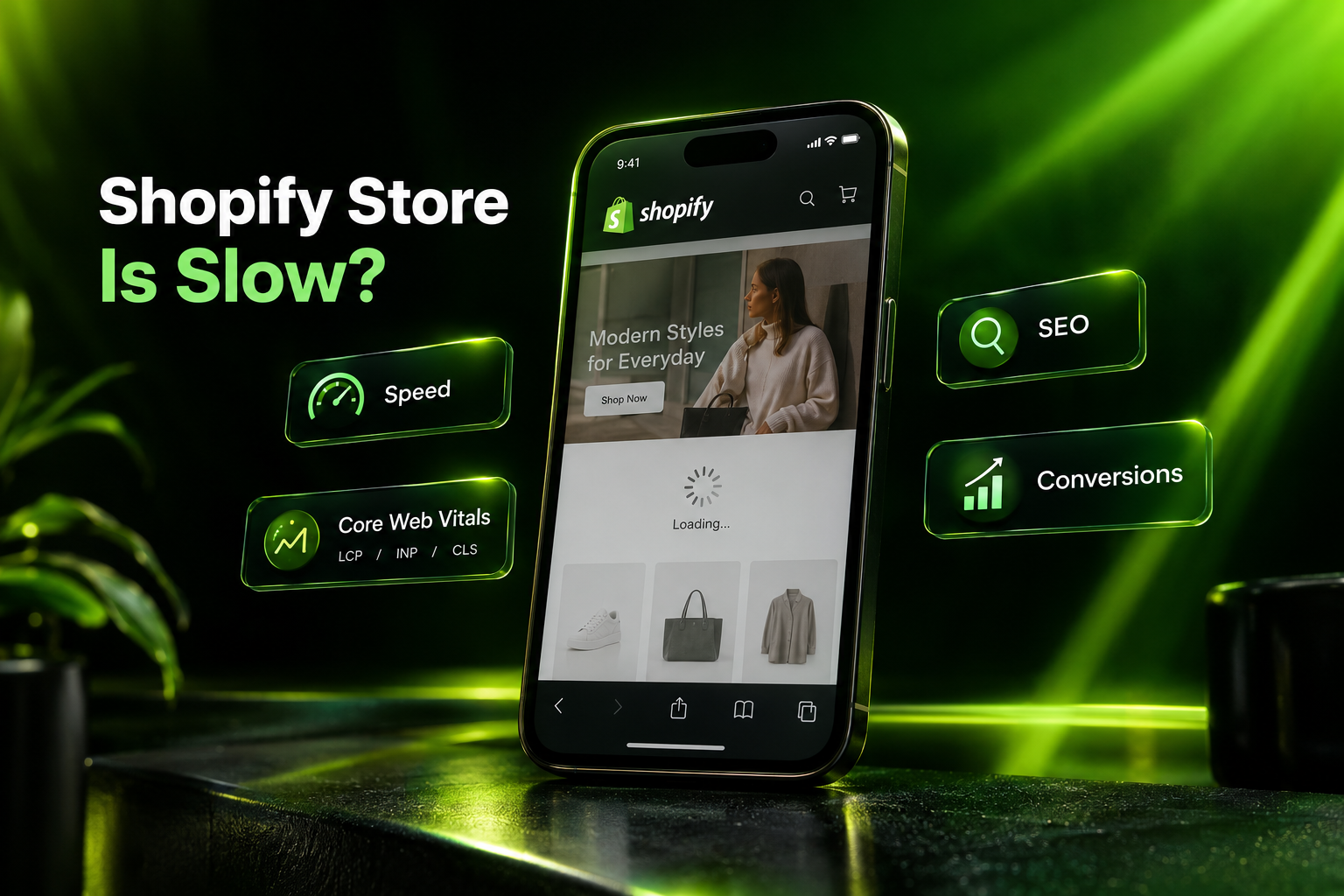
Shopify Store Is Slow? How to Fix It and Improve Speed, SEO & Conversions

Your Shopify store may look polished, have great products, and attract the right visitors—but if pages take too long to load, customers may leave before they ever see what makes your brand worth buying from.

A slow Shopify store can affect much more than a PageSpeed score. It can create friction while shoppers browse products, interact with filters, add items to the cart, or move toward checkout. Poor performance can also weaken the overall user experience that supports organic search visibility.

The good news is that Shopify itself is rarely the fundamental problem.

Shopify already provides managed hosting, a global CDN, image optimization, browser caching, compression, and other platform-level performance features. In many cases, slow storefronts become slow because of what has been added on top: theme code, Shopify apps, third-party scripts, tracking tags, oversized media, animations, and years of customizations.

If your Shopify store feels slow, this guide will help you identify what is actually causing the problem, what you can safely fix, and when deeper Shopify performance optimization is needed.Is Your Shopify Store Losing Customers Because of Speed?
Let our Shopify specialists review your theme, apps, scripts and Core Web Vitals to identify what is slowing down your storefront.
Request a Shopify Performance Audit →

Why Shopify Store Speed Matters to Your Business

Store speed isn’t simply a technical metric.

Imagine someone discovers your product through Google, Instagram, an influencer, or an email campaign. They tap your link from their phone.

The page begins loading.

The hero image takes too long to appear. A popup script runs. Reviews initialize. A tracking tool loads. The page shifts as another widget appears.

The shopper hasn’t even evaluated the product yet—and you’ve already made the buying journey harder.

This is why Shopify speed optimization should be approached as part of customer experience, SEO, and conversion optimization rather than as a race for a perfect testing-tool score.

Shopify states that better web performance can improve customer experience, conversion rates, and store discoverability. Its performance guidance identifies themes, installed apps, and manually added third-party code as major factors affecting Shopify storefront performance.

What a Slow Shopify Store Can Affect

A poorly optimized storefront can contribute to:

  • Higher abandonment from mobile visitors
  • Slower product and collection browsing
  • Delayed add-to-cart interactions
  • Frustrating navigation and filtering
  • Poor Core Web Vitals
  • Lower engagement with landing pages
  • Wasted SEO and marketing traffic
  • Reduced conversion opportunities

Speed matters because every visitor arrives with limited patience and many alternatives.

How Fast Should a Shopify Store Be?

Instead of obsessing over a single PageSpeed number, start with Google’s Core Web Vitals.

These metrics measure real aspects of the experience your shoppers receive.

Largest Contentful Paint (LCP)

What it measures: How quickly the main visible content loads.

Good target: 2.5 seconds or less

For a Shopify store, the LCP element might be your homepage hero, collection banner, or main product image.

Interaction to Next Paint (INP)

What it measures: How quickly your storefront responds when a visitor interacts with it.

Good target: 200 milliseconds or less

A poor INP can make actions such as opening menus, choosing variants, applying filters, or interacting with product components feel sluggish.

Cumulative Layout Shift (CLS)

What it measures: Unexpected movement of content while the page loads.

Good target: 0.1 or less

You’ve probably experienced this yourself: you’re about to tap a button and suddenly the page moves because another element loads above it.

That is exactly the kind of frustration CLS is designed to measure.

For Core Web Vitals, performance is generally evaluated at the 75th percentile of page loads.

Shopify Performance Benchmark

There is another useful reality check.

Shopify published platform-wide Liquid storefront data for January–February 2026 showing median performance of approximately:

LCP: 1.1 seconds
INP: 40 milliseconds
CLS: 0.001

That doesn’t mean every Shopify store should achieve those exact numbers. Stores vary considerably in design, apps, functionality, traffic, and custom development.

It does show something important:

Shopify itself is capable of delivering very fast storefront experiences.

If your store is substantially slower, the first question shouldn’t be “Is Shopify slow?”

It should be:

“What is my storefront loading that is making it slow?”

Why Is My Shopify Store So Slow?

There isn’t one universal answer.

We’ve seen Shopify stores where one poorly implemented feature creates most of the performance problem, while others accumulate dozens of smaller issues over several years.

Here are the areas we investigate first.

1. Too Many Shopify Apps

Apps make Shopify powerful, but every storefront app Shopify app development and integration should earn its place.

Review widgets, chat systems, recommendation engines, upsell tools, popups, loyalty programs, heatmaps, social feeds, currency tools and analytics platforms can introduce additional JavaScript, CSS, requests and third-party resources.

The problem isn’t simply the number of installed apps.

The important questions are:

  • What does the app load on the storefront?
  • Does it load on every page?
  • Does the feature need to load immediately?
  • Is another app providing the same functionality?
  • Is the app actually contributing to revenue or customer experience?
  • Did uninstalling an old app leave code behind?

How to Fix It

Audit every installed app and classify it as:

Essential | Useful | Replaceable | Unused

Remove applications that provide little business value.

But don’t stop at clicking Uninstall.

An app may leave theme snippets, scripts, stylesheets, app embeds, or other code behind. Review the theme after removing apps and clean up unused resources carefully.

Important: Don’t delete unfamiliar theme code directly on a live store. Work from a duplicate theme and test changes before publishing.

2. Your Shopify Theme Has Become Too Heavy

A theme that started fast can become considerably heavier after months or years of development.

Common causes include:

  • Repeated custom modifications
  • Large JavaScript bundles
  • Unused CSS
  • Multiple libraries doing similar jobs
  • Heavy sliders
  • Excessive animations
  • Old theme architecture
  • Poorly implemented sections
  • Duplicate functionality
  • Code from previous developers
  • App remnants

This is particularly common when several developers and agencies have worked on the same storefront over time.

How to Fix It

Perform a Shopify theme code audit.

Look for code that can be removed, simplified, conditionally loaded, deferred, or replaced with native Shopify functionality.

Don’t blindly delete functionality just to improve a benchmark.

The goal is a faster store that still sells effectively, not an empty storefront with a high performance score.

Has Your Shopify Theme Been Modified for Years?
We can audit legacy theme code, unused assets, app remnants and third-party scripts without rebuilding everything unnecessarily.

custom Shopify theme development
Get Your Shopify Theme Reviewed →

3. Large Images Are Slowing Important Pages

eCommerce naturally depends on visual content.

High-resolution product photography, lifestyle images, banners, lookbooks and promotional graphics can all improve merchandising—but images should be delivered according to how they are actually displayed.

A 4,000-pixel image does not need to be downloaded if a visitor only sees it inside a much smaller card.

Shopify Image Optimization Checklist

Make sure you:

  • Upload appropriately sized source images
  • Avoid unnecessarily large files
  • Use responsive image delivery
  • Set width and height attributes
  • Lazy-load below-the-fold images where appropriate
  • Avoid lazy-loading critical above-the-fold imagery without considering LCP
  • Remove unused image assets where relevant
  • Test product, collection and homepage imagery independently

Shopify already provides an image CDN and can resize, compress, and serve optimized image formats. The theme still needs to request and display those assets intelligently.

4. Your Hero Section Is Beautiful—but Expensive

One of the most common performance problems sits right at the top of the homepage.

A hero might contain:

  • Desktop background image
  • Mobile background image
  • Autoplay video
  • Slider
  • Animation library
  • Custom fonts
  • Multiple CTA effects
  • JavaScript transitions
  • Tracking events

All of this can happen before a visitor even begins scrolling.

Better Approach

Ask:

Does this hero actually help someone buy?

A strong hero doesn’t need five slides and complicated animations. Shopify performance optimization Often, one clear visual, one strong value proposition and one primary call to action provide a better customer experience while reducing unnecessary loading work.

5. Third-Party JavaScript Is Blocking the Experience

Your theme isn’t the only source of JavaScript.

Shopify stores commonly depend on third-party scripts for:

  • Google Tag Manager
  • Advertising pixels
  • Analytics
  • Heatmaps
  • Live chat
  • Reviews
  • Personalization
  • A/B testing
  • Affiliate tracking
  • Social integrations
  • Recommendation tools

Each script may appear small independently.

Together, they can become expensive.

What to Do

Create an inventory of every third-party script.

For each one, ask:

Who added it?
What business purpose does it serve?
Does it need to load immediately?
Does it need to run on every page?
Is the company still using it?

Old marketing campaigns often leave tracking code behind long after the campaign itself has ended.

Remove what isn’t required and reconsider when non-critical scripts execute Shopify development experts.

6. Too Much JavaScript Is Hurting Interactivity

A page can appear loaded but still feel slow.

You tap the menu.

Nothing happens immediately.

You select a variant.

There’s a delay.

You open a filter.

The interface hesitates.

This is where Interaction to Next Paint (INP) becomes particularly important.

Shopify specifically points to excessive JavaScript from theme code, apps, and third-party/tag-manager code as a likely contributor to poor INP.

How to Improve It

Depending on the store, improvements may include:

  • Removing unnecessary JavaScript
  • Splitting code by functionality
  • Loading scripts only where required
  • Deferring non-critical work
  • Reducing expensive event handlers
  • Replacing heavy libraries
  • Simplifying theme functionality
  • Auditing app-generated scripts
  • Reviewing tag-manager execution

This usually requires developer-level investigation rather than installing another “speed optimization” app.

7. Too Many Sections Are Loading on One Page

Modern Shopify themes make it easy to add sections.

That flexibility can become a performance problem when a homepage contains:

hero → announcement → featured collection → video → testimonials → recommendations → Instagram → reviews → another collection → blog → newsletter → social proof → another carousel.

Every section may bring additional HTML, images, CSS, JavaScript, and third-party functionality.

Fix the Page Around Buying Intent

Instead of asking:

“What else can we add?”

ask:

“What does the customer need to make the next decision?”

Remove sections that don’t help visitors understand the product, trust the business, navigate the catalog, or buy.

Performance optimization and conversion optimization should work together.

8. Large Collection Pages Are Doing Too Much

Stores with hundreds or thousands of products can run into problems when collection pages attempt to display too much at once.

Potential issues include:

  • Excessive product cards
  • Multiple product images per card
  • Swatches
  • Quick-add functionality
  • Review stars
  • Wishlist buttons
  • Complex filtering
  • Recommendation logic

Better Approach

Use sensible pagination or controlled loading and evaluate every feature included on product cards.

Shopify itself recommends pagination for collections containing large numbers of products rather than forcing excessive content to load at once Shopify eCommerce development.

9. Fonts Can Quietly Damage Performance

Custom typography is valuable for branding, but poor font implementation can add unnecessary network requests and visual instability.

Common problems include:

  • Too many font families
  • Too many weights
  • Loading fonts that aren’t actually used
  • Third-party font dependencies
  • Poor font-display behavior

Fix

Use only the font files and weights your design actually needs.

Brand consistency matters. Loading seven variations that nobody sees doesn’t.

10. Tracking Tags Have Accumulated Over Time

Marketing teams regularly add:

Meta Pixel
Google Ads
Google Analytics
TikTok
Pinterest
Affiliate systems
Heatmaps
Retargeting scripts
Experimentation tools

But removal rarely receives the same attention.

A store can therefore accumulate tracking code from campaigns that ended years ago.

Fix

Audit Google Tag Manager and every manually installed tracking script.

Remove duplicates, old pixels, unused events and tags that no longer support a current business requirement.

How to Find What Is Actually Slowing Down Your Shopify Store

Don’t begin by randomly removing things.

Start with evidence.

Step 1: Check Shopify’s Web Performance Reports

Shopify provides real-user performance reporting based around:

LCP
INP
CLS

This is especially useful because it reflects actual visitor experiences rather than only a single simulated test.

Review performance across mobile and desktop and look for changes that coincide with:

  • App installations
  • Theme releases
  • New marketing scripts
  • Design changes
  • New features

Step 2: Test Important Pages Individually

Don’t test only your homepage.

Check:

Homepage
Top collection pages
Best-selling product pages
Landing pages
Search/results pages where applicable

A homepage can perform well while a heavily customized product page performs badly.

Step 3: Use Google PageSpeed Insights

PageSpeed Insights can help identify issues involving:

  • LCP
  • INP
  • CLS
  • Render-blocking resources
  • JavaScript execution
  • Image delivery
  • Main-thread work
  • Third-party resources

Don’t treat every recommendation as a command.

Some generic testing-tool recommendations relate to infrastructure Shopify already manages.

Use the report to diagnose the storefront—not to chase a perfect score.

Step 4: Inspect the Browser Network and Performance Data

For deeper issues, browser developer tools can reveal:

  • Large requests
  • Slow third-party resources
  • JavaScript execution
  • Network waterfalls
  • Unused assets
  • Rendering bottlenecks

This is where an experienced Shopify developer can often distinguish between a symptom and the actual cause.

Why Installing a Shopify Speed App Isn’t Always the Answer

When a store owner searches “how to speed up Shopify store,” installing another app can sound like the easiest solution.

Sometimes an app can help with a specific optimization.

But consider the logic:

If your store is already slow because too many scripts and apps are running, adding another layer of code may not address the root problem.

Start with:

Diagnosis → Remove waste → Optimize existing code → Improve delivery → Measure again

rather than:

Slow store → Install another app → Hope

Should You Change Your Shopify Theme?

Not automatically.

If the theme’s foundation is good, optimizing the existing theme may be more practical than rebuilding the entire storefront.

Consider a theme rebuild or major upgrade when:

  • The theme is significantly outdated
  • Legacy code is difficult to maintain
  • Years of modifications have created technical debt
  • Important functionality is duplicated
  • Performance issues are architectural
  • The current UX is also hurting conversions Shopify website redesign
  • Your business requirements have outgrown the existing theme

The decision should come after an audit—not before it.

Shopify Speed Optimization and SEO: What’s the Connection?

A faster store does not magically guarantee a #1 Google ranking.

SEO depends on many signals, including relevance, content quality, links, technical accessibility and competition.

But performance still matters.

A faster Shopify store can improve the experience visitors receive after clicking a search result. Core Web Vitals also provide Google with measurable information about real-world page experience.

For eCommerce SEO, this matters across:

Product pages
Collection pages
Category landing pages
Blog content
Campaign landing pages

Think about speed as one component of a broader Shopify SEO strategy, not a substitute for one.

Don’t Sacrifice Conversion Features Just to Get a 100 Score

This is another common mistake.

Imagine a product recommendation tool makes the page slightly heavier but generates meaningful additional revenue.

Removing it just to move a synthetic performance score from 92 to 100 might be the wrong business decision.

Shopify itself notes that there is no universal requirement to achieve a perfect performance score and recommends balancing features against their effect on web performance Shopify CRO services.

The question isn’t:

“How do we get 100?”

The better question is:“How do we make this storefront faster without removing features customers actually use?”

Shopify Speed Optimization Checklist

If your Shopify store is running slowly, review these areas:

Theme

  • Update your theme where appropriate
  • Audit custom Liquid
  • Remove obsolete code
  • Reduce unused CSS and JavaScript
  • Review animations and transitions
  • Limit unnecessary sections

Apps

  • Audit installed apps
  • Remove unused applications
  • Check for leftover app code
  • Avoid duplicated functionality
  • Review app embeds

Images & Video

  • Right-size images
  • Use responsive images
  • Lazy-load appropriate media
  • Review LCP imagery
  • Avoid unnecessary autoplay video
  • Set image dimensions

JavaScript

  • Remove unnecessary libraries
  • Defer non-critical scripts
  • Reduce main-thread work
  • Load features only where needed
  • Review third-party JavaScript

Tracking

  • Audit Google Tag Manager
  • Remove outdated pixels
  • Remove duplicate tracking
  • Delay non-essential marketing scripts where appropriate

UX

  • Simplify overloaded pages
  • Reduce unnecessary sliders
  • Review popup behavior
  • Optimize mobile navigation
  • Improve product and collection interactions

Measurement

  • Review Shopify Web Performance reports
  • Check PageSpeed Insights
  • Compare mobile and desktop
  • Monitor LCP, INP and CLS
  • Re-test after every meaningful change

When Should You Hire a Shopify Speed Optimization Expert?

Basic image compression or removing an unused app may be straightforward.

You may need professional Shopify performance optimization services when:

  • PageSpeed problems return after every fix
  • Core Web Vitals remain poor
  • Mobile performance is significantly worse than desktop
  • You have a heavily customized theme
  • Removing apps hasn’t solved the problem
  • Product or collection pages remain slow
  • Add-to-cart or filtering feels delayed
  • You don’t know which scripts are safe to remove
  • Your development team needs a technical performance review
  • Speed problems are affecting SEO, paid traffic, or conversions

A good performance audit shouldn’t begin with deleting features. It should identify what is slow, why it is slow, what business function it serves, and the safest way to improve it.

Turn a Slow Shopify Store Into a Better Shopping Experience

Customers shouldn’t have to wait for your storefront to catch up with their buying intent.

If your Shopify store has accumulated apps, custom code, scripts, tracking tools and theme modifications over the years, performance problems are rarely solved by one button.

They need to be diagnosed properly.

At IOGOOS Solution, our Shopify developers review the complete storefront experience—from theme architecture and Liquid code to apps, JavaScript, third-party scripts, images, Core Web Vitals and mobile performance.

We don’t remove useful features simply to produce an impressive test score Shopify eCommerce case studies.

We focus on improving performance while protecting the functionality your customers and business depend on.

Your Shopify Store May Be Faster Than You Think

Before rebuilding your theme or installing another optimization app, find out what’s actually causing the slowdown.

Contact IOGOOS for a Shopify Performance Audit

We’ll review the key performance issues affecting your storefront and identify practical opportunities to improve speed, Core Web Vitals, user experience, SEO readiness and conversion performance.[Get My Shopify Performance Audit →]

Frequently Asked Questions About Shopify Store Speed

Why is my Shopify store so slow?

Common causes include a heavily customized theme, unnecessary apps, third-party JavaScript, large media files, excessive page sections, tracking tags and outdated theme code. Shopify already handles many infrastructure-level optimizations, so troubleshooting should normally focus on your storefront implementation.

Do too many Shopify apps slow down a store?

They can. Apps that load scripts, CSS, widgets or third-party resources on the storefront can affect performance. The impact varies considerably by app, so evaluate what each application loads rather than judging performance only by the total number installed.

What is a good Shopify LCP?

A Largest Contentful Paint of 2.5 seconds or less is considered good. LCP measures how quickly the main visible content becomes available to the visitor.

What is a good INP for Shopify?

An Interaction to Next Paint of 200 milliseconds or less is considered good. Poor INP can make menus, filters, variants and other interactive elements feel unresponsive.

What is a good CLS score?

A Cumulative Layout Shift of 0.1 or less is considered good. Lower CLS means customers experience fewer unexpected layout movements while pages load.

Does Shopify store speed affect SEO?

Performance and page experience can contribute to search visibility, but speed is only one part of SEO. Content relevance, authority, internal linking, technical SEO, search intent and other factors remain important.

Will compressing images make my Shopify store faster?

It can help when oversized images are part of the problem, but image compression alone won’t fix slow JavaScript, excessive apps, heavy theme code or third-party scripts.

Should I install a Shopify speed optimization app?

Not before identifying the cause of the slowdown. Some tools can help with specific tasks, but adding another app won’t necessarily solve underlying problems in theme code, third-party scripts or existing applications.

Can I improve Shopify speed without changing my theme?

Often, yes. Existing themes can frequently be improved by removing obsolete code, optimizing scripts and media, auditing apps and improving how resources are loaded. A rebuild should be recommended only when there is a clear technical or commercial reason.

How can I check my Shopify store speed?

Start with Shopify’s Web Performance reports and Google PageSpeed Insights. Test multiple page types and compare mobile and desktop performance rather than relying on a single homepage test

Why is my Shopify store fast on desktop but slow on mobile?

Mobile devices can have less processing power and slower network conditions. Heavy JavaScript, large images, animations and third-party scripts can therefore become much more noticeable on mobile.

Can Shopify speed optimization improve conversions?

Better performance can reduce friction throughout the shopping journey. Shopify states that improved web performance can contribute to better customer experience and conversion rates. Actual conversion impact will vary by store, traffic, products and the problems being fixed.

How long does Shopify speed optimization take?

It depends on the cause. A focused theme or app cleanup can be relatively straightforward, while a heavily customized storefront with years of legacy code and third-party integrations may require deeper development work. A technical audit should come before promising a timeline.

How AI Can Help Promote Your Business Website and Drive Digital Growth

Your website should do more than sit on Google and wait for visitors. It should attract the right audience, build trust, generate qualified leads, and help turn website traffic into paying customers.

Artificial intelligence (AI) is changing how businesses approach website promotion, search engine optimization, content marketing, lead generation, and online sales. From identifying the keywords your potential customers search for to personalizing website experiences, AI can help businesses make better marketing decisions and improve how they connect with their audience.

But there is an important distinction: AI alone does not guarantee higher rankings, genuine traffic, or increased revenue. Businesses need a well-planned SEO strategy, useful content, a technically sound website, and conversion-focused marketing to turn AI-assisted work into measurable business results.

This guide explores how AI can support website promotion, improve search visibility, attract relevant visitors, generate leads, and help businesses build a website that contributes to revenue.

Why Businesses Need AI-Powered Website Promotion Today

Imagine spending months building a professional website, investing in attractive design, publishing service pages, and waiting for potential customers to contact you. But weeks pass, and your analytics report shows very little relevant traffic. Your competitors appear in search results, while your business struggles to reach the people who are actively looking for your services.

This is a common challenge for businesses competing online. A website may look professional, but design alone does not bring consistent customers. Businesses need to connect their website with what people search for, the problems they want to solve, and the reasons they should choose one provider over another.

AI can assist with several parts of this process:

  • Identifying relevant SEO keywords and customer search intent.
  • Finding content opportunities based on customer questions.
  • Supporting website content optimization and content planning.
  • Helping businesses analyze traffic, engagement, and marketing performance.
  • Assisting with personalized customer communication.
  • Supporting lead qualification and follow-up processes.

The goal is not to publish more content simply because AI makes it faster. The goal is to create useful content, attract the right visitors, and give those visitors a clear path toward becoming customers.

A Data-Driven Look at AI and Website Discovery

Google reported in August 2025 that overall organic click volume to websites from Google Search was relatively stable year over year, while its internal data indicated improved average click quality. The company also highlighted that users continue clicking to explore detailed information, reviews, and purchase-related content. This reinforces the importance of publishing useful, trustworthy website content rather than relying only on short answers.

A separate 2026 Semrush study analyzed billions of visits across more than 50,000 websites and 17 industries. It reported that AI referral traffic grew by 66% in 2025, although AI traffic represented less than 0.15% of total visits in its dataset. These findings suggest that AI discovery is developing, but traditional organic search remains an important part of website acquisition.

What does this mean for your business? AI should be part of a wider marketing system that combines SEO, website quality, customer trust, and conversion opportunities.

1. Use AI to Find the Right SEO Keywords Before Your Competitors Reach Your Customers

A website can offer excellent services and still receive little search traffic if its content does not match the phrases potential customers use.

For example, a company offering ecommerce development may focus on a broad keyword such as “ecommerce website.” However, customers with a stronger purchasing intention might search for:

  • Shopify Development Services
  • Hire Shopify Developers
  • Custom Ecommerce Website Development
  • BigCommerce Development Company USA
  • Enterprise Ecommerce Development
  • Ecommerce Website Migration Services

Businesses can target relevant commercial keywords such as Shopify Development Services to connect their content strategy with specific ecommerce solutions.

These searches represent different needs. Someone researching ecommerce platforms may still be learning, while someone searching for a development company may be comparing service providers and preparing to request a quotation.

Businesses looking for a dedicated ecommerce solution can explore BigCommerce Development Services to understand platform-specific development options.

AI can help marketers organize these differences by analyzing keyword ideas, search intent, related questions, and the problems behind each search. It can also support competitor content analysis and identify gaps that deserve original coverage.

How AI-Assisted Keyword Research Works

A practical workflow can include:

  1. Understand your business services. Identify the services, products, locations, and customer types you want to reach.
  2. Collect keyword ideas. Use SEO tools and AI-assisted brainstorming to discover relevant search phrases.
  3. Group keywords by intent. Separate informational searches from commercial investigation and service-related searches.
  4. Review competition and search demand. Check keyword difficulty, search volume, current results, and the quality of competing pages.
  5. Create a content plan. Match keywords with service pages, supporting articles, FAQs, and conversion-focused landing pages.

For example, an informational article about planning a Shopify store could naturally lead readers toward a Shopify Development Services page when they need professional assistance.

Commercial CTA: Are you targeting the right keywords for your business website? Review your existing service pages and identify whether they answer customer questions and provide a clear next step. A targeted SEO strategy can help you focus marketing efforts on relevant search intent.

2. Create Helpful, Original Content That Builds Search Visibility and Customer Trust

Publishing blog posts is not enough to attract qualified customers. Your content must answer real questions, demonstrate expertise, and give readers a reason to continue exploring your website.

Many businesses face a difficult choice: they know regular content matters, but producing well-researched articles takes time. Writers need to understand the industry, avoid repetitive explanations, verify information, and create content that is useful to actual customers.

AI can support the research and planning process, but businesses should maintain human review, fact-checking, and original insights.

Use Trust Signals Instead of Empty Marketing Claims

A professional business blog becomes more convincing when it includes evidence that helps readers evaluate the company.

Useful trust signals include:

  • Relevant client case studies.
  • Original project screenshots.
  • Clear service descriptions.
  • Author information and editorial review.
  • Accurate industry statistics with source attribution.
  • Transparent explanations of timelines and project requirements.
  • Genuine testimonials, where permission has been obtained.
  • Examples of technical expertise and completed work.

Google’s guidance on AI-generated content emphasizes that content should be created primarily to help people, rather than to manipulate search rankings. AI-assisted writing therefore needs a clear quality-control process and a meaningful purpose for the reader.

3. Improve Search Engine Ranking Through Technical SEO and Content Optimization

One of the biggest mistakes businesses make is expecting AI-written content to solve every SEO problem. Search visibility depends on many factors, including relevance, content quality, website accessibility, technical health, and how users interact with search results.

AI can support SEO analysis, but it should not replace proper technical audits or human decision-making.

Where AI Can Support SEO Improvements

Website content optimization

AI can review page structure and help identify opportunities to improve title tags, meta descriptions, headings, internal linking, and content clarity. Every suggestion should be checked for accuracy and relevance.

Technical SEO checks

AI-assisted tools can help summarize potential issues involving:

  • Broken links.
  • Missing or duplicated metadata.
  • Crawlability.
  • Page performance.
  • Mobile usability.
  • Structured data implementation.
  • Content duplication.

These tools do not remove the need for appropriate technical testing. A recommendation should be validated before changes are deployed.

Internal linking

Strategic internal links help visitors discover related pages and help search engines understand the relationship between content on a website.

For example, an article about AI Automation in E-commerce could link to related service pages about Shopify development, ecommerce website development, or business contact options when those links genuinely help the reader.

Search intent alignment

A page targeting a commercial keyword should provide useful information about the service, explain its benefits, address customer concerns, and make it easy to take the next step. A page targeting an informational keyword should answer the user’s question clearly without forcing an irrelevant sales pitch.

Ranking Is Not a One-Week Promise

Businesses should be cautious of agencies or tools that promise guaranteed Google rankings or a fixed number of leads within a short period. SEO performance depends on the industry, competition, website condition, content quality, search demand, and other factors.

Track meaningful progress through measurable indicators such as:

SEO metricWhat it helps you understand
Organic impressionsHow often your pages appear in search results
Search clicksHow many users visit from search
Relevant keyword visibilityWhether your pages appear for target searches
Organic conversionsWhether visitors take valuable actions
Qualified leadsWhether inquiries match your ideal customer
Revenue from organic trafficWhether SEO contributes to business income

Conversion CTA: Don’t judge your SEO campaign only by keyword positions. Connect search performance with actual business outcomes, including qualified inquiries, booked consultations, sales, and revenue.

4. Generate Relevant Website Traffic Instead of Chasing Empty Visitor Numbers

More visitors do not automatically mean more customers.

A website can receive thousands of visits from people who have no interest in its services. A smaller number of relevant visitors may be more valuable if they are actively researching a purchase, requesting a quote, or comparing providers.

AI can help businesses develop a traffic strategy around the audience they want to attract.

Combine Informational SEO With Commercial Content

01 A strong website promotion strategy should connect different stages of the customer journey.

Awareness: The customer has a question

02 The customer searches for information, such as “How can AI help an ecommerce business?”

Consideration: The customer explores solutions

03 The customer reads an article, compares approaches, and researches possible service providers.

Commercial intent: The customer evaluates providers

04 The customer searches for phrases such as “Hire Shopify Developers” or “Custom Ecommerce Development.”

Conversion: The customer takes action

The website offers a clear consultation request, contact form, quotation request, or other appropriate next step.

AI can help identify related questions, organize topics, and suggest connections between informational articles and commercial service pages. The content must still provide genuine value at each stage.

Example: Turning an Article Into a Customer Journey

Suppose an agency publishes a blog called “How AI Can Help Improve Ecommerce Website Performance.”

The article could explain:

  • How AI can assist with customer behavior analysis.
  • How personalization may improve product discovery.
  • How automated support can help answer common questions.
  • How analytics can reveal conversion barriers.
  • What businesses should consider before investing in AI tools.

Businesses can learn more about AI Automation in E-commerce and how it can support website promotion, customer experience, and digital growth.

A relevant internal link could guide interested readers toward Ecommerce Development Services. The service page can then explain the agency’s capabilities, project approach, and how customers can request more information.

The link should be useful in context—not inserted merely to increase the number of backlinks.

Commercial CTA: Review your top-performing blog articles. Do they guide readers toward relevant services, helpful resources, or a clear contact option? If visitors finish reading without knowing what to do next, you may be missing an opportunity to generate qualified inquiries.

5. Use AI to Support Lead Generation and Turn Website Visits Into Business Opportunities

Getting a visitor to your website is only the beginning. The next challenge is helping that visitor take a meaningful action.

Many businesses spend money on SEO and advertising but lose potential customers because their website does not clearly communicate what happens after someone submits an inquiry.

A visitor might be interested in your services but hesitate because:

  • The contact form asks for too much information.
  • There is no clear explanation of the service.
  • The website lacks relevant project examples.
  • The customer cannot find pricing guidance or a consultation option.
  • The next step is unclear.
  • The business does not respond promptly to inquiries.

AI can support parts of the lead-generation process, but the website’s messaging, trust signals, and follow-up workflow remain essential.

AI-Assisted Lead Generation Strategies

1. Identify high-intent visitors

Analytics and marketing platforms can help businesses examine visitor behavior, traffic sources, and interactions. Use appropriate privacy safeguards and consent practices when collecting or processing customer data.

2. Offer useful conversion opportunities

Different visitors may need different next steps:

  • Request a project consultation.
  • Ask for a quotation.
  • Schedule a discovery call.
  • Download a relevant guide.
  • Explore a case study.
  • Contact a specialist.

The CTA should match the content and the visitor’s likely needs.

3. Use chatbots for common questions

An AI chatbot can help answer routine questions about services, project processes, and availability. It should provide accurate information, clearly identify when automation is involved where appropriate, and offer a way to reach a human representative for complex requests.

4. Support lead qualification

AI-assisted workflows may help organize incoming inquiries by service type, project requirements, timeline, or other business-defined criteria. The business should validate the information and ensure that automated categorization does not unfairly exclude potential customers.

Example: A Visitor Who Becomes a Qualified Lead

A business owner searches for “Custom Shopify Development Services” and arrives at a relevant service page.

Businesses planning a new Shopify store can explore Custom Shopify Development to understand relevant development options for their project requirements.

Instead of displaying only a paragraph about the company’s experience, the page could provide:

  1. A clear explanation of the service.
  2. A description of the problems it solves.
  3. Relevant portfolio examples.
  4. Information about the development process.
  5. A consultation or quotation CTA.
  6. A simple contact form.
  7. A confirmation message explaining the next step.

The customer now has more information and a clearer path to contacting the business.

CTA: Ready to improve your website’s lead-generation process? Review your service pages, contact forms, and inquiry workflows. Look for points where potential customers might have questions, lose confidence, or struggle to take action.

6. Personalize Website Experiences to Help Customers Make Purchasing Decisions

Every website visitor arrives with different expectations. Some people want to compare services, others need technical guidance, and some are ready to contact a provider.

A website that presents the same experience to every visitor may miss opportunities to address these different needs.

AI-powered personalization can help businesses understand customer preferences and provide more relevant experiences when the necessary data, tools, and privacy practices are in place.

Practical Examples of AI-Powered Personalization

Personalized product recommendations

An ecommerce store can use customer behavior and product information to recommend relevant products. For example, a visitor browsing running shoes may see related footwear, accessories, or products based on their activity.

Relevant content suggestions

A website visitor reading about Shopify migration may be shown related content about data migration planning, theme compatibility, or ecommerce development services.

Targeted customer messaging

Businesses can use customer segments and consent-based data to provide more relevant email campaigns, offers, and follow-up communications.

Personalized support

AI-powered support systems can help customers find answers based on their questions and the information available in the company’s knowledge base.

Personalization should not feel intrusive or make unsupported assumptions about a visitor. The experience should remain useful, transparent, and respectful of customer privacy.

Why Personalization Matters for Commercial Intent

Consider two visitors:

  • Visitor A is reading an introductory article about ecommerce platforms.
  • Visitor B is searching for an agency to migrate an existing Shopify store.

Both may be interested in ecommerce, but their immediate needs differ. Relevant content and clear service pathways can help each visitor find the information that fits their stage of decision-making.

Conversion CTA: Examine your website’s most important visitor journeys. Can a customer quickly find the content, product, or service that matches their current needs?

7. Use AI to Support Paid Advertising and Reach Customers With Buying Intent

Organic search is important, but it is not the only way to promote a business website. Paid advertising can help businesses reach selected audiences through platforms such as Google Ads and social advertising networks.

AI is increasingly integrated into advertising platforms for tasks such as audience targeting, creative assistance, campaign optimization, and performance analysis.

Google’s India-focused Marketing Live 2025 announcement described AI-related advertising capabilities and reported a 15% increase in conversions in an early AI Max test by Cashify. This was a reported result from a specific company test, not a guaranteed outcome for all advertisers.

Build an Advertising Strategy Around Business Objectives

A campaign should start with a clear objective:

  • Generate consultation requests.
  • Promote a specific service.
  • Increase ecommerce purchases.
  • Attract customers in a target location.
  • Encourage visitors to complete an inquiry.
  • Re-engage eligible previous visitors.

AI can help produce ad copy variations, identify potential keyword themes, and assist with campaign analysis. However, businesses still need to define their audience, budget, landing page, and conversion measurement.

Why Your Landing Page Matters

Imagine a business spending money to advertise “Hire Shopify Developers.” The advertisement brings users to a page that only contains general information about the company, with no clear description of Shopify services or a contact option.

The advertising campaign may attract visitors, but the landing page may not give them enough confidence to inquire.

A relevant landing page should explain:

  • What service the business provides.
  • Who the service is intended for.
  • What challenges the team can help address.
  • Relevant experience or project examples.
  • How to request a consultation or quotation.

Commercial CTA: Before increasing your advertising budget, check whether your landing pages match the promise of your advertisements. A clear message and relevant next step can make the visitor experience more useful.

8. Turn Website Analytics Into Decisions That Can Improve Leads and Revenue

AI-powered marketing becomes more useful when businesses measure what happens after a visitor arrives.

A website might receive more traffic but fewer inquiries. Another website might receive fewer visitors but generate higher-value projects. Without conversion and revenue data, it is difficult to understand which marketing activities are contributing to business objectives.

Track the Metrics That Matter to Your Business

MetricBusiness question
Organic trafficAre relevant users discovering our website through search?
EngagementAre visitors finding the content useful?
Conversion rateWhat proportion of visitors take a desired action?
Qualified leadsAre the inquiries relevant to our services?
Cost per leadHow much are we spending to acquire an inquiry?
Customer acquisition costWhat does it cost to gain a customer?
RevenueIs our marketing contributing to actual business income?
Return on ad spendHow much revenue is associated with advertising spend?

These metrics should be interpreted according to the business model. A service agency may measure consultation requests and signed projects, while an ecommerce business may focus on purchases, average order value, and repeat customer activity.

A Simple Revenue Measurement Example

Suppose a business receives 1,000 relevant website visitors in a month.

  • 40 visitors submit inquiries.
  • 10 inquiries become qualified opportunities.
  • 2 opportunities become paying customers.
  • Each customer generates ₹50,000 in revenue.

The example produces ₹1,00,000 in revenue from those two customers. It is an illustration, not a forecast or a benchmark.

The business can then examine which marketing channels and landing pages contributed to the inquiries, whether the leads were suitable, and where improvements might be possible.

AI-assisted analytics may help identify patterns in this information. However, attribution is not always exact, especially when customers interact with multiple channels before making a purchase.

Conversion CTA: Connect your website analytics with your business goals. Track not only how many people visit your website, but also how many become qualified leads and paying customers.

9. Use AI to Strengthen Your Brand’s Visibility in Search and AI-Generated Answers

Search behavior is changing. Users increasingly encounter information through traditional search results, AI-generated summaries, and conversational search interfaces.

This creates an additional consideration for businesses: how can their website content be easy to understand, trustworthy, and relevant when search systems identify sources to show users?

Businesses should not assume that appearing in an AI-generated answer is guaranteed by adding a particular keyword or using a specific tool. Instead, they should focus on strong foundational practices.

AI automation in e-commerce

Content Practices That Support Search Discoverability

Write clear, specific answers. Explain questions directly and avoid unnecessary filler.

Demonstrate expertise. Include accurate information, relevant experience, and original examples.

Maintain content quality. Review outdated information, fix factual errors, and update important pages when needed.

Build useful website structure. Use descriptive headings, appropriate internal links, and clear navigation.

Support credibility. Cite reliable sources when presenting statistics or industry claims.

Make service information easy to understand. Explain what your business offers, whom it serves, and how potential customers can get in touch.

Shopify Development Services

Google’s public statements about AI search emphasize that users continue to explore websites for detailed information, unique perspectives, and content that helps them make decisions. Businesses can respond by prioritizing useful, original website content rather than treating AI visibility as a replacement for SEO fundamentals.

AI Search Is Not a Substitute for Website SEO

Semrush’s 2026 traffic study reported that AI referral traffic was growing, but still represented a small proportion of total visits in its analyzed dataset. The study also found that organic search remained a major source of traffic.

This supports a balanced approach: improve your website for conventional search while producing content that is clear and useful in changing discovery environments.

Commercial CTA: Review your website’s most important pages. Are your service descriptions, business information, and expertise clear enough for both potential customers and search systems to understand?

10. Create an AI-Assisted Content Promotion Strategy That Brings Visitors Back to Your Website

Publishing one article and waiting for results is rarely a complete website promotion strategy.

Content promotion involves distributing useful material through channels that are relevant to your target audience. AI can help businesses plan variations of content for different platforms, identify possible promotional themes, and organize publishing workflows.

The original article should remain the foundation. Promotional versions should be adapted to each channel rather than copied everywhere without consideration.

A Practical Content Promotion Workflow

  1. Research the topicIdentify a genuine customer problem and collect relevant, reliable information.
  2. Publish the main website articleCreate a detailed resource with original insights, relevant keywords, and appropriate internal links.
  3. Create promotional contentAdapt the key insights into LinkedIn posts, short educational updates, email content, or other suitable formats.
  4. Direct interested users to the websiteUse natural, relevant links to the original article or a related service page.
  5. Review performanceExamine traffic, engagement, inquiries, and conversions to understand which activities are useful.

Example for an Ecommerce Development Agency

A company publishes an article about AI-Powered Product Recommendations in E-commerce.

It could then create:

  • A LinkedIn post explaining how product recommendations work.
  • A short educational post about common ecommerce personalization challenges.
  • An email highlighting practical considerations for store owners.
  • A related service-page link for businesses seeking ecommerce development support.
  • BigCommerce Development Company

The content should be adapted for the platform and audience. Promotional messages should not make unsupported claims or promise guaranteed sales.

CTA: Do you have valuable website content that is receiving little attention? Build a promotion plan that connects your articles with relevant audiences and measurable business goals.

11. Build a Website That Works Like a Sales Machine—With the Right Strategy Behind It

The phrase “sales machine” sounds attractive to business owners because it reflects an important goal: a website that consistently supports customer acquisition and revenue.

However, no website or AI tool can guarantee a continuous stream of sales without considering the product or service, market demand, pricing, customer experience, competition, and marketing execution.

A sales-focused website should work toward several connected objectives:

  1. Attract relevant visitors through search, content, advertising, and other appropriate channels.
  2. Build confidence through clear information, credible evidence, and professional presentation.
  3. Address buying concerns with useful answers, examples, and transparent service information.
  4. Encourage action through relevant CTAs and a straightforward contact or purchase process.
  5. Support follow-up so genuine inquiries receive appropriate attention.
  6. Measure business results to identify what is contributing to leads and revenue.

What a Conversion-Focused Website Should Include

Professional and User-Friendly Design

Visitors should be able to understand your offer and navigate the website comfortably on desktop and mobile devices.

Relevant Portfolio and Case Studies

Show practical examples of your work where you have permission to publish them. Explain the project context and the services delivered.

Clear Conversion Paths

Make it easy for visitors to find what they need and take action. Provide clear options to request information or schedule a consultation. Use simple and visible calls-to-action throughout the website.
Guide visitors smoothly toward the next step in their journey. Keep important contact and inquiry options easy to find.

Analytics and Ongoing Improvement

Use reliable data to understand website performance and identify opportunities to improve the customer journey.

The Business Impact of Connecting These Elements

Consider a company that invests in SEO but has confusing service pages. Even if the company attracts more relevant visitors, some may leave without contacting the business.

Now consider a website with clear service descriptions, useful content, project examples, strong internal linking, and a straightforward inquiry process. It still cannot guarantee a conversion, but it gives interested visitors more information and a clearer way to move forward.

Are you planning to improve your ecommerce website or build a new online store? Contact iOGOOS to discuss your project requirements and explore suitable development solutions.

12. A Practical AI-Powered Website Promotion Plan for Businesses

AI marketing tools become more valuable when they are connected to a clear implementation plan. Businesses should start with their current situation rather than adopting every available tool at once.

The following framework can help organize a website promotion project.

Phase 1: Website and SEO Audit

Foundation

Review existing pages, technical issues, keywords, search performance, and conversion paths.

Phase 2: Content and Keyword Strategy

Identify relevant topics, prioritize commercial keywords, and create original articles and service-page improvements.

Phase 3: Website Optimization

Improve page clarity, technical SEO, internal links, mobile experience, and conversion opportunities.

Phase 4: Content Promotion

Promote relevant content through suitable channels, including organic search, social media, email, and paid campaigns where appropriate.

Phase 5: Measurement and Refinement

Track relevant traffic, leads, conversion rates, and revenue indicators. Use the findings to prioritize improvements.

What to Prioritize First

Not every business needs the same order of work. For example:

  • A website with technical problems may need an SEO audit before publishing a large amount of content.
  • A website with traffic but few inquiries may need a conversion and messaging review.
  • A new business may need foundational keyword research and service-page development.
  • An established ecommerce business may need product content improvements, customer experience analysis, and analytics refinement.

AI can assist across these activities, but the strategy should be based on the business’s actual needs.

Common Mistakes to Avoid When Using AI for Website Promotion

AI can make some marketing tasks more efficient, but careless implementation may create new problems.

Mistake 1: Publishing AI-Generated Content Without Review

Unedited content can contain factual errors, repetitive language, generic examples, or unsupported claims. Human review is important, especially for commercial service pages and industry-specific information.

Mistake 2: Targeting Keywords Without Understanding Intent

A keyword with high search volume is not automatically valuable for every business. The searcher’s purpose, competition, relevance, and potential business value should be considered.

Mistake 3: Buying Traffic Without a Conversion Strategy

Traffic campaigns may bring visitors, but the landing page and offer need to address the needs of the target audience. Review campaign results alongside qualified leads and business outcomes.

Mistake 4: Using Fake Reviews or Unsupported Statistics

Trust is difficult to build and easy to damage. Businesses should use genuine evidence, accurately attributed research, and transparent claims.

Mistake 5: Expecting Instant SEO Results

SEO and content marketing may require ongoing work and measurement. Businesses should avoid guaranteeing specific rankings, traffic volumes, or revenue outcomes without a credible basis.

Mistake 6: Ignoring Privacy and Customer Data Protection

AI systems that process customer information should be implemented with appropriate security, access controls, and privacy requirements. Businesses should understand how their tools handle data before using them in customer-facing workflows

How to Measure Whether AI Is Helping Your Business Grow

A successful website promotion strategy should be evaluated using clear business objectives. AI adoption by itself is not a measure of success.

Suggested Monthly Performance Review

AreaWhat to review
Search visibilityImpressions, relevant search terms, and landing-page performance
Content qualityUpdates, accuracy, engagement, and content usefulness
Lead generationInquiry volume, lead quality, and response process
ConversionContact form completion, consultation bookings, or purchases
RevenueRevenue attributed to marketing where measurement is appropriate
Technical SEOSite health, page performance, mobile usability, and indexing issues
Marketing efficiencyCampaign cost, conversion value, and return on investment

The exact metrics and review period should match the business’s sales cycle. A high-value B2B service may require a longer period to evaluate qualified leads and closed projects than a business selling low-cost products online.

CTA: Start with a small set of measurable objectives. Review your performance regularly and use the findings to improve the website promotion strategy instead of relying on assumptions.

FAQs: AI Website Promotion and Digital Growth

1. How can AI help promote a business website?

AI can support keyword research, content planning, SEO analysis, personalization, marketing analytics, and lead-generation workflows. Businesses should combine these capabilities with a broader strategy and human review.

2. Can AI improve a website’s Google search ranking?

AI can assist with SEO tasks such as content analysis, keyword research, and technical issue identification. However, AI does not guarantee higher rankings. Search performance depends on multiple factors, including relevance, content quality, technical website health, and competition.

3. Can AI generate real website traffic and leads?

AI can help businesses plan content, identify relevant audiences, and support marketing activities that attract visitors. Real traffic and lead generation depend on the quality of the strategy, customer demand, website experience, and conversion process.

4. How does AI help businesses increase website revenue?

AI can support customer analysis, content optimization, personalization, and marketing workflows. Revenue improvements depend on factors such as conversion rates, customer acquisition costs, product or service demand, and the effectiveness of the overall sales process.

5. Is AI-generated content good for SEO?

AI-assisted content can be useful when it provides accurate, original, relevant information and is created for people. Businesses should review and improve content to ensure it meets their quality standards and serves the reader’s needs.

6. How long does it take to see results from AI-powered website promotion?

The timeframe varies according to the website’s starting condition, competition, marketing channels, content quality, and business objectives. There is no universal guaranteed timeline for achieving specific SEO rankings or revenue results.

Final Thoughts: Use AI to Support Growth, Not Replace Good Marketing

AI is changing how businesses research keywords, create content, analyze customer behavior, improve website experiences, and manage marketing workflows. It can help teams organize their work and identify opportunities, but the results depend on how thoughtfully the technology is applied.

A website that attracts relevant visitors, answers customer questions, demonstrates expertise, and provides clear conversion opportunities has a stronger foundation for supporting business growth.

The most useful approach is to connect AI-Powered SEO, Website Promotion, Content Marketing, Lead Generation, and Conversion Optimization with a clear business strategy.

Rather than asking only, “How can AI generate more traffic?” businesses should also ask:

  • Are we reaching the right audience?
  • Does our website answer customer questions?
  • Are our service pages convincing and easy to understand?
  • Are we converting relevant visitors into qualified leads?
  • Can we measure the connection between marketing activity and revenue?

These questions help businesses focus on outcomes rather than simply producing more content or collecting larger visitor numbers.

Ready to improve your website’s digital growth strategy?

At iOGOOS, businesses can explore ecommerce development and website-related services based on their specific needs. Start by reviewing your current website, identify opportunities for improvement, and plan the next steps around your customers and business objectives.

Top AI Automation Use Cases for eCommerce Businesses

Top AI Automation Use Cases for eCommerce Businesses That Drive Traffic, Leads, and Revenue

As the digital marketplace continues to evolve, running an eCommerce business has become more demanding than ever.

Getting visitors to a website is already difficult. But traffic alone does not pay the bills. The real challenge begins after a potential customer lands on your online store.

Will they find the right product?

How quickly can they get answers to their questions?

Will they trust your brand enough to make a purchase?

What makes customers return after their first order?

Additionally, for many eCommerce businesses, these questions reveal a major problem: too many important processes still depend on manual work, disconnected tools, and delayed decision-making.

A customer leaves without finding a product. A support ticket waits for hours. A marketing campaign reaches the wrong audience. Inventory runs low without warning. A potential buyer abandons their cart and never comes back.

These small problems can quietly cost an online business valuable traffic, leads, customers, and revenue.

This is where AI Automation for eCommerce is becoming increasingly valuable.

AI automation can help businesses create more relevant shopping experiences, reduce repetitive manual tasks, understand customer behavior, improve operations, and support customers at the right moment. The goal is not simply to add AI to a website because it is trending. The real opportunity is to use technology where it solves a genuine business problem.

Building these capabilities on a strong foundation often starts with professional eCommerce Development Services that support custom features, integrations, automation, and better customer experiences.

Additionally, according to DHL’s 2025 research, AI adoption is becoming increasingly common among eCommerce businesses, with companies using AI for personalization, content creation, and customer service.

In this guide, we will explore the top AI Automation Use Cases for eCommerce Businesses, how they can support growth, and where businesses can focus their investment for better customer experiences and stronger commercial results.

To understand the broader impact of AI on online business, you can also explore our guide on AI automation for eCommerce digital growth.


Why AI Automation Has Become Important for eCommerce Businesses

Imagine two online stores selling similar products at similar prices.

The first store provides the same experience to every visitor.

Every customer sees identical product suggestions. Questions are answered only during business hours. Marketing campaigns are sent to everyone. The team manually checks inventory, customer behavior, abandoned carts, and sales reports.

The second store understands what customers are looking for.

A visitor receives relevant product suggestions. Additionally, a customer can get quick answers before making a purchase The marketing system can respond to customer behavior. The business receives useful insights that help the team make better decisions.

Which business has a stronger opportunity to convert interest into revenue?

The answer is obvious.

Modern customers expect speed, relevance, and convenienceCustomers do not want to spend twenty minutes searching through hundreds of products. Waiting a day for a simple answer is equally frustrating. Irrelevant promotional emails filling their inbox only make the experience worse.

Research from Mastercard reported that 67% of global eCommerce brands consider personalization a top priority and plan to invest more in it.

AI automation gives businesses a practical way to respond to these expectations.

However, successful implementation requires more than installing a chatbot or using an AI content tool.

The best results come from identifying:

  • Where customers experience friction
  • Which manual processes consume the most time
  • Where leads are being lost
  • Which tasks create operational delays
  • What information the business needs to make better decisions
  • Which customer interactions have the greatest impact on conversions

That is where AI in eCommerce becomes a business strategy rather than just another technology investment.

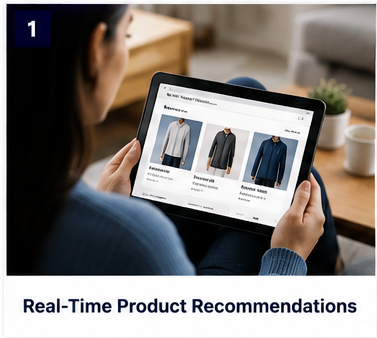
1. AI-Powered Product Recommendations

One of the most valuable AI Automation Use Cases for eCommerce Businesses is personalized product recommendations.

Think about what happens when a customer visits a large online store.

They may have hundreds or thousands of products available. Without guidance, the customer can become overwhelmed and leave without making a purchase.

Want to improve product discovery and create a more personalized shopping journey? Explore professional Shopify Development Services that can help businesses integrate intelligent features and create better online shopping experiences.

AI-powered recommendation systems can analyze relevant information such as:

  • Browsing behavior
  • Previous purchases
  • Product interests
  • Similar customer behavior
  • Frequently viewed products
  • Related products
  • Purchase patterns

The purpose is simple: help customers discover products that are genuinely relevant to their interests.

How AI Product Recommendations Can Support Revenue

A customer looking at running shoes may also need:

  • Sports socks
  • Running apparel
  • Fitness accessories
  • Shoe care products

Instead of expecting the customer to search manually, an intelligent recommendation system can present relevant options during the shopping journey.

This creates opportunities for:

  • Higher average order value
  • Cross-selling
  • Upselling
  • Better product discovery
  • Improved customer experience
  • More repeat purchases

McKinsey has reported that companies that excel at personalization can generate significantly more revenue from those activities than average performers.

The Important Lesson

Product recommendations should not feel random or aggressive.

Customers can quickly lose trust when every page pushes unrelated products.

Effective AI Product Recommendations should answer one important question:

What would genuinely help this customer make a better buying decision?

That approach can turn recommendations from a simple sales feature into a useful part of the customer experience.

Want to improve product discovery and create a more personalized shopping journey? Explore professional eCommerce development solutions that can help integrate intelligent features into your online store.


2. AI Chatbots and Automated Customer Support

A customer is ready to buy a product.

But before completing the order, they have one question.

“Will this product arrive before Friday?”

They cannot find the answer easily.

They send a message.

Nobody responds.

A few minutes later, they leave the website.

The business may never know that a simple unanswered question resulted in a lost sale.

This is one reason AI Chatbots for eCommerce have become an important customer service tool.

AI-powered assistants can help customers with common questions such as:

  • Where is my order?
  • What are your return policies?
  • Is this product available?
  • Which product is suitable for me?
  • How long will delivery take?
  • Can I change my order?
  • What payment options are available?

The goal is not to replace every human interaction.

Some customer situations require a real person.

Instead, AI automation can handle routine questions and direct more complex conversations to the appropriate team member.

IBM identifies customer and order experiences among the important areas where AI is transforming B2B and B2C commerce.

Why This Can Improve Conversions

Customers often need information immediately before making a decision.

If your website can provide clear and useful answers at that moment, you reduce unnecessary friction.

However, trust matters.

A 2025 Clutch study found that consumers see value in AI tools when they help solve real problems, but poorly designed AI experiences can also create frustration.

That means businesses should focus on:

  • Accurate answers
  • Clear escalation to human support
  • Helpful product information
  • Fast responses
  • Honest communication
  • Easy navigation

A chatbot should feel helpful.

It should not trap customers in endless automated conversations.

3. AI Automation for Abandoned Cart Recovery

Cart abandonment is one of the most frustrating problems for online businesses.

A customer visits your website.

After finding a product, they add it to their cart.

They add it to their cart.

They may even begin the checkout process.

But then, they disappear.

Why?

There could be many reasons:

  • They were distracted
  • They wanted to compare prices
  • The checkout process was complicated
  • Delivery information was unclear
  • They were not ready to purchase
  • They experienced a technical issue
  • They simply forgot

DHL’s 2025 eCommerce research found that delivery options can have a major impact on purchase decisions, with missing preferred delivery options contributing to cart abandonment.

This is where AI Automation for eCommerce Marketing can help.

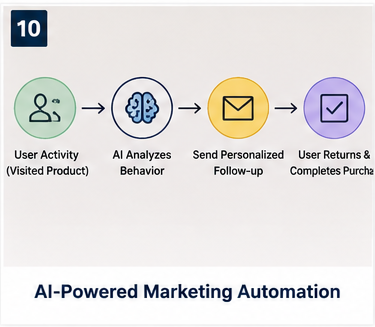
Instead of sending every abandoned cart customer the same message, businesses can create more relevant follow-up strategies based on behavior.

For example:

Customer A

Viewed one product and left quickly.

Customer B

Added three products to the cart.

Customer C

Reached the payment page but did not complete the purchase.

These customers may need different messages.

AI-supported automation can help businesses identify behavioral patterns and trigger relevant communication.

Possible Recovery Actions

  • Personalized email reminders
  • Relevant product suggestions
  • Back-in-stock notifications
  • Limited-time offers
  • Delivery information
  • Product reviews
  • Customer support assistance
  • Alternative product recommendations

The goal should not always be to offer a discount.

Sometimes the customer simply needs more information or reassurance.

A strong abandoned cart strategy can recover opportunities that would otherwise disappear without the business ever understanding why.

Are visitors reaching your store but leaving without buying? Review your customer journey, checkout process, and automation opportunities before spending more money on traffic.

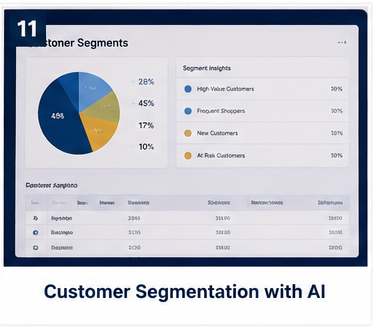
4. AI-Powered Customer Personalization

Personalization is no longer limited to adding a customer’s first name to an email.

Modern eCommerce Personalization can involve understanding where customers are in their buying journey and providing more relevant experiences.

For example:

A first-time visitor may need:

  • Product education
  • Category recommendations
  • Customer reviews
  • Buying guides

A returning customer may need:

  • Related products
  • Reorder reminders
  • Personalized offers
  • New product updates

A high-value customer may expect:

  • Exclusive recommendations
  • Priority support
  • Early product access
  • Relevant loyalty benefits

AI can help businesses analyze patterns and organize customer information to support more relevant experiences.

Furthermore, Contentful’s 2025 review of eCommerce personalization research highlights how strongly retailers connect personalization with business outcomes such as average order value and customer loyalty.

Why Personalization Matters Emotionally

Customers want to feel understood.

They do not want to feel like another number in a database.

When a website helps a customer quickly find something relevant, the experience becomes easier and more comfortable.

That can improve:

  • Customer engagement
  • Product discovery
  • Repeat visits
  • Brand loyalty
  • Purchase confidence
  • Customer lifetime value

The important word is relevant.

More personalization is not automatically better.

Collecting unnecessary data or making recommendations that feel intrusive can damage trust.

Businesses should focus on delivering genuine value while respecting customer privacy.

5. AI Automation for eCommerce Marketing Campaigns

Marketing teams often spend a huge amount of time managing repetitive tasks.

They may manually:

  • Create audience segments
  • Schedule campaigns
  • Analyze results
  • Follow up with leads
  • Track customer behavior
  • Prepare reports
  • Identify inactive customers

This becomes more difficult as an eCommerce business grows.

AI Marketing Automation for eCommerce can help teams organize and respond to customer behavior more efficiently.

For example, automation workflows can support campaigns for:

Welcome Campaigns

New visitors or customers can receive helpful information about:

  • Your brand
  • Popular products
  • Key benefits
  • Buying guides
  • Customer support

Re-Engagement Campaigns

Customers who have not visited recently can receive relevant updates.

Post-Purchase Campaigns

Customers can receive:

  • Product care information
  • Usage guides
  • Related products
  • Review requests
  • Reorder reminders

Product Interest Campaigns

Visitors who show interest in a particular category may receive relevant content or product information.

Why This Can Generate Better Leads

Generic campaigns often fail because they treat every customer the same way.

Better automation helps businesses move toward more relevant communication.

Instead of asking:

“How many emails should we send?”

Businesses should ask:

“What information would help this customer take the next step?”

That mindset can improve both marketing quality and customer trust.


6. AI-Powered Search and Product Discovery

Many eCommerce businesses invest heavily in SEO and paid advertising to bring visitors to their website.

But what happens after visitors arrive?

If customers cannot find what they want, the traffic may produce very little revenue.

This is why AI-Powered Search for eCommerce is becoming increasingly important.

Traditional search often depends heavily on exact keywords.

But customers do not always search that way.

A visitor might search:

  • “Shoes for long-distance running”
  • “Gift for a person who loves coffee”
  • “Affordable laptop for graphic design”
  • “Black dress for a wedding”

AI-supported search can help businesses better understand customer intent and connect searches with relevant products.

According to Clutch research published in 2025, AI-powered search assistants were among the AI tools consumers found useful for eCommerce experiences.

Benefits of Better Product Search

  • Faster product discovery
  • Fewer irrelevant search results
  • Better customer experience
  • More engagement
  • Higher purchase opportunities
  • Reduced frustration

A good search experience can feel almost like having a knowledgeable sales assistant inside your website.

The customer asks what they need.

Your store helps them find it.

That can be a powerful conversion advantage.

7. AI Automation for Inventory Management

Imagine running a successful marketing campaign.

Traffic increases.

Orders begin coming in.

Then customers discover that your most popular product is out of stock.

Or imagine the opposite situation.

Your warehouse is full of products that are not selling.

Both problems can affect profitability.

AI Inventory Management for eCommerce can help businesses analyze sales patterns and support better inventory decisions.

Potential applications include:

  • Demand forecasting
  • Low-stock alerts
  • Product performance analysis
  • Seasonal demand insights
  • Inventory planning
  • Reorder recommendations

The purpose is to help businesses move from reactive decisions to more informed planning.

Why Inventory Problems Hurt Customer Trust

When customers repeatedly see:

Out of Stock

they may not return.

If an item is unavailable, customers may immediately purchase from a competitor.

Inventory management is not just an operational issue.

It directly affects the customer experience and revenue opportunity.

AI can help businesses connect operational data with real customer demand.

However, accurate inventory automation depends on accurate data.

Poor product information or disconnected systems can create unreliable recommendations.

This is why businesses should review their existing data and technology before implementing advanced automation.


8. AI for Sales Forecasting and Business Decisions

Many business decisions are still based on assumptions.

A team may ask:

  • Which product will sell best next month?
  • Which customers are likely to purchase again?
  • Which marketing campaign deserves more investment?
  • Which category is losing demand?
  • When should we reorder inventory?

Without useful data, these decisions can become expensive guesses.

AI Data Analytics for eCommerce can help identify patterns across large amounts of information.

Businesses may analyze:

  • Sales history
  • Customer behavior
  • Product demand
  • Seasonal patterns
  • Marketing performance
  • Website engagement
  • Purchase frequency

The value is not simply having more dashboards.

Most businesses already have plenty of data.

The real challenge is understanding what that data means.

Example

Your analytics report may show:

Product sales increased by 20%.

That sounds positive.

But why did they increase?

Was it because of:

  • Organic traffic?
  • Paid advertising?
  • Email marketing?
  • Seasonal demand?
  • A new product launch?
  • Repeat customers?

AI-supported analysis can help teams identify meaningful patterns and investigate where attention is needed.

Better information can lead to:

  • Smarter marketing decisions
  • Better inventory planning
  • Improved product strategies
  • More efficient budgets
  • Stronger customer retention

Looking for an eCommerce website that supports better data, automation, and customer experiences? A strong technology foundation should come before adding multiple disconnected AI tools.

Enterprise businesses with complex operations and high-volume sales may also require advanced solutions from a professional Shopify Plus Agency to support integrations, automation, and customized eCommerce experiences.

9. AI Automation for Dynamic Pricing and Promotions

Pricing decisions can have a direct impact on conversion and profitability.

Price a product too high, and customers may leave.

Price it too low, and profit margins may suffer.

AI-supported systems can help businesses analyze factors such as:

  • Product demand
  • Customer behavior
  • Inventory levels
  • Seasonal trends
  • Promotional performance
  • Market conditions

This can help teams make more informed pricing decisions.

Important: Automation Needs Human Oversight

Dynamic pricing should not operate without clear business rules.

A poorly configured system could:

  • Create confusing price changes
  • Damage customer trust
  • Reduce margins
  • Cause compliance issues
  • Create inconsistent experiences

The best approach combines intelligent analysis with human business control.

AI can process information quickly.

Business teams still need to decide what is appropriate for their customers and brand.


10. AI Automation for Fraud Detection and Payment Security

Trust is one of the most important factors in eCommerce.

A customer may love your products.

Your website may look professional.

Your marketing may be excellent.

But if customers do not trust your checkout process, they may never complete their purchase.

AI can help businesses identify unusual patterns and potential risks related to transactions and customer activity.

Potential areas include:

  • Suspicious transactions
  • Unusual purchasing behavior
  • Account activity
  • Payment risks
  • Fraud patterns

IBM identifies payments and security as one of the important areas where AI can support modern commerce experiences.

Why Security Supports Revenue

Security is not only about preventing losses.

It can also support:

  • Customer confidence
  • Brand reputation
  • Repeat purchases
  • Safer transactions
  • Long-term customer relationships

However, businesses should never make unrealistic security promises.

AI is one layer of protection.

Strong security also requires:

  • Secure development practices
  • Reliable payment systems
  • Data protection
  • Regular monitoring
  • Access controls
  • Human review

Building a secure online store requires the right technical foundation, reliable integrations, and secure development practices. Professional eCommerce Development Services can help businesses create eCommerce solutions with stronger website architecture and customer experiences.

Trust is built through consistent actions, not marketing claims.


11. AI-Powered Content and Product Information Automation

Large eCommerce stores often manage hundreds or thousands of products.

Each product may require:

  • Titles
  • Descriptions
  • Specifications
  • Categories
  • Tags
  • SEO information
  • FAQs
  • Product attributes

Managing all of this manually can be time-consuming.

AI Content Automation for eCommerce can help teams speed up repetitive content tasks.

However, there is an important warning.

Automatically generated content should not be published without review.

Poor-quality product content can create:

  • Incorrect information
  • Duplicate content
  • Generic descriptions
  • Customer confusion
  • Weak brand messaging
  • SEO problems

AI can help teams prepare and organize content.

But human review remains essential.

A Better Workflow

AI Assistance → Human Review → Brand Editing → Accuracy Check → SEO Optimization → Publishing

This approach can help businesses save time without sacrificing quality.

The best product content should answer real customer questions.

Instead of simply writing:

“High-quality premium product.”

Explain:

  • What problem does it solve?
  • Who is it for?
  • What makes it useful?
  • What are the specifications?
  • How should it be used?
  • What should customers know before buying?

That type of content can support both SEO and conversions.

12. AI Automation for Customer Retention

Getting a new customer is only one part of eCommerce growth.

A more important question is:

What happens after the first purchase?

Does the customer disappear?

Or do they return?

AI automation can help businesses identify opportunities for customer retention.

For example:

Reorder Predictions

Customers who regularly purchase the same product may receive a reminder at an appropriate time.

Personalized Recommendations

Previous purchases can help identify relevant products.

Customer Win-Back Campaigns

Inactive customers can receive relevant communication.

Loyalty Engagement

High-value customers can receive personalized experiences and offers.

Post-Purchase Support

Customers can receive useful product information after buying.

This is where automation can become more than a marketing tool.

It can support the entire customer relationship.

The Revenue Opportunity

A customer who trusts your brand and returns does not need to discover your business from the beginning again.

You already understand part of their journey.

The customer already understands your brand.

That relationship can become extremely valuable over time.


13. AI Automation for Order Processing and Operations

Behind every successful online order, there are many processes.

Depending on the business, these may include:

  • Order confirmation
  • Inventory updates
  • Payment verification
  • Warehouse communication
  • Shipping updates
  • Customer notifications
  • Return processing

Manual operations can create delays and errors.

AI and automation can help businesses connect workflows and reduce repetitive tasks. Professional eCommerce Development Services can help businesses build and integrate the technology needed to support smoother order processing and connected workflows.

Businesses with complex product catalogs, inventory systems, and operational workflows may also benefit from Magento Development Services for building customized eCommerce solution

Example

When an order is placed:

  1. The order is confirmed.
  2. Inventory is updated.
  3. The warehouse receives information.
  4. The customer receives an update.
  5. Shipping information is added.
  6. Post-purchase communication begins.

Automation can help these processes move more efficiently.

This does not mean every business needs a complex AI system.

Sometimes simple workflow automation can solve the biggest problem.

Businesses should start with the areas where manual work is:

  • Repetitive
  • Time-consuming
  • Error-prone
  • High-volume

That is often where automation provides the clearest business value.


14. AI Automation for SEO and Content Opportunities

AI can support SEO teams, but a successful strategy still requires technical expertise, quality content, and a strong understanding of customer search intent. Professional SEO Services can help businesses improve these areas strategically.

Search engines remain an important source of traffic for many eCommerce businesses.

But SEO requires consistent work.

Businesses need to understand:

  • What customers are searching for
  • Which pages need improvement
  • Where technical problems exist
  • Which products need better content
  • Which topics can attract relevant visitors

AI can support SEO teams with:

  • Content research
  • Keyword analysis
  • Topic organization
  • Content improvement
  • Product information
  • Internal linking opportunities
  • Customer question analysis

But AI should not replace SEO strategy.

Publishing hundreds of generic pages will not automatically create meaningful traffic.

The goal should be to create useful pages that answer genuine search intent.

Informational Search Intent

Examples:

  • How to choose the right product
  • Product comparison guides
  • Buying guides
  • How-to content
  • Product education

Commercial Search Intent

Examples:

  • Best products for a specific need
  • Product comparisons
  • Service comparisons
  • Solution pages
  • Development services

A strong eCommerce content strategy should connect these two journeys.

First, help the customer.

Then, make the next step clear.

Need help building an SEO-friendly eCommerce website with strong technical foundations and conversion-focused customer journeys? Professional eCommerce development can help bring technology, performance, SEO, and user experience together.

15. AI Automation for Better Customer Journey Analysis

Customers rarely follow a perfect path.

They may:

  • Discover your brand on Google
  • Visit your website
  • Leave
  • Return through social media
  • Read reviews
  • Subscribe to your newsletter
  • Compare products
  • Purchase later

Understanding this journey can be difficult.

AI can help businesses analyze patterns across different customer interactions.

This can help answer questions such as:

  • Where are customers leaving?
  • Which pages create interest?
  • Which products are frequently compared?
  • What questions appear before purchase?
  • Which marketing channels attract better leads?
  • Where does the buying journey become difficult?

Why This Matters

Businesses often spend more money trying to generate additional traffic.

But sometimes the fastest opportunity is improving what already exists.

If 10,000 visitors arrive every month but customers struggle to:

  • Find products
  • Understand pricing
  • Get answers
  • Complete checkout

then increasing traffic alone may not solve the problem.

AI automation can help identify friction.

Your team can then focus on fixing it.

That is a much smarter approach to growth.

How AI Automation Can Work Like a Digital Sales Assistant

AI automation should not be viewed as a magic solution.

It cannot fix:

  • Poor products
  • Weak customer service
  • Slow websites
  • Confusing navigation
  • Broken checkout processes
  • Bad pricing
  • Inaccurate data

But when implemented correctly, AI automation can support your sales process throughout the customer journey, especially when supported by a strong eCommerce development strategy and the right technology foundation.

Attract

AI can support content, SEO research, audience understanding, and marketing.

Engage

AI can help personalize website experiences and answer customer questions.

Guide

AI-powered search and recommendations can help customers discover relevant products. Professional Shopify Development Services can also help businesses create better product discovery and shopping experiences.

Convert

Automation can reduce friction and support customers during their decision-making process.

Retain

AI can support post-purchase communication, recommendations, and customer engagement.

This is why businesses increasingly view AI Automation for eCommerce as part of their broader digital growth strategy.

The strongest approach is not:

“Where can we add AI?”

The stronger question is:

“Where are we losing customers, wasting time, or missing revenue opportunities?”

Then use automation to solve that problem.

AI Automation Statistics eCommerce Businesses Should Know

Here are several important statistics and trust signals that show why AI and personalization are receiving increased attention in eCommerce:

67% of Global eCommerce Brands

Mastercard reported that 67% of global eCommerce brands consider personalization a top priority and plan to invest more in it.

Nearly Half of Businesses Integrating AI

DHL’s 2025 business research found that almost half of surveyed eCommerce businesses were integrating AI into operations, with B2B usage reported even higher.

AI Tools Are Becoming Part of Shopping Experiences

A 2025 Clutch study found that 81% of consumers found one or more AI tools for eCommerce helpful, particularly when they provided useful answers and simplified tasks.

Personalization Can Have a Major Commercial Impact

McKinsey reported that companies excelling at personalization can generate 40% more revenue from those activities than average players.

AI Shopping Tools Are Increasingly Expected

DHL’s 2025 consumer research reported that 7 in 10 shoppers want AI-driven shopping tools to help guide their decisions.

These numbers do not mean every AI tool will generate instant results.

They do show something important:

Customers and businesses are changing how they shop, sell, search, and interact online.

The businesses that understand where automation genuinely improves the experience may have stronger opportunities to attract, convert, and retain customers.

How to Choose the Right AI Automation Solution for Your eCommerce Business

Do not begin by purchasing the most expensive AI platform.

Start with your problems.

Ask your team:

Where Do We Lose the Most Customers?

Look at:

  • Product pages
  • Website search
  • Cart abandonment
  • Checkout
  • Customer support

Which Tasks Take Too Much Time?

Identify repetitive work such as:

  • Customer questions
  • Order updates
  • Product information
  • Reporting
  • Marketing follow-ups

What Data Do We Already Have?

Review:

  • Customer information
  • Sales data
  • Product data
  • Inventory information
  • Website analytics

What Result Do We Want?

Be specific.

For example:

  • Improve product discovery
  • Reduce support response time
  • Increase repeat purchases
  • Improve inventory planning
  • Recover abandoned carts

Clear goals make it easier to measure whether an AI solution is actually working.

Common AI Automation Mistakes eCommerce Businesses Should Avoid

1. Adding AI Without a Business Goal

Do not add technology simply because competitors are talking about it.

Every implementation should solve a meaningful problem.


2. Ignoring Customer Trust

Customers should understand when they are interacting with automated systems where appropriate.

Trust can be damaged by:

  • Incorrect answers
  • Hidden automation
  • Poor data practices
  • Overly aggressive personalization

3. Automating a Broken Process

Automation does not automatically improve a poor workflow.

First understand the process.

Then improve it.

Then automate where appropriate.


4. Using AI Without Human Review

AI-generated information can be inaccurate.

This is especially important for:

  • Product information
  • Pricing
  • Customer support
  • Legal information
  • Security decisions

Human oversight remains important.


5. Measuring Activity Instead of Results

Do not celebrate AI implementation just because a tool is live.

Measure outcomes such as:

  • Conversion rate
  • Customer satisfaction
  • Average order value
  • Repeat purchases
  • Support resolution time
  • Revenue
  • Cost savings

Business results matter more than technology buzz.

Build an AI-Ready eCommerce Website Before Adding More Tools

There is another important point many businesses overlook.

Your AI tools are only as useful as your existing eCommerce foundation.

If your website has:

  • Slow loading times
  • Poor mobile usability
  • Disconnected systems
  • Weak product data
  • Confusing navigation
  • Technical errors

then adding multiple AI tools may create more complexity.

A strong eCommerce Development Strategy supported by professional eCommerce Development Services should consider:

  • Website performance
  • User experience
  • Mobile responsiveness
  • Platform architecture
  • Product management
  • Integrations
  • Security
  • SEO
  • Automation readiness

AI automation works best when it connects with a well-planned digital ecosystem

FAQ Section for SEO

Frequently Asked Questions About AI Automation in eCommerce

1. What is AI automation in eCommerce?

AI automation in eCommerce uses artificial intelligence and automated technology to support tasks such as product recommendations, customer service, marketing, inventory management, data analysis, and customer personalization. It helps businesses reduce repetitive work and create more relevant customer experiences.

2. How can AI automation help eCommerce businesses?

AI automation can help eCommerce businesses improve customer support, personalize shopping experiences, automate marketing activities, improve product discovery, support inventory planning, and analyze customer behavior. When implemented correctly, it can also help identify opportunities to improve conversions and customer retention.

3. What are the most common AI automation use cases for eCommerce?

Common AI automation use cases include AI-powered product recommendations, chatbots, personalized marketing, abandoned cart recovery, inventory management, product search, sales forecasting, fraud detection, content automation, and customer journey analysis.

4. Can AI automation improve eCommerce sales?

AI automation can support sales by helping businesses improve product discovery, personalize customer experiences, respond to customer questions faster, recover abandoned carts, and provide more relevant marketing communication. Results depend on the business strategy, website experience, data quality, and how automation is implemented.

5. How does AI help with eCommerce customer service?

AI-powered chatbots and automated support tools can help answer common customer questions, provide order updates, assist with product information, and offer support outside normal business hours. Complex questions can still be transferred to human support teams.

6. Is AI automation suitable for small eCommerce businesses?

Yes. Small eCommerce businesses can begin with simple automation such as chat support, marketing workflows, product recommendations, and customer follow-ups. Businesses should start with a clear problem instead of implementing multiple tools at once.

7. What should businesses consider before implementing AI automation?

Before implementing AI automation, businesses should review their website, customer journey, existing technology, data quality, business goals, integrations, and security requirements. Starting with a clear problem makes it easier to select the right solution.

Ready to Turn Your eCommerce Website Into a Better Lead and Revenue Channel?

Your website should do more than display products.

It should help your business:

  • Attract relevant traffic
  • Answer customer questions
  • Guide product discovery
  • Capture leads
  • Support buying decisions
  • Reduce unnecessary manual work
  • Encourage repeat purchases

The right combination of eCommerce Development Services, automation, SEO, and customer experience can help create a stronger digital foundation for long-term business growth.

If your business is exploring AI automation, personalization, advanced integrations, or improvements to your eCommerce customer journey, start by identifying where your current website is losing opportunities.

A professional eCommerce strategy can help you connect technology decisions with real business goals.

👉 Looking to improve your online store? Contact our experienced eCommerce development team to discuss your website requirements, automation opportunities, integrations, and conversion challenges.

Final Thoughts: AI Automation Should Solve Real eCommerce Problems

The future of eCommerce will not be won simply by businesses that use the most AI tools.

It will be shaped by businesses that understand their customers and remove unnecessary friction from the buying journey.

The most valuable AI Automation Use Cases for eCommerce Businesses include:

  1. AI-Powered Product Recommendations
  2. AI Chatbots and Customer Support
  3. Abandoned Cart Automation
  4. Customer Personalization
  5. AI Marketing Automation
  6. AI-Powered Product Search
  7. Inventory Management
  8. Sales Forecasting
  9. Dynamic Pricing Support
  10. Fraud Detection
  11. Content and Product Information Automation
  12. Customer Retention
  13. Order Processing Automation
  14. SEO and Content Opportunities
  15. Customer Journey Analysis

The opportunity is significant, but businesses should avoid treating AI as a shortcut.

Start with a real problem.

Understand your customers.

Use reliable data.

Keep humans involved where judgment matters.

Measure commercial results.

Most importantly, build technology around the customer experience.

Because at the end of the day, the purpose of AI Automation in eCommerce is not to make a business look more advanced.

It is to help businesses serve customers better, create more efficient operations, generate stronger leads, improve conversions, and build lasting customer relationships.

Want to understand how AI automation is changing the future of online business? Read our complete guide on how AI automation is helping eCommerce businesses drive digital growth and discover how intelligent technology can support your next stage of digital success.

AI-Powered Personalization in E-commerce: How AI Is Creating Smarter Shopping Experiences

Imagine a customer visits an online store looking for running shoes.

Instead of seeing the same products displayed to every visitor, the store immediately understands that this shopper previously viewed lightweight shoes, prefers a particular price range, and regularly purchases fitness products.

The homepage changes.

The product recommendations change.

The search results become more relevant.

Even the promotional message can change according to the shopper’s interests.

That is the difference between a traditional online store and an AI-powered personalized e-commerce experience.

Today, customers have thousands of products and hundreds of online stores to choose from. If they cannot quickly find something relevant, they can leave with a single click. For e-commerce businesses, this creates a serious challenge: attracting visitors is no longer enough. Businesses need to understand what each shopper wants and make the buying journey easier.

This is where AI-powered personalization in e-commerce becomes commercially valuable.

AI can analyze browsing behavior, previous purchases, product searches, cart activity, customer preferences, and other signals to deliver more relevant experiences. When implemented correctly, personalization can help businesses improve engagement, increase conversions, encourage repeat purchases, and generate more revenue from existing traffic.

Why E-commerce Personalization Has Become a Revenue Priority

The biggest problem facing many online stores is not always a lack of traffic.

It is irrelevant traffic and poor customer experiences.

A visitor may arrive through Google, an advertisement, social media, or an AI assistant. But if the website shows the same products, offers, and content to everyone, the customer still has to do all the work.

That creates friction.

A customer may think:

  • “Which product is right for me?”
  • “Is there a better option?”
  • “Why am I seeing products I don’t need?”
  • “Does this store understand what I’m looking for?”
  • “Should I compare this with another website?”

Every unanswered question increases the possibility of losing the sale.

Personalization addresses this problem by making the shopping experience more relevant to the individual.

Adobe research has found that 76% of consumers are more likely to consider purchasing from brands that personalize the customer experience. The same research identifies relevant recommendations, tailored messaging, targeted promotions, and behavior-based communication as important personalized experiences.

For an e-commerce business, that matters because personalization is not simply about making a website look smarter.

It is about removing obstacles between customer intent and purchase.

What Is AI-Powered Personalization in E-commerce?

AI-powered personalization uses artificial intelligence and customer data to adapt an online shopping experience according to individual shopper behavior and preferences.

Traditional personalization might use simple rules.

For example:

“If a customer buys men’s shoes, show men’s socks.”

AI-powered personalization can go much further.

It can identify patterns across thousands or millions of interactions and use those patterns to predict what a particular customer may want next.

An AI system can consider signals such as:

  • Products viewed
  • Search queries
  • Previous purchases
  • Cart activity
  • Purchase frequency
  • Product categories visited
  • Price preferences
  • Location
  • Device behavior
  • Customer lifecycle stage
  • Engagement with emails
  • Products frequently purchased together

The result is a shopping experience that can adapt as the customer interacts with the website.

Someone visiting for the first time may receive popular recommendations.

A returning customer may see products related to previous purchases.

A high-intent shopper may receive comparisons or complementary products.

A loyal customer may see personalized offers based on their buying history.

This is why e-commerce AI solutions are becoming increasingly important for businesses that want to turn customer data into practical buying experiences.

The Real Business Problem: Customers Do Not Want to Search Forever

Think about a physical retail store.

If a customer walks in and says, “I need a laptop for video editing under $1,500,” a good salesperson does not point toward an enormous warehouse and say, “Everything is over there.”

Ask relevant questions.

Narrow down the choices.

Explain the key differences.

They recommend suitable products.

Help the customer make an informed decision.

Online stores need to provide a similar experience digitally.

The difference is that an AI system can help perform this process across thousands of customers simultaneously.

That makes AI e-commerce personalization particularly valuable for large product catalogs.

Instead of forcing every shopper to navigate hundreds of categories and product pages, intelligent systems can help surface the products most relevant to that individual.

And when customers find relevant products faster, the path toward conversion becomes much shorter.

10 Ways AI Personalization Can Increase E-commerce Revenue

1. Personalized Product Recommendations

Product recommendations are one of the most visible applications of AI personalization.

Instead of displaying random or universally popular products, AI can recommend products based on individual behavior and relationships between products.

For example:

A customer purchases a camera.

The system may recommend:

  • Compatible lenses
  • Memory cards
  • Camera bags
  • Tripods
  • Extra batteries

The recommendation is not simply an advertisement.

It is connected to the customer’s purchase intent.

Adobe has reported that approximately 30% of e-commerce revenue can come through product recommendation paths, highlighting why personalized product discovery deserves serious attention from online retailers.

For businesses, this can create opportunities to increase:

Average Order Value (AOV)

and

Revenue per Customer.

Want better product discovery on your store?

A professionally developed recommendation experience can connect customer behavior with relevant products without making the website feel complicated.

CTA: If your store has a large catalog and customers struggle to find the right products, consider an AI-powered e-commerce development solution designed around your customer journey.

2. Smarter E-commerce Search

Search is one of the most important moments in an online shopping journey.

A customer who searches for:

“black running shoes for women under $100”

does not necessarily want pages of products containing those exact words.

They want products that match the meaning behind the search.

AI can help interpret natural-language searches, customer preferences, previous behavior, and product attributes to provide more relevant results.

This can reduce the frustration caused by irrelevant search results.

Adobe has reported that users of its AI-powered Live Search saw a 15% lift in conversion rates, while its product recommendation technology has been associated with a 25% increase in average order value for Adobe Commerce users.

That makes intelligent search more than a convenience feature.

It can become a conversion tool eCommerce website development

3. Personalized Offers That Encourage Purchases

Not every customer responds to the same offer.

A first-time visitor may respond to free shipping.

A repeat customer may be more interested in loyalty rewards.

A price-sensitive shopper may respond to a discount.

Another customer may not need a discount at all.

AI can help identify these differences and support more relevant offers.

Adobe research found that 61% of consumers surveyed said personalized promotions make them more likely to purchase, while 67% said they wanted personalized promotions or offers based on their spending habits.

The commercial opportunity is clear:

Instead of discounting products for everyone, businesses can make promotions more relevant to specific customer groups.

That can help protect margins while improving the likelihood of conversion.


4. Reduce Cart Abandonment With Behavioral Personalization

A customer adds a product to the cart.

Then they leave.

For an e-commerce business, this is one of the most frustrating moments in the sales funnel.

The customer showed buying intent, but something interrupted the purchase.

AI can analyze behavioral patterns and help businesses understand when shoppers are at risk of abandoning their carts.

Personalized follow-ups can then be used through channels such as:

  • Email
  • SMS
  • Push notifications
  • On-site messages
  • Personalized recommendations

The message can also be more relevant.

Instead of:

“You left something in your cart.”

A personalized experience could remind the shopper about the exact product, relevant benefits, availability, or complementary products.

The objective is not to repeatedly chase customers.

It is to remove the reason they hesitated.

5. Personalized Experiences for Returning Customers

Getting the first purchase is only part of the e-commerce journey.

The bigger opportunity can come from encouraging customers to return.

AI can help businesses recognize returning shoppers and personalize the experience according to their previous interactions.

For example, an online beauty store may recognize that a customer frequently purchases skincare products.

When that customer returns, the website can prioritize:

  • Recently purchased products
  • Replenishment reminders
  • Compatible products
  • New products within the same category
  • Relevant promotions

This creates a sense that the store remembers the customer.

And that feeling matters.

Adobe’s research shows that consumers increasingly expect brands to anticipate their needs with relevant information or offers. In Adobe’s 2025 retail research, 69% of consumers said anticipating their needs with relevant offers or information at the right moment was important, while only 35% felt brands were delivering effectively.

That gap represents an opportunity for e-commerce businesses willing to improve personalization.

6. AI Can Turn Customer Data Into Buying Signals

Most e-commerce businesses already have enormous amounts of customer data.

The problem is knowing what to do with it.

A store may have information about:

  • Thousands of purchases
  • Millions of product views
  • Search activity
  • Customer reviews
  • Cart events
  • Email interactions
  • Repeat purchases
  • Product returns

Without intelligent analysis, much of that information remains underused.

AI can identify patterns that are difficult to detect manually.

For example:

Customers who purchase Product A may frequently purchase Product B within 30 days.

Repeated views of Product C can indicate strong purchase intent, especially when customers receive additional product information.

Customers who purchase a particular product may need a replacement after a certain period.

These insights can support more intelligent marketing and merchandising decisions.

The result is a move from guessing what customers want toward using behavioral evidence to make better decisions.

7. Personalized Content Can Improve Customer Engagement

Personalization is not limited to products.

It can also apply to content.

An e-commerce website can personalize:

  • Homepage content
  • Product descriptions
  • Promotional messages
  • Email campaigns
  • Recommendations
  • Educational content
  • Product comparisons
  • Loyalty messages

For example, a customer interested in premium products may see content emphasizing quality and long-term value.

A price-conscious customer may see savings, bundles, or value-focused messaging.

The product can remain the same.

The message changes according to customer intent.

This is where AI-powered content and personalization can work together.


8. AI Can Help Create Better Cross-Selling and Upselling

Cross-selling is about recommending complementary products.

Upselling encourages customers to consider a higher-value option.

The challenge is relevance.

If a customer buys a laptop and immediately sees unrelated kitchen products, the recommendation feels random.

But if the customer sees:

  • Laptop accessories
  • A larger storage option
  • A compatible monitor
  • A laptop bag
  • Extended warranty

the recommendation makes sense.

AI can analyze relationships between products and customer behavior to determine which recommendations are more relevant.

The objective should not be:

“How many products can we show?”

It should be:

“Which additional product genuinely makes this purchase more useful?”

That distinction creates a better customer experience and a stronger commercial opportunity.

9. AI-Powered Personalization Can Improve Customer Experience Across Channels

Customers rarely interact with a brand through only one channel.

They may discover a product through Google, research it on a website, see an advertisement on social media, receive an email, and eventually purchase through a mobile device.

If every interaction feels disconnected, the customer experience becomes frustrating.

Adobe’s 2025 retail research found that 75% of consumers considered a consistent experience across websites, mobile apps, email, social media, and physical stores important, but only 41% said brands were delivering effectively.

AI can help connect customer signals across these touchpoints.

A shopper who viewed a product on one device may later receive relevant recommendations.

A customer who already purchased an item should not continue receiving aggressive acquisition messages for the same product.

A returning shopper should see content that reflects their relationship with the brand.

This creates a more connected customer journey.


10. AI Can Help E-commerce Businesses Prepare for AI-Led Shopping

There is another important reason businesses should invest in personalization.

Customers themselves are starting to use AI during the buying journey.

Adobe reported in 2025 that generative AI traffic to U.S. retail websites increased 4,700% year over year in July 2025. Its research also found that 38% of surveyed consumers had used generative AI for online shopping, with 52% planning to do so that year.

More recent Adobe research shows the trend continuing: 86% of shoppers use AI during retail journeys, while integrated AI experiences such as “recommended for you” sections and image search are already used by 52% of shoppers surveyed.

This changes the way businesses should think about digital commerce.

The customer may no longer begin with:

“Which website should I visit?”

They may begin with:

“Which product is best for my needs?”

and ask an AI assistant to help them decide.

That means e-commerce businesses need strong product information, structured data, useful content, relevant recommendations, and technically sound websites that can support increasingly intelligent shopping experiences.

How AI Personalization Moves Customers Through the Sales Funnel

A strong personalization strategy can support every stage of the buying journey.

Awareness

AI helps businesses deliver more relevant content and product discovery experiences.

Consideration

Personalized recommendations, comparisons, reviews, and educational content help shoppers evaluate options.

Decision

Relevant offers, product information, availability, and personalized messaging can reduce hesitation.

Purchase

AI can recommend complementary products and improve the checkout journey.

Retention

Post-purchase recommendations and replenishment reminders can encourage repeat purchases.

Loyalty

Customer behavior can help businesses create more relevant loyalty experiences.

This is why AI e-commerce personalization should not be treated as a single website feature.

It should be considered part of the complete customer journey.

What Data Does AI Need for E-commerce Personalization?

AI personalization works best when businesses have useful customer and product data.

Common inputs include:

Behavioral data:
Pages viewed, searches, clicks, carts, and purchases.

Product data:
Categories, attributes, prices, availability, brands, and product relationships.

Customer data:
Purchase history, preferences, loyalty information, and customer segments.

Contextual data:
Device, location, time, referral source, and current browsing session.

Engagement data:
Email clicks, promotional interactions, reviews, and previous campaign activity.

The goal is not to collect every possible piece of information.

The goal is to use appropriate data responsibly to provide a better experience.

Privacy and Trust: The Part E-commerce Businesses Cannot Ignore

Personalization can increase relevance, but poor implementation can damage trust.

Customers want businesses to understand their needs without feeling that their privacy has been ignored.

Adobe’s 2025 retail research found that 87% of consumers considered responsible and secure handling of personal data important, while only 46% believed brands were delivering effectively on that expectation.

That means businesses need to think about:

  • Data security
  • Consent
  • Transparency
  • Responsible AI usage
  • Data minimization
  • Clear privacy policies
  • Appropriate personalization

Good personalization should feel helpful.

Bad personalization can feel intrusive.

The difference is trust.

Common E-commerce Personalization Mistakes

AI does not automatically create a better shopping experience.

Poor implementation can produce the opposite result.

Showing Too Many Recommendations

More recommendations do not necessarily mean more sales.

Customers need useful choices, not an endless product wall.

Using Old Customer Data

If recommendations are based on outdated behavior, customers may receive irrelevant products.

Personalizing Without a Strategy

Installing an AI tool without defining the business objective can create complexity without meaningful results.

Ignoring Product Data Quality

AI cannot produce consistently relevant recommendations when product information is incomplete, inconsistent, or poorly structured.

Forgetting Mobile Shoppers

A personalization strategy that works on desktop but creates friction on mobile can lose potential customers.

Treating AI as a Replacement for Customer Understanding

AI should support business decisions, not replace human judgment.

The strongest results come from combining technology with a clear understanding of customers and business goals.

How to Build an AI-Powered Personalized E-commerce Store

Businesses considering personalization should start with the customer journey rather than immediately choosing an AI tool.

Step 1: Identify the Revenue Problem

Determine where customers are leaving.

Is the problem:

  • Poor product discovery?
  • Low conversion?
  • Cart abandonment?
  • Low average order value?
  • Few repeat purchases?
  • Weak customer engagement?

Step 2: Analyze Available Data

Review customer, product, behavioral, and transaction data.

Step 3: Choose High-Value Personalization Opportunities

Start with areas where personalization can have a measurable commercial impact.

Examples include:

  • Product recommendations
  • Intelligent search
  • Personalized offers
  • Cross-selling
  • Email personalization
  • Replenishment reminders

Step 4: Integrate AI With the E-commerce Platform

The AI layer should work with the website, product catalog, customer data, analytics, eCommerce Development Services, CRM, and marketing systems.

Step 5: Test Customer Experiences

Do not assume a personalization strategy will work simply because it uses AI.

Test different recommendations, messages, layouts, and offers.

Step 6: Measure Business Results

Track metrics such as:

  • Conversion rate
  • Average order value
  • Revenue per visitor
  • Repeat purchase rate
  • Customer lifetime value
  • Cart abandonment
  • Engagement
  • Revenue from recommendations

This turns personalization from a technology project into a measurable business initiative.

AI Personalization Is Becoming a Competitive Advantage

The e-commerce businesses that understand personalization early can create an experience that feels significantly more helpful than a generic online store.

Customers do not want to spend 20 minutes searching through products that do not match their needs.

They want relevant options.

Expect brands to remember their preferences.

They want quick answers.

Value useful and relevant recommendations.

And increasingly, they expect digital experiences to understand context.

Adobe’s recent research shows that shoppers are already using AI as part of their buying journeys, with AI-driven shopping becoming increasingly integrated into product research and discovery.

For e-commerce businesses, the message is straightforward:

Personalization is no longer simply a “nice-to-have” website feature. It is becoming part of the way customers discover, evaluate, and purchase products online.

Why Businesses Should Invest in AI-Powered E-commerce Development

Buying an AI tool is easy.

Creating a personalized e-commerce experience that actually contributes to revenue is much harder.

The technology needs to work with the store’s architecture, product catalog, customer data, search functionality, analytics, marketing systems, and conversion strategy.

This is where choosing the right eCommerce Development Company can make a significant difference.

A professional development team can help businesses evaluate their existing e-commerce infrastructure, identify personalization opportunities, integrate AI capabilities, improve product discovery, and create a smoother buying journey.

Instead of adding AI simply because it is trending, businesses can focus on practical applications that support measurable commercial goals.

CTA: Planning to make your online store more intelligent and customer-focused? Explore ourContact an e-commerce development team to discuss how AI, personalization, intelligent search, and modern e-commerce technology can be integrated into your store.

The Future of E-commerce Is Personal

The next generation of online shopping will not be built around showing every customer the same storefront.

It will be built around relevance.

A shopper searching for a specific product should find the right options faster.

A returning customer should see products connected to their interests.

A customer ready to buy should receive information that removes hesitation.

And a loyal customer should receive experiences that recognize their relationship with the brand.

AI makes this level of personalization more achievable by turning customer behavior and product information into actionable recommendations.

But the technology itself is not the final objective.

The real objective is more useful shopping experiences, stronger customer relationships, better conversions, and more revenue.

For e-commerce businesses ready to move beyond generic shopping experiences, AI-powered personalization can become one of the most valuable components of a modern digital commerce strategy.

Ready to build a smarter e-commerce experience? Contact an experienced e-commerce development team and turn customer data into more relevant shopping journeys and stronger business results.

Enquiry Now

When We Work Together

We can create something incredible

arrow
HQ INDIA
HQ INDIA
C-31, Milap Nagar,
Uttam Nagar, New Delhi,
Delhi 110059
USA
USA
6715 Backlick Rd Suite 202
Springfield,
VA 22150, USA
AUSTRALIA
AUSTRALIA
2/51, Lane Cres,
Reservoir, VIC
3037, Australia
CANADA
CANADA
61 Payzant Bog Road, Falmouth, NS, B0P 1P0, CANADA
UK
UK
3rd Floor, 131 City Road, London, EC1V 2NX, United Kingdom
UAE
UAE
Boutik Mall, Al Reem Island - Abu Dhabi, UAE
X

Let Us Call You Back

  • India+91
  • United States+1
  • United Arab Emirates+971

Your phone number is kept confidential
and not shared with others.