AI-Powered Personalization in E-commerce: How AI Is Creating Smarter Shopping Experiences

Imagine a customer visits an online store looking for running shoes.

Instead of seeing the same products displayed to every visitor, the store immediately understands that this shopper previously viewed lightweight shoes, prefers a particular price range, and regularly purchases fitness products.

The homepage changes.

The product recommendations change.

The search results become more relevant.

Even the promotional message can change according to the shopper’s interests.

That is the difference between a traditional online store and an AI-powered personalized e-commerce experience.

Today, customers have thousands of products and hundreds of online stores to choose from. If they cannot quickly find something relevant, they can leave with a single click. For e-commerce businesses, this creates a serious challenge: attracting visitors is no longer enough. Businesses need to understand what each shopper wants and make the buying journey easier.

This is where AI-powered personalization in e-commerce becomes commercially valuable.

AI can analyze browsing behavior, previous purchases, product searches, cart activity, customer preferences, and other signals to deliver more relevant experiences. When implemented correctly, personalization can help businesses improve engagement, increase conversions, encourage repeat purchases, and generate more revenue from existing traffic.

Why E-commerce Personalization Has Become a Revenue Priority

The biggest problem facing many online stores is not always a lack of traffic.

It is irrelevant traffic and poor customer experiences.

A visitor may arrive through Google, an advertisement, social media, or an AI assistant. But if the website shows the same products, offers, and content to everyone, the customer still has to do all the work.

That creates friction.

A customer may think:

  • “Which product is right for me?”
  • “Is there a better option?”
  • “Why am I seeing products I don’t need?”
  • “Does this store understand what I’m looking for?”
  • “Should I compare this with another website?”

Every unanswered question increases the possibility of losing the sale.

Personalization addresses this problem by making the shopping experience more relevant to the individual.

Adobe research has found that 76% of consumers are more likely to consider purchasing from brands that personalize the customer experience. The same research identifies relevant recommendations, tailored messaging, targeted promotions, and behavior-based communication as important personalized experiences.

For an e-commerce business, that matters because personalization is not simply about making a website look smarter.

It is about removing obstacles between customer intent and purchase.

What Is AI-Powered Personalization in E-commerce?

AI-powered personalization uses artificial intelligence and customer data to adapt an online shopping experience according to individual shopper behavior and preferences.

Traditional personalization might use simple rules.

For example:

“If a customer buys men’s shoes, show men’s socks.”

AI-powered personalization can go much further.

It can identify patterns across thousands or millions of interactions and use those patterns to predict what a particular customer may want next.

An AI system can consider signals such as:

  • Products viewed
  • Search queries
  • Previous purchases
  • Cart activity
  • Purchase frequency
  • Product categories visited
  • Price preferences
  • Location
  • Device behavior
  • Customer lifecycle stage
  • Engagement with emails
  • Products frequently purchased together

The result is a shopping experience that can adapt as the customer interacts with the website.

Someone visiting for the first time may receive popular recommendations.

A returning customer may see products related to previous purchases.

A high-intent shopper may receive comparisons or complementary products.

A loyal customer may see personalized offers based on their buying history.

This is why e-commerce AI solutions are becoming increasingly important for businesses that want to turn customer data into practical buying experiences.

The Real Business Problem: Customers Do Not Want to Search Forever

Think about a physical retail store.

If a customer walks in and says, “I need a laptop for video editing under $1,500,” a good salesperson does not point toward an enormous warehouse and say, “Everything is over there.”

Ask relevant questions.

Narrow down the choices.

Explain the key differences.

They recommend suitable products.

Help the customer make an informed decision.

Online stores need to provide a similar experience digitally.

The difference is that an AI system can help perform this process across thousands of customers simultaneously.

That makes AI e-commerce personalization particularly valuable for large product catalogs.

Instead of forcing every shopper to navigate hundreds of categories and product pages, intelligent systems can help surface the products most relevant to that individual.

And when customers find relevant products faster, the path toward conversion becomes much shorter.

10 Ways AI Personalization Can Increase E-commerce Revenue

1. Personalized Product Recommendations

Product recommendations are one of the most visible applications of AI personalization.

Instead of displaying random or universally popular products, AI can recommend products based on individual behavior and relationships between products.

For example:

A customer purchases a camera.

The system may recommend:

  • Compatible lenses
  • Memory cards
  • Camera bags
  • Tripods
  • Extra batteries

The recommendation is not simply an advertisement.

It is connected to the customer’s purchase intent.

Adobe has reported that approximately 30% of e-commerce revenue can come through product recommendation paths, highlighting why personalized product discovery deserves serious attention from online retailers.

For businesses, this can create opportunities to increase:

Average Order Value (AOV)

and

Revenue per Customer.

Want better product discovery on your store?

A professionally developed recommendation experience can connect customer behavior with relevant products without making the website feel complicated.

CTA: If your store has a large catalog and customers struggle to find the right products, consider an AI-powered e-commerce development solution designed around your customer journey.

2. Smarter E-commerce Search

Search is one of the most important moments in an online shopping journey.

A customer who searches for:

“black running shoes for women under $100”

does not necessarily want pages of products containing those exact words.

They want products that match the meaning behind the search.

AI can help interpret natural-language searches, customer preferences, previous behavior, and product attributes to provide more relevant results.

This can reduce the frustration caused by irrelevant search results.

Adobe has reported that users of its AI-powered Live Search saw a 15% lift in conversion rates, while its product recommendation technology has been associated with a 25% increase in average order value for Adobe Commerce users.

That makes intelligent search more than a convenience feature.

It can become a conversion tool eCommerce website development

3. Personalized Offers That Encourage Purchases

Not every customer responds to the same offer.

A first-time visitor may respond to free shipping.

A repeat customer may be more interested in loyalty rewards.

A price-sensitive shopper may respond to a discount.

Another customer may not need a discount at all.

AI can help identify these differences and support more relevant offers.

Adobe research found that 61% of consumers surveyed said personalized promotions make them more likely to purchase, while 67% said they wanted personalized promotions or offers based on their spending habits.

The commercial opportunity is clear:

Instead of discounting products for everyone, businesses can make promotions more relevant to specific customer groups.

That can help protect margins while improving the likelihood of conversion.


4. Reduce Cart Abandonment With Behavioral Personalization

A customer adds a product to the cart.

Then they leave.

For an e-commerce business, this is one of the most frustrating moments in the sales funnel.

The customer showed buying intent, but something interrupted the purchase.

AI can analyze behavioral patterns and help businesses understand when shoppers are at risk of abandoning their carts.

Personalized follow-ups can then be used through channels such as:

  • Email
  • SMS
  • Push notifications
  • On-site messages
  • Personalized recommendations

The message can also be more relevant.

Instead of:

“You left something in your cart.”

A personalized experience could remind the shopper about the exact product, relevant benefits, availability, or complementary products.

The objective is not to repeatedly chase customers.

It is to remove the reason they hesitated.

5. Personalized Experiences for Returning Customers

Getting the first purchase is only part of the e-commerce journey.

The bigger opportunity can come from encouraging customers to return.

AI can help businesses recognize returning shoppers and personalize the experience according to their previous interactions.

For example, an online beauty store may recognize that a customer frequently purchases skincare products.

When that customer returns, the website can prioritize:

  • Recently purchased products
  • Replenishment reminders
  • Compatible products
  • New products within the same category
  • Relevant promotions

This creates a sense that the store remembers the customer.

And that feeling matters.

Adobe’s research shows that consumers increasingly expect brands to anticipate their needs with relevant information or offers. In Adobe’s 2025 retail research, 69% of consumers said anticipating their needs with relevant offers or information at the right moment was important, while only 35% felt brands were delivering effectively.

That gap represents an opportunity for e-commerce businesses willing to improve personalization.

6. AI Can Turn Customer Data Into Buying Signals

Most e-commerce businesses already have enormous amounts of customer data.

The problem is knowing what to do with it.

A store may have information about:

  • Thousands of purchases
  • Millions of product views
  • Search activity
  • Customer reviews
  • Cart events
  • Email interactions
  • Repeat purchases
  • Product returns

Without intelligent analysis, much of that information remains underused.

AI can identify patterns that are difficult to detect manually.

For example:

Customers who purchase Product A may frequently purchase Product B within 30 days.

Repeated views of Product C can indicate strong purchase intent, especially when customers receive additional product information.

Customers who purchase a particular product may need a replacement after a certain period.

These insights can support more intelligent marketing and merchandising decisions.

The result is a move from guessing what customers want toward using behavioral evidence to make better decisions.

7. Personalized Content Can Improve Customer Engagement

Personalization is not limited to products.

It can also apply to content.

An e-commerce website can personalize:

  • Homepage content
  • Product descriptions
  • Promotional messages
  • Email campaigns
  • Recommendations
  • Educational content
  • Product comparisons
  • Loyalty messages

For example, a customer interested in premium products may see content emphasizing quality and long-term value.

A price-conscious customer may see savings, bundles, or value-focused messaging.

The product can remain the same.

The message changes according to customer intent.

This is where AI-powered content and personalization can work together.


8. AI Can Help Create Better Cross-Selling and Upselling

Cross-selling is about recommending complementary products.

Upselling encourages customers to consider a higher-value option.

The challenge is relevance.

If a customer buys a laptop and immediately sees unrelated kitchen products, the recommendation feels random.

But if the customer sees:

  • Laptop accessories
  • A larger storage option
  • A compatible monitor
  • A laptop bag
  • Extended warranty

the recommendation makes sense.

AI can analyze relationships between products and customer behavior to determine which recommendations are more relevant.

The objective should not be:

“How many products can we show?”

It should be:

“Which additional product genuinely makes this purchase more useful?”

That distinction creates a better customer experience and a stronger commercial opportunity.

9. AI-Powered Personalization Can Improve Customer Experience Across Channels

Customers rarely interact with a brand through only one channel.

They may discover a product through Google, research it on a website, see an advertisement on social media, receive an email, and eventually purchase through a mobile device.

If every interaction feels disconnected, the customer experience becomes frustrating.

Adobe’s 2025 retail research found that 75% of consumers considered a consistent experience across websites, mobile apps, email, social media, and physical stores important, but only 41% said brands were delivering effectively.

AI can help connect customer signals across these touchpoints.

A shopper who viewed a product on one device may later receive relevant recommendations.

A customer who already purchased an item should not continue receiving aggressive acquisition messages for the same product.

A returning shopper should see content that reflects their relationship with the brand.

This creates a more connected customer journey.


10. AI Can Help E-commerce Businesses Prepare for AI-Led Shopping

There is another important reason businesses should invest in personalization.

Customers themselves are starting to use AI during the buying journey.

Adobe reported in 2025 that generative AI traffic to U.S. retail websites increased 4,700% year over year in July 2025. Its research also found that 38% of surveyed consumers had used generative AI for online shopping, with 52% planning to do so that year.

More recent Adobe research shows the trend continuing: 86% of shoppers use AI during retail journeys, while integrated AI experiences such as “recommended for you” sections and image search are already used by 52% of shoppers surveyed.

This changes the way businesses should think about digital commerce.

The customer may no longer begin with:

“Which website should I visit?”

They may begin with:

“Which product is best for my needs?”

and ask an AI assistant to help them decide.

That means e-commerce businesses need strong product information, structured data, useful content, relevant recommendations, and technically sound websites that can support increasingly intelligent shopping experiences.

How AI Personalization Moves Customers Through the Sales Funnel
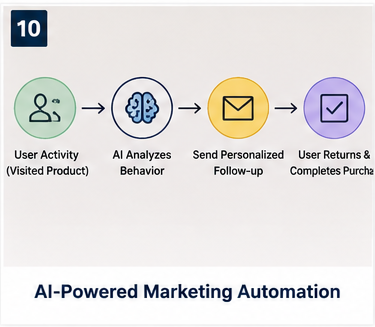
A strong personalization strategy can support every stage of the buying journey.

Awareness

AI helps businesses deliver more relevant content and product discovery experiences.

Consideration

Personalized recommendations, comparisons, reviews, and educational content help shoppers evaluate options.

Decision

Relevant offers, product information, availability, and personalized messaging can reduce hesitation.

Purchase

AI can recommend complementary products and improve the checkout journey.

Retention

Post-purchase recommendations and replenishment reminders can encourage repeat purchases.

Loyalty

Customer behavior can help businesses create more relevant loyalty experiences.

This is why AI e-commerce personalization should not be treated as a single website feature.

It should be considered part of the complete customer journey.

What Data Does AI Need for E-commerce Personalization?

AI personalization works best when businesses have useful customer and product data.
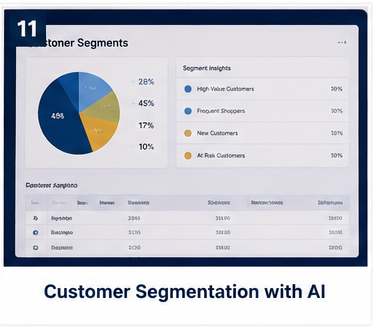
Common inputs include:

Behavioral data:
Pages viewed, searches, clicks, carts, and purchases.

Product data:
Categories, attributes, prices, availability, brands, and product relationships.

Customer data:
Purchase history, preferences, loyalty information, and customer segments.

Contextual data:
Device, location, time, referral source, and current browsing session.

Engagement data:
Email clicks, promotional interactions, reviews, and previous campaign activity.

The goal is not to collect every possible piece of information.

The goal is to use appropriate data responsibly to provide a better experience.

Privacy and Trust: The Part E-commerce Businesses Cannot Ignore

Personalization can increase relevance, but poor implementation can damage trust.

Customers want businesses to understand their needs without feeling that their privacy has been ignored.

Adobe’s 2025 retail research found that 87% of consumers considered responsible and secure handling of personal data important, while only 46% believed brands were delivering effectively on that expectation.

That means businesses need to think about:

  • Data security
  • Consent
  • Transparency
  • Responsible AI usage
  • Data minimization
  • Clear privacy policies
  • Appropriate personalization

Good personalization should feel helpful.

Bad personalization can feel intrusive.

The difference is trust.

Common E-commerce Personalization Mistakes

AI does not automatically create a better shopping experience.

Poor implementation can produce the opposite result.

Showing Too Many Recommendations

More recommendations do not necessarily mean more sales.

Customers need useful choices, not an endless product wall.

Using Old Customer Data

If recommendations are based on outdated behavior, customers may receive irrelevant products.

Personalizing Without a Strategy

Installing an AI tool without defining the business objective can create complexity without meaningful results.

Ignoring Product Data Quality

AI cannot produce consistently relevant recommendations when product information is incomplete, inconsistent, or poorly structured.

Forgetting Mobile Shoppers

A personalization strategy that works on desktop but creates friction on mobile can lose potential customers.

Treating AI as a Replacement for Customer Understanding

AI should support business decisions, not replace human judgment.

The strongest results come from combining technology with a clear understanding of customers and business goals.

How to Build an AI-Powered Personalized E-commerce Store

Businesses considering personalization should start with the customer journey rather than immediately choosing an AI tool.

Step 1: Identify the Revenue Problem

Determine where customers are leaving.

Is the problem:

  • Poor product discovery?
  • Low conversion?
  • Cart abandonment?
  • Low average order value?
  • Few repeat purchases?
  • Weak customer engagement?

Step 2: Analyze Available Data

Review customer, product, behavioral, and transaction data.

Step 3: Choose High-Value Personalization Opportunities

Start with areas where personalization can have a measurable commercial impact.

Examples include:

  • Product recommendations
  • Intelligent search
  • Personalized offers
  • Cross-selling
  • Email personalization
  • Replenishment reminders

Step 4: Integrate AI With the E-commerce Platform

The AI layer should work with the website, product catalog, customer data, analytics, eCommerce Development Services, CRM, and marketing systems.

Step 5: Test Customer Experiences

Do not assume a personalization strategy will work simply because it uses AI.

Test different recommendations, messages, layouts, and offers.

Step 6: Measure Business Results

Track metrics such as:

  • Conversion rate
  • Average order value
  • Revenue per visitor
  • Repeat purchase rate
  • Customer lifetime value
  • Cart abandonment
  • Engagement
  • Revenue from recommendations

This turns personalization from a technology project into a measurable business initiative.
AI Personalization Is Becoming a Competitive Advantage

The e-commerce businesses that understand personalization early can create an experience that feels significantly more helpful than a generic online store.

Customers do not want to spend 20 minutes searching through products that do not match their needs.

They want relevant options.

Expect brands to remember their preferences.

They want quick answers.

Value useful and relevant recommendations.

And increasingly, they expect digital experiences to understand context.

Adobe’s recent research shows that shoppers are already using AI as part of their buying journeys, with AI-driven shopping becoming increasingly integrated into product research and discovery.

For e-commerce businesses, the message is straightforward:

Personalization is no longer simply a “nice-to-have” website feature. It is becoming part of the way customers discover, evaluate, and purchase products online.

Why Businesses Should Invest in AI-Powered E-commerce Development

Buying an AI tool is easy.

Creating a personalized e-commerce experience that actually contributes to revenue is much harder.

The technology needs to work with the store’s architecture, product catalog, customer data, search functionality, analytics, marketing systems, and conversion strategy.

This is where choosing the right eCommerce Development Company can make a significant difference.

A professional development team can help businesses evaluate their existing e-commerce infrastructure, identify personalization opportunities, integrate AI capabilities, improve product discovery, and create a smoother buying journey.

Instead of adding AI simply because it is trending, businesses can focus on practical applications that support measurable commercial goals.

CTA: Planning to make your online store more intelligent and customer-focused? Explore ourContact an e-commerce development team to discuss how AI, personalization, intelligent search, and modern e-commerce technology can be integrated into your store.

The Future of E-commerce Is Personal

The next generation of online shopping will not be built around showing every customer the same storefront.

It will be built around relevance.

A shopper searching for a specific product should find the right options faster.

A returning customer should see products connected to their interests.

A customer ready to buy should receive information that removes hesitation.

And a loyal customer should receive experiences that recognize their relationship with the brand.

AI makes this level of personalization more achievable by turning customer behavior and product information into actionable recommendations.

But the technology itself is not the final objective.

The real objective is more useful shopping experiences, stronger customer relationships, better conversions, and more revenue.

For e-commerce businesses ready to move beyond generic shopping experiences, AI-powered personalization can become one of the most valuable components of a modern digital commerce strategy.

Ready to build a smarter e-commerce experience? Contact an experienced e-commerce development team and turn customer data into more relevant shopping journeys and stronger business results.
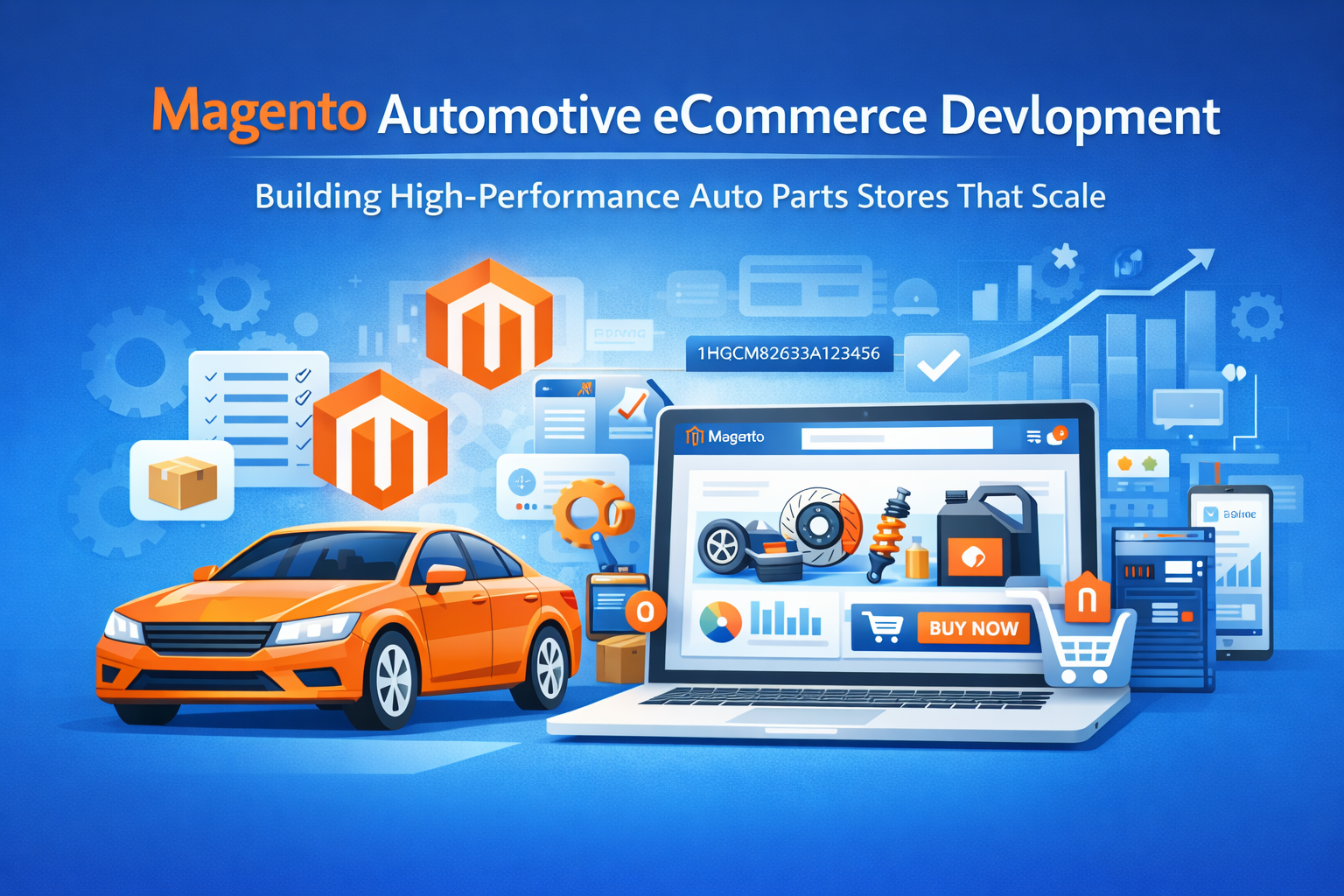
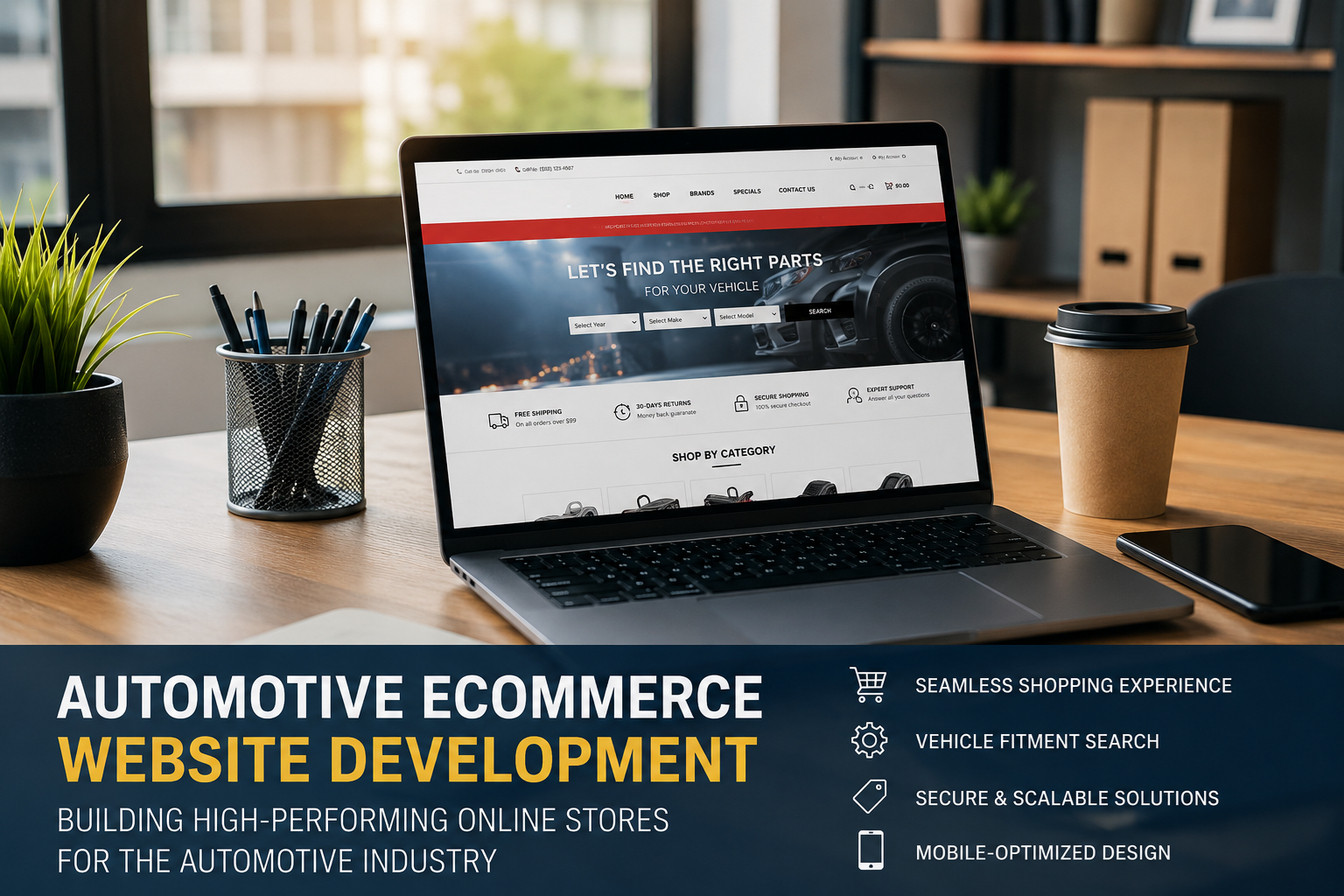
Automotive eCommerce Website Development: The Complete Guide to Building High-Performance Auto Parts Websites

Automotive eCommerce Website Solutions That Help Auto Parts Businesses Grow

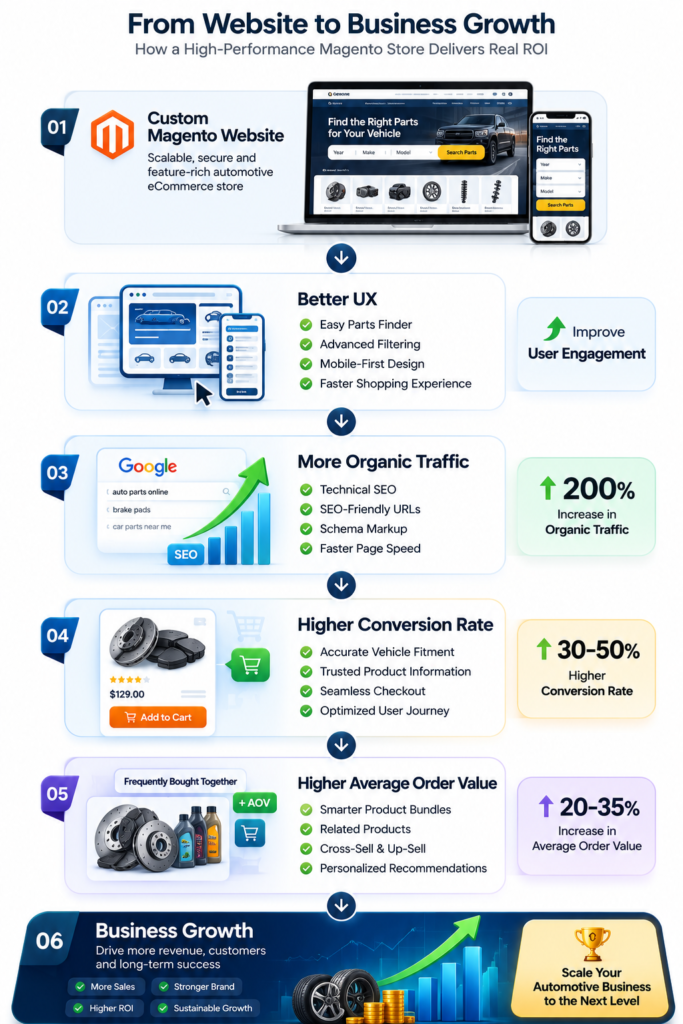
The automotive industry has changed dramatically over the last decade. Customers no longer rely solely on local parts stores or dealership counters to purchase replacement parts and accessories. Instead, they expect fast, reliable online shopping experiences where they can quickly identify the correct parts for their vehicle, compare products, and complete purchases with confidence.

For automotive businesses, this shift presents both an opportunity and a challenge. Selling thousands—or even hundreds of thousands—of products online requires much more than a standard eCommerce website. Automotive retailers need intelligent search, accurate vehicle compatibility, advanced product catalog management, secure payment processing, and a platform capable of handling large volumes of products without sacrificing speed or usability.

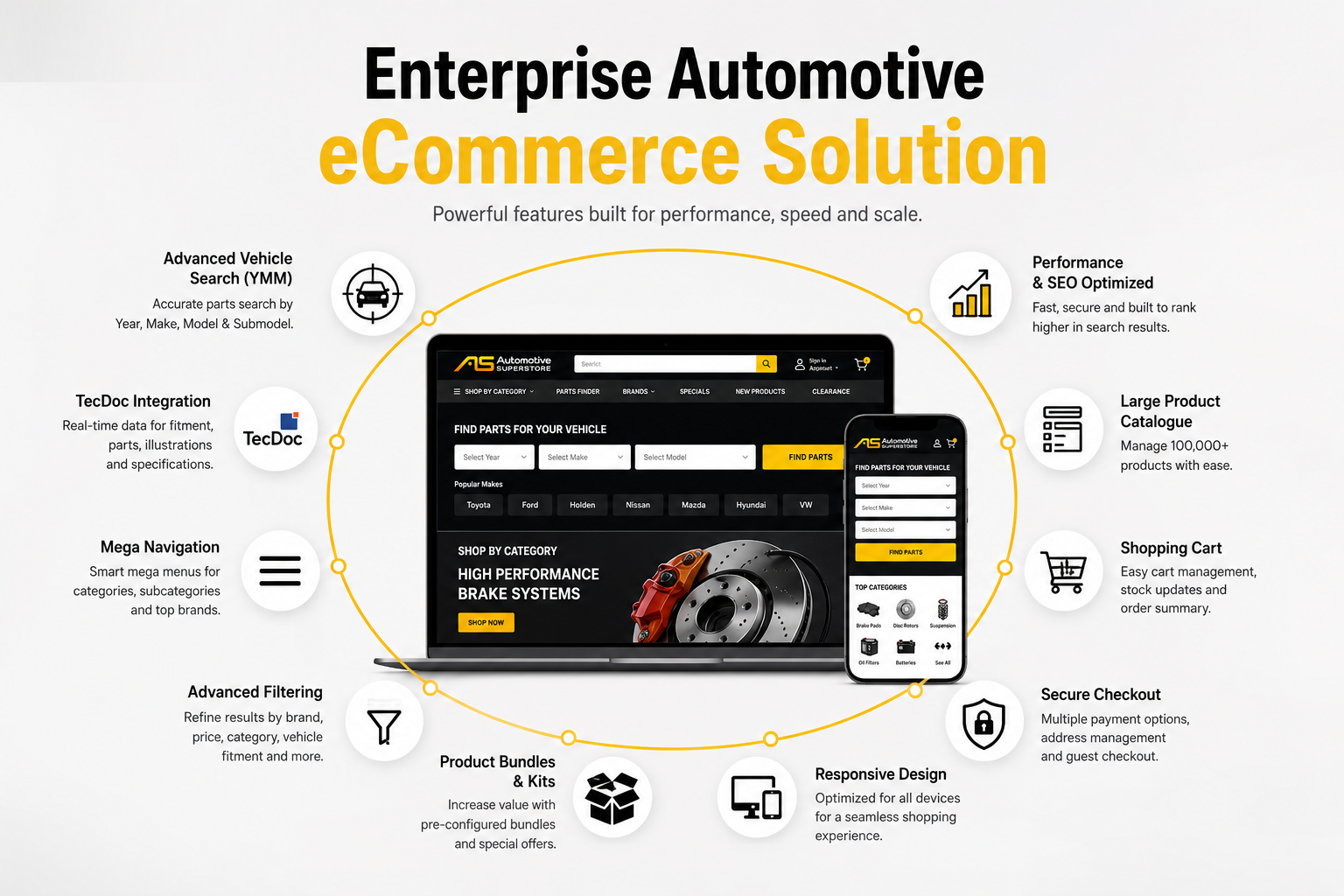
At IOGOOS Solution, we specialize in developing Enterprise Magento Development solutions for automotive businesses that require more than a basic online store. From custom Year Make Model Parts Finder functionality and TecDoc Integration to large product catalog management and conversion-focused user experiences, we build automotive eCommerce platforms designed around real business requirements—not one-size-fits-all templates.

Whether you’re launching a new Auto Parts Store, replacing an outdated system, or modernizing an existing automotive eCommerce platform, choosing the right technology and development partner can significantly impact customer satisfaction, operational efficiency, and long-term business growth.

Why Automotive Businesses Need a Specialized eCommerce Platform

Unlike fashion, electronics, or general retail, automotive eCommerce revolves around one critical factor—product compatibility. Customers need confidence that the part they purchase will fit their specific vehicle. A traditional online store simply cannot provide the level of accuracy, filtering, and compatibility required by the automotive industry.

Modern automotive websites must support advanced vehicle search, intelligent filtering, and dynamic product relationships while managing extensive product catalogs that often contain tens of thousands of SKUs. Every second spent searching for the right part increases the likelihood of customer frustration and lost sales.

A purpose-built Automotive eCommerce Platform removes these barriers by making it easier for customers to identify compatible products, compare options, and complete purchases quickly. Features such as Year Make Model Parts Finder, Vehicle Fitment, OEM Part Finder, and TecDoc Integration not only improve the shopping experience but also reduce incorrect orders and customer support requests.

Businesses investing in specialized automotive solutions consistently experience stronger customer engagement, improved product discoverability, and higher conversion rates because the website is designed around how automotive buyers actually search for parts.

Why Generic eCommerce Websites Often Fail Automotive Stores

Many automotive businesses begin with a standard eCommerce website because it appears to be the fastest or least expensive option. However, as product catalogs grow and customer expectations increase, these platforms quickly reveal their limitations.

Common challenges include:

  • Difficulty managing large automotive product catalogs.
  • Slow product searches.
  • Limited filtering capabilities.
  • No vehicle compatibility search.
  • Poor mobile shopping experience.
  • Inaccurate product matching.
  • Weak SEO architecture.
  • Performance issues with large inventories.
  • Complex inventory synchronization.
  • Difficulty integrating automotive databases.

These issues don’t just affect website performance—they directly impact sales. When customers cannot quickly find the correct part, they are more likely to abandon the website and purchase from a competitor offering a more intuitive shopping experience.

A custom-built Magento Development solution eliminates these limitations by providing the flexibility, performance, and scalability required for enterprise automotive eCommerce.

Why Enterprise Magento Development Is the Preferred Choice for Automotive eCommerce

Automotive businesses often manage product catalogs that include thousands of categories, multiple vehicle compatibility relationships, aftermarket parts, OEM products, accessories, and supplier integrations. Supporting this level of complexity requires an eCommerce platform designed for enterprise operations.

This is where Enterprise Magento Development stands apart.

Magento offers a highly flexible architecture that enables developers to build custom automotive functionality without compromising performance or scalability. From advanced search capabilities and custom catalog structures to complex pricing rules and third-party integrations, Magento provides the foundation needed for high-performing automotive websites.

At IOGOOS Solution, our experience in Custom Magento Development allows us to create automotive websites tailored to each client’s operational requirements. Instead of forcing businesses to adapt to platform limitations, we develop solutions that fit existing workflows while improving customer experience.

Our automotive Magento projects commonly include:

  • Custom Year Make Model Parts Finder
  • OEM Parts Lookup
  • Vehicle Fitment Search
  • TecDoc API Integration
  • Large Product Catalogue Management
  • Advanced Product Filtering
  • Intelligent Mega Navigation
  • Responsive Magento Website Design
  • Product Bundle Functionality
  • Interactive Hotspot Images
  • Secure Multi-Gateway Payment Integration
  • Technical SEO Foundation
  • Performance Optimization
  • Third-Party ERP Integration
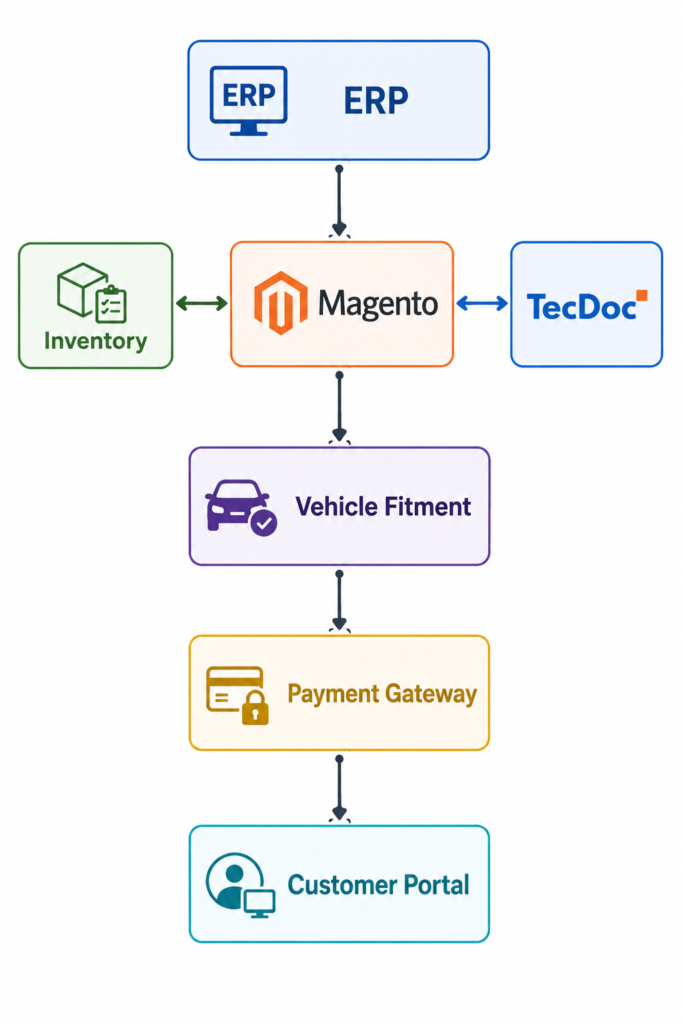
  • Warehouse & Inventory Synchronization

These features work together to create an automotive shopping experience that is intuitive, reliable, and built to support long-term business growth.

What Automotive Customers Expect from an Online Store Today

Today’s automotive buyers expect more than an attractive website. They want confidence that every product they purchase is compatible with their vehicle, backed by accurate information and a seamless shopping experience.

A successful automotive eCommerce website should enable customers to:

  • Search by Year, Make, and Model.
  • Find compatible parts within seconds.
  • Browse organized product categories.
  • Filter products by brand, specifications, and vehicle compatibility.
  • View detailed product information.
  • Explore related products and bundled offers.
  • Complete purchases securely on any device.
  • Receive fast-loading pages with minimal delays.

Meeting these expectations requires a combination of intelligent development, thoughtful user experience design, and a platform capable of supporting enterprise-level automotive operations.

Essential Features Every Automotive eCommerce Website Needs to Succeed

Building a successful automotive eCommerce website requires far more than an attractive design. Automotive customers expect speed, accuracy, and confidence when purchasing vehicle parts online. Whether they’re searching for brake pads, suspension components, performance upgrades, or OEM replacement parts, they want to find compatible products quickly without navigating through thousands of unrelated items.

At IOGOOS Solution, we build enterprise automotive eCommerce platforms that simplify complex buying journeys while helping businesses manage extensive product catalogs efficiently. From intelligent vehicle search to custom integrations and performance optimization, every feature is developed with one objective—creating a faster shopping experience that increases customer satisfaction and drives more sales.

Enterprise Features Built for High-Performance Automotive eCommerce

An automotive website should do more than display products—it should help customers identify the correct part with minimal effort. We combine enterprise Magento development with custom functionality to create automotive platforms that are fast, intuitive, and designed around how customers actually shop for vehicle parts.

Below are the core features we recommend for every modern automotive eCommerce website.

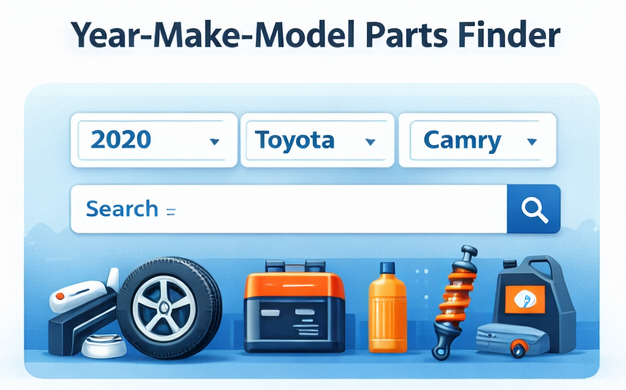
Year Make Model Parts Finder

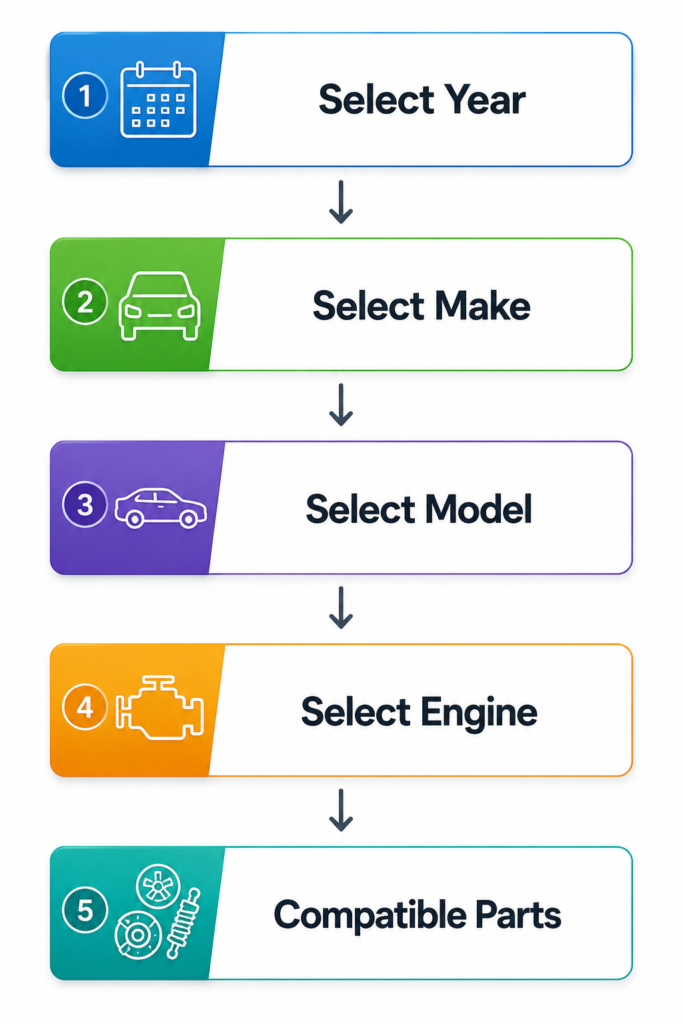
The Year Make Model (YMM) Parts Finder is one of the most valuable features of any automotive eCommerce platform. Instead of manually browsing thousands of products, customers simply select their vehicle’s year, make, and model to view only compatible parts.

This significantly improves product discovery, reduces incorrect purchases, and creates a more confident buying experience. It also lowers support inquiries while helping businesses achieve higher conversion rates and fewer product returns.

OEM Parts Finder

Many customers prefer genuine manufacturer-approved replacement parts. A custom OEM Parts Finder enables users to search by OEM part numbers or manufacturer references, making it easier to locate exact replacement components for their vehicles.

This feature is particularly valuable for dealerships, manufacturers, wholesalers, and professional automotive workshops that require precise product identification.

TecDoc Integration

For automotive businesses managing extensive vehicle compatibility data, TecDoc Integration provides access to one of the industry’s most comprehensive automotive databases.

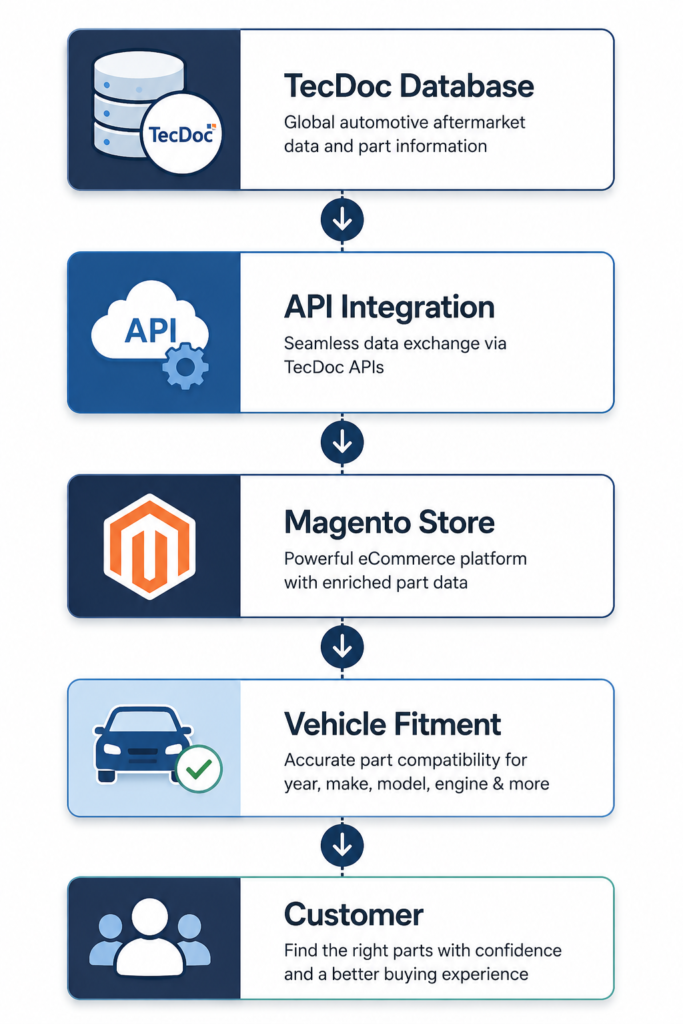
By connecting your eCommerce platform with TecDoc APIs, customers receive accurate vehicle fitment information, enriched product specifications, manufacturer data, and compatibility details directly within your online store. This improves shopping confidence while reducing costly ordering mistakes.

Intelligent Vehicle Fitment

Displaying compatible products is no longer optional—it’s expected.

Custom Vehicle Fitment functionality ensures customers only view products suitable for their selected vehicle. Instead of searching through hundreds of unrelated products, buyers immediately receive accurate recommendations that simplify purchasing decisions and improve the overall shopping experience.

Advanced Automotive Product Catalog Management

Managing thousands of automotive products requires a flexible catalog structure capable of supporting multiple brands, vehicle applications, technical specifications, pricing rules, and inventory sources.

Our Automotive Product Catalog Management solutions help businesses efficiently organize large inventories while maintaining excellent search performance and streamlined backend administration. Whether you’re managing 10,000 or 500,000 products, the platform remains responsive and easy to maintain.

Advanced Product Filtering

Automotive customers rarely search using a single keyword.

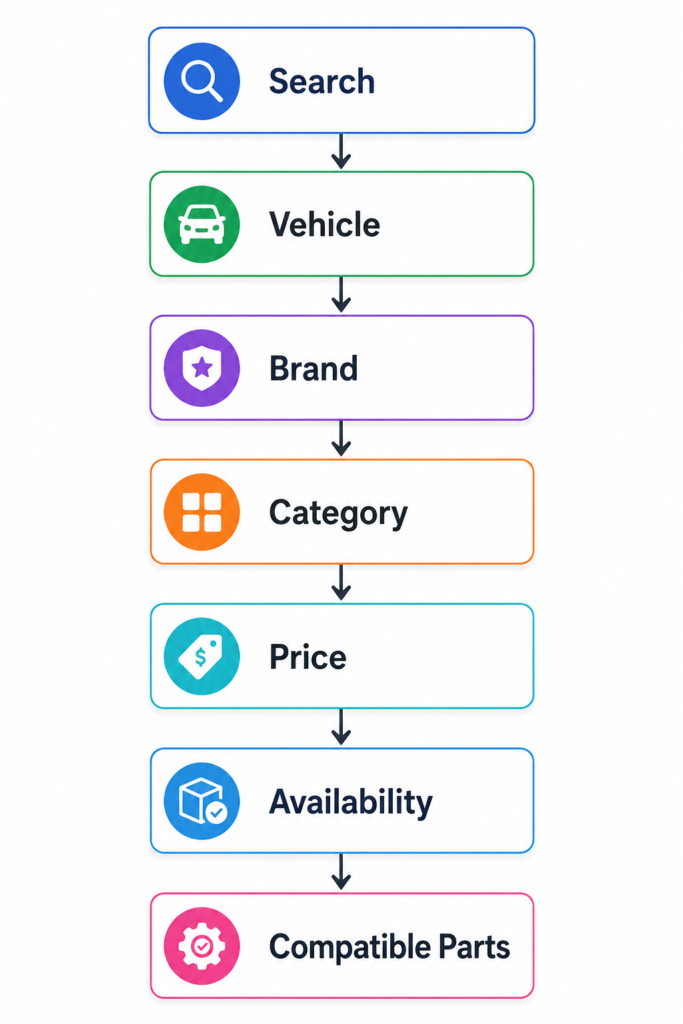
They often refine products by brand, engine size, fuel type, transmission, product category, manufacturer, specifications, availability, price range, or vehicle compatibility.

Advanced filtering enables shoppers to narrow their results quickly, helping them reach the correct product faster while reducing frustration and increasing conversions.

Seamless Mega Navigation

Large automotive stores require well-structured navigation that makes thousands of products feel organized rather than overwhelming.

Our custom Mega Navigation solutions organize products into logical categories with vehicle-based navigation, featured brands, popular collections, and promotional sections. Customers spend less time searching and more time purchasing.

Product Bundle Functionality

Automotive customers frequently purchase related products together.

Custom Product Bundle functionality enables businesses to group compatible products into complete installation kits, maintenance packages, or promotional bundles. This not only simplifies purchasing decisions but also increases average order value while improving customer convenience.

Examples include:

  • Brake Kit + Brake Fluid
  • Suspension Kit
  • Timing Belt Package
  • Service Kit
  • Performance Upgrade Bundle

Interactive Hotspot Images

Visual shopping experiences improve customer confidence.

Interactive Hotspot Images allow visitors to click specific vehicle components or product areas to instantly explore compatible parts. Instead of searching through categories, customers can visually identify components and navigate directly to relevant products.

This feature is especially useful for complex assemblies and technical automotive products.

Responsive Magento Website

More than half of automotive shoppers now browse and purchase using mobile devices.

A Responsive Magento Website automatically adapts to desktops, tablets, and smartphones while maintaining excellent usability across every screen size. Mobile-friendly navigation, optimized images, and streamlined checkout contribute to higher engagement and increased conversions.

Large Product Catalogue Management

Enterprise automotive businesses often manage hundreds of brands and tens of thousands of SKUs.

Our Large Product Catalogue Management solutions support:

  • Bulk product imports
  • Inventory synchronization
  • Category automation
  • Product relationships
  • Supplier feeds
  • Performance optimization
  • Catalog indexing
  • Efficient backend workflows

This allows businesses to expand their inventory without compromising website performance.

Secure Multi-Gateway Payment Integration

Customer trust begins at checkout.

We integrate secure payment gateways that support credit cards, digital wallets, financing options, PayPal, Stripe, and region-specific payment providers. Multiple payment options improve checkout flexibility while increasing customer confidence and reducing cart abandonment.

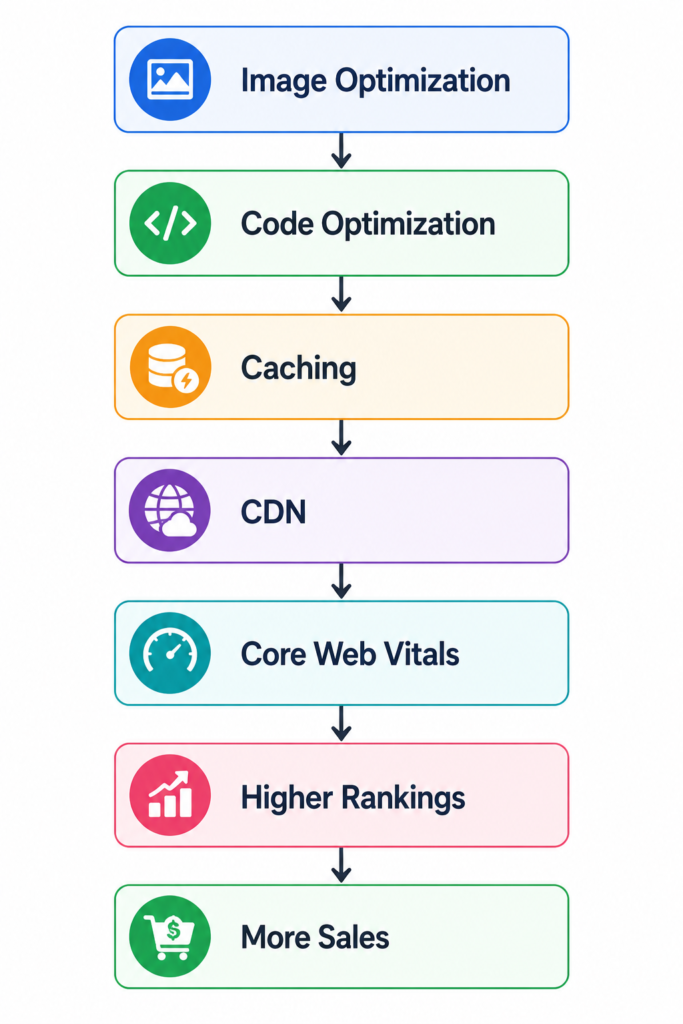
Performance Optimization & Core Web Vitals

Website speed directly impacts customer satisfaction, search rankings, and revenue.

Our optimization process includes:

  • Faster page loading
  • Optimized database queries
  • Image optimization
  • Full-page caching
  • Lazy loading
  • Code optimization
  • CDN integration
  • Server performance improvements

A faster website creates a smoother shopping experience and contributes to better search engine visibility.

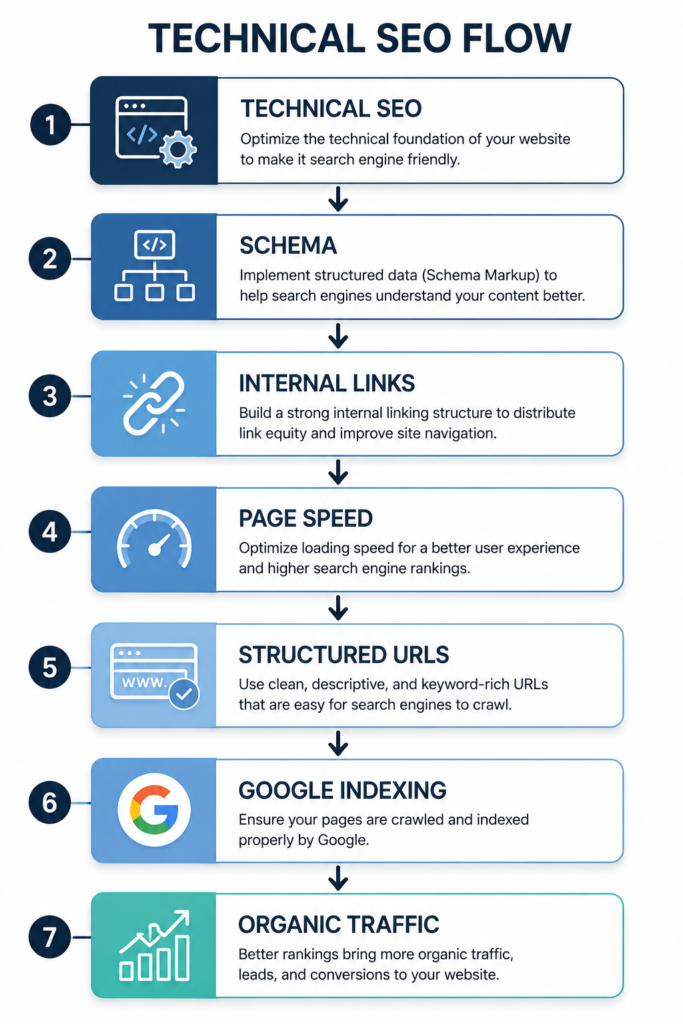
Technical SEO Foundation & Implementation

An exceptional automotive website deserves to be discovered.

Every project we build includes a strong Technical SEO Foundation, ensuring search engines can efficiently crawl, understand, and index the website.

Our SEO implementation typically includes:

  • SEO-friendly URL structures
  • Optimized metadata
  • Schema markup
  • XML sitemaps
  • Internal linking strategy
  • Canonical URL management
  • Breadcrumb optimization
  • Image optimization
  • Core Web Vitals improvements
  • Structured category architecture

These technical improvements help automotive businesses increase organic visibility and attract more qualified traffic.

Comprehensive Features for a Smarter Automotive Shopping Experience

A modern automotive eCommerce website must balance functionality, performance, and usability. Every feature should make it easier for customers to find the correct parts while helping businesses manage products efficiently and grow online sales.

At IOGOOS Solution, we combine Enterprise Magento Development, custom automotive functionality, intelligent integrations, and conversion-focused design to create high-performing Automotive eCommerce Platforms that support long-term business growth. From Year Make Model Parts Finder and TecDoc Integration to Large Product Catalogue Management, Vehicle Fitment, Secure Multi-Gateway Payment Integration, and a strong Technical SEO Foundation, every solution is tailored to the unique requirements of the automotive industry.

A well-built automotive website isn’t simply an online catalog—it’s a powerful sales platform that improves customer experience, increases engagement, strengthens search visibility, and helps automotive businesses generate sustainable revenue in an increasingly competitive market.

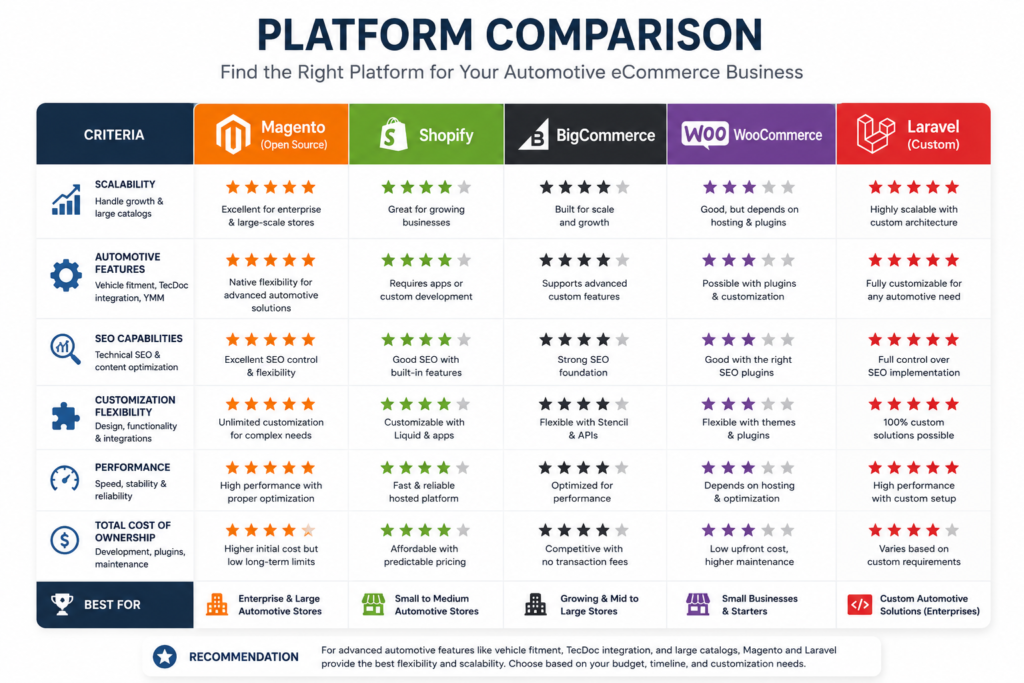
Magento vs Shopify vs BigCommerce vs WooCommerce vs Laravel: Which Platform Is Best for Automotive eCommerce?

Choosing the right technology is one of the most important decisions when building an automotive eCommerce website. While many platforms can sell products online, very few are designed to handle the complexity of the automotive industry. Features like Year Make Model Parts Finder, Vehicle Fitment, TecDoc Integration, large product catalog management, and advanced search require a platform that offers flexibility, performance, and room for future growth.

At IOGOOS Solution, we’ve developed automotive eCommerce solutions across multiple platforms, including Magento, Shopify, Shopify Plus, BigCommerce, WooCommerce, and Laravel. Each platform has its strengths, and the best choice depends on your business goals, product catalog size, integrations, and budget.

Adobe Commerce (Magento) – The Enterprise Choice for Automotive eCommerce

When it comes to enterprise automotive websites, Magento remains one of the most powerful and flexible eCommerce platforms available. It is purpose-built for businesses that require advanced customization, large product catalogs, complex pricing structures, multiple warehouses, B2B capabilities, and third-party integrations.

Magento gives complete control over every aspect of your website, making it the preferred choice for automotive manufacturers, wholesalers, distributors, and large auto parts retailers.

Best For

  • Large automotive product catalogs
  • Auto parts retailers
  • Multi-brand businesses
  • OEM and aftermarket parts suppliers
  • Manufacturers
  • B2B & B2C automotive stores
  • Multi-store operations

Key Advantages

  • Unlimited customization
  • Enterprise-level performance
  • Year Make Model Parts Finder
  • TecDoc Integration
  • Vehicle Fitment
  • Advanced Product Filtering
  • Custom Product Bundles
  • Multiple pricing rules
  • Large Product Catalogue Management
  • ERP integration
  • Warehouse integration
  • API-first architecture
  • Excellent SEO capabilities
  • Strong security
  • Multi-language & multi-currency support

Considerations

Magento requires experienced developers and a higher initial investment than template-based platforms. However, businesses with long-term growth plans often find that the flexibility and scalability justify the investment.

Shopify – Best for Small to Medium Automotive Businesses

Shopify is an excellent choice for businesses that want to launch quickly with minimal technical management. It provides reliable hosting, security, and an easy-to-use administration panel.

For businesses selling a relatively small number of automotive products, Shopify offers a straightforward solution. However, highly customized automotive functionality usually requires custom applications or third-party integrations.

Best For

  • Small automotive stores
  • Startup auto parts businesses
  • Simple product catalogs
  • Businesses requiring fast deployment

Advantages

  • Easy to manage
  • Excellent reliability
  • Secure hosting
  • Large app marketplace
  • Mobile responsive
  • Fast setup

Limitations

  • Limited backend customization
  • Complex automotive functionality often requires custom apps
  • Less suitable for very large catalogs
  • Additional monthly app costs

Shopify Plus – Enterprise Simplicity

Shopify Plus builds upon Shopify by offering greater scalability, automation, and enterprise-level support.

It works well for growing automotive brands that want managed infrastructure while still requiring some custom functionality. Advanced automotive features such as Vehicle Fitment or TecDoc Integration generally require custom development.

Best For

  • High-growth automotive brands
  • Multi-channel retailers
  • Enterprise D2C businesses

Advantages

  • Faster deployment
  • Enterprise hosting
  • High uptime
  • Automation tools
  • Excellent checkout performance

Limitations

  • Less backend flexibility compared to Magento
  • Complex automotive workflows require custom development

BigCommerce – Flexible SaaS for Automotive Retailers

BigCommerce offers a strong balance between SaaS simplicity and customization. It supports larger catalogs than many hosted platforms and provides robust APIs for integrations.

It can be a suitable choice for medium-sized automotive retailers requiring good SEO capabilities and flexible integrations.

Best For

  • Mid-sized automotive businesses
  • Multi-channel selling
  • Growing product catalogs

Advantages

  • Strong SEO
  • Reliable hosting
  • API flexibility
  • B2B capabilities
  • Multi-channel integrations

Limitations

  • Smaller extension ecosystem than Magento
  • Custom automotive functionality may require additional development

WooCommerce – Cost-Effective for Smaller Stores

WooCommerce is built on WordPress and provides an affordable solution for businesses entering the automotive market.

While suitable for smaller product catalogs, WooCommerce can become difficult to maintain as inventory, integrations, and custom functionality grow.

Best For

  • Small businesses
  • Local auto parts retailers
  • Budget-conscious startups

Advantages

  • Low entry cost
  • WordPress integration
  • Large plugin ecosystem
  • Easy content management

Limitations

  • Performance challenges with very large catalogs
  • Higher maintenance requirements
  • Plugin dependency
  • Complex automotive functionality requires custom coding

Laravel – Complete Freedom for Custom Automotive Solutions

Laravel isn’t an eCommerce platform—it’s a PHP framework that allows developers to build completely custom applications.

For businesses with unique operational requirements, proprietary workflows, or highly specialized automotive systems, Laravel provides unmatched flexibility.

Best For

  • Custom automotive marketplaces
  • Fleet management systems
  • Dealer portals
  • Custom B2B platforms
  • Automotive ERP solutions

Advantages

  • Unlimited customization
  • Tailored workflows
  • API-first architecture
  • Excellent performance
  • Complete ownership

Limitations

  • Longer development time
  • Higher development investment
  • Requires ongoing technical support

Platform Comparison

FeatureMagentoShopifyShopify PlusBigCommerceWooCommerceLaravel
Large Product Catalog⭐⭐⭐⭐⭐⭐⭐⭐⭐⭐⭐⭐⭐⭐⭐⭐⭐⭐⭐⭐⭐⭐⭐⭐
Year Make Model Finder⭐⭐⭐⭐⭐⭐⭐⭐⭐⭐⭐⭐⭐⭐⭐⭐⭐⭐⭐⭐⭐⭐⭐
TecDoc Integration⭐⭐⭐⭐⭐⭐⭐⭐⭐⭐⭐⭐⭐⭐⭐⭐⭐⭐⭐⭐⭐⭐⭐
Vehicle Fitment⭐⭐⭐⭐⭐⭐⭐⭐⭐⭐⭐⭐⭐⭐⭐⭐⭐⭐⭐⭐⭐⭐⭐
Custom Development⭐⭐⭐⭐⭐⭐⭐⭐⭐⭐⭐⭐⭐⭐⭐⭐⭐⭐⭐⭐⭐⭐⭐⭐
SEO⭐⭐⭐⭐⭐⭐⭐⭐⭐⭐⭐⭐⭐⭐⭐⭐⭐⭐⭐⭐⭐⭐⭐⭐⭐⭐
Performance⭐⭐⭐⭐⭐⭐⭐⭐⭐⭐⭐⭐⭐⭐⭐⭐⭐⭐⭐⭐⭐⭐⭐⭐⭐⭐
Enterprise Ready⭐⭐⭐⭐⭐⭐⭐⭐⭐⭐⭐⭐⭐⭐⭐⭐⭐⭐⭐⭐⭐⭐⭐⭐

How Much Does an Automotive eCommerce Website Cost?

The cost of developing an automotive website depends on the platform, catalog size, required integrations, and level of customization. While template-based stores may have a lower upfront cost, businesses with long-term growth plans often benefit from investing in a platform that supports advanced automotive functionality.

Estimated Development Costs

Website TypeEstimated Cost
Basic Automotive Website$4,000–$6,000
Custom Automotive Store$7,000–$15,000
Enterprise Magento Development$15,000–$50,000+
TecDoc Integration$3,000–$10,000
Year Make Model Parts Finder$1,000–$5,000
ERP / Inventory Integration$1,000–$8,000

The final investment depends on your business requirements, product volume, third-party systems, design complexity, and custom functionality. A well-planned automotive platform is an investment in long-term operational efficiency, customer satisfaction, and sustainable revenue growth.

Enterprise Automotive eCommerce Features Comparison

Building a successful automotive eCommerce website requires more than an attractive design. Customers expect to find compatible parts quickly, while businesses need a platform that can efficiently manage large product catalogs, third-party integrations, and high transaction volumes. The table below highlights the essential features that separate an enterprise automotive eCommerce platform from a standard online store and explains how each capability improves customer experience, operational efficiency, and business growth.

FeatureStandard eCommerce WebsiteEnterprise Automotive eCommerce Platform by IOGOOS Solution
Year Make Model Parts Finder❌ Not Available✅ Advanced Vehicle Compatibility Search
Vehicle Fitment❌ Manual Selection✅ Intelligent Vehicle-Based Product Matching
TecDoc Integration❌ No Integration✅ Real-Time Automotive Database Integration
OEM Parts Finder❌ Limited✅ Advanced OEM & Aftermarket Compatibility
Large Product CatalogueBasic Catalog ManagementEnterprise Management for 100,000+ Products
Advanced Product FilteringBasic Category FiltersMulti-Level Vehicle, Brand, Engine & Attribute Filters
Mega NavigationSimple NavigationCustom Automotive Mega Menu with Product Categories
Product Bundle FunctionalityLimitedDynamic Bundles, Kits & Promotional Offers
Interactive Hotspot Images❌ Not Available✅ Interactive Product Exploration
Responsive DesignBasic Mobile SupportFully Optimized Mobile-First Experience
Performance OptimizationStandard SpeedCore Web Vitals Optimized for Maximum Performance
Technical SEO FoundationBasic SEOAdvanced Technical SEO & Structured Data
Secure Multi-Payment IntegrationLimited Payment OptionsMultiple Secure Payment Gateway Integrations
Third-Party IntegrationsLimited APIsERP, CRM, Inventory, Supplier & Marketplace Integration
Inventory ManagementBasic Stock ControlReal-Time Inventory & Warehouse Synchronization
Customer ExperienceStandard Shopping JourneyPersonalized Automotive Shopping Experience
ScalabilitySuitable for Small StoresEnterprise-Grade Architecture for High Growth
Business GrowthModerateIncreased Traffic, Higher Conversions & Long-Term Growth

Key Takeaway

An enterprise automotive eCommerce platform is designed to solve the unique challenges of selling vehicle parts online. Features such as Year Make Model Parts Finder, TecDoc Integration, Vehicle Fitment, large product catalogue management, advanced filtering, and technical SEO work together to help customers find the right parts faster, reduce incorrect orders, improve search visibility, and increase conversions. At IOGOOS Solution, we combine these capabilities with custom Magento development to build automotive websites that support long-term business growth and deliver measurable results.

Why Automotive Businesses Choose IOGOOS Solution

Building an automotive eCommerce website requires more than technical expertise—it requires a deep understanding of how automotive businesses operate and how customers search for parts online.

At IOGOOS Solution, we have hands-on experience delivering custom automotive solutions that combine enterprise technology with practical business requirements. Our team specializes in Enterprise Magento Development, Custom Magento Development, Automotive eCommerce Platforms, Year Make Model Parts Finder, TecDoc Integration, Vehicle Fitment, Large Product Catalogue Management, Responsive Magento Websites, Technical SEO Implementation, and Secure Multi-Gateway Payment Integration.

Whether you’re launching a new automotive store, modernizing an existing platform, or replacing legacy systems, we develop tailored solutions designed to improve user experience, streamline operations, increase organic visibility, and support long-term business growth.

Real-World Success: Automotive Superstore Magento Development

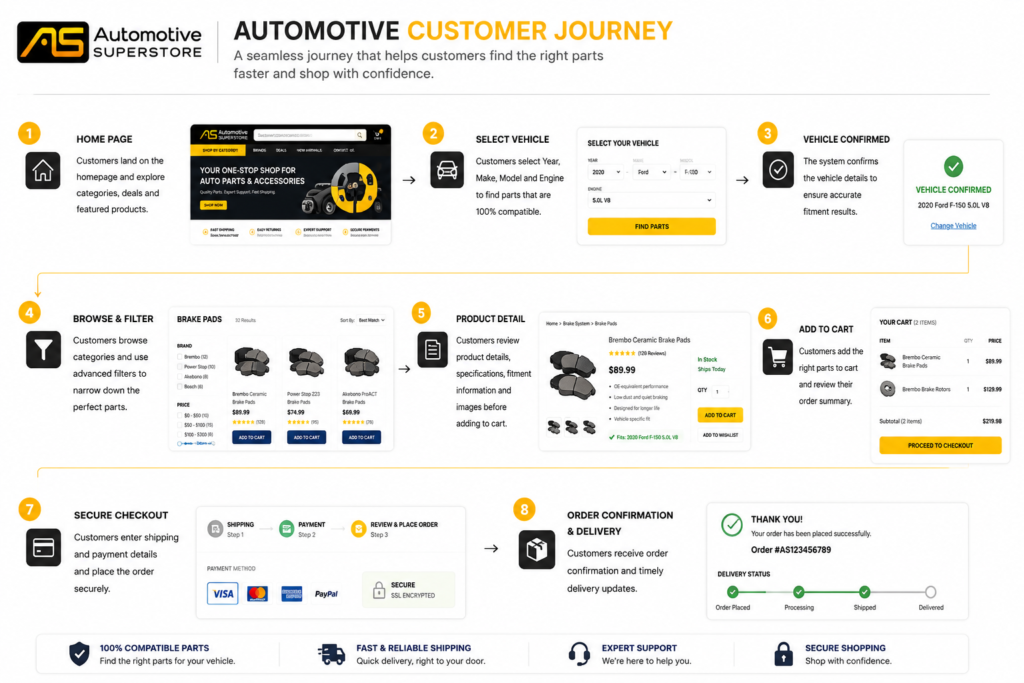
At IOGOOS Solution, we don’t just discuss automotive eCommerce—we build it. One of our recent projects, Automotive Superstore, demonstrates how a well-planned automotive eCommerce platform can transform the online buying experience for customers while giving businesses the flexibility to manage large product catalogs efficiently.

Our team developed a custom Enterprise Magento eCommerce Platform tailored to the unique demands of the automotive industry. The project included a fully customized user interface, intelligent navigation, advanced search functionality, and a responsive shopping experience designed to help customers quickly locate the right parts for their vehicles.

The website features a Year Make Model Parts Finder, TecDoc Integration, Vehicle Fitment, advanced product filtering, large product catalogue management, secure multi-gateway payment integration, promotional tools, product bundles, hotspot images, and a strong technical SEO foundation. Every feature was designed to improve product discoverability, reduce customer frustration, and create a faster path from search to purchase.

Beyond functionality, we focused on performance optimization, Core Web Vitals, and scalable Magento architecture to ensure the platform remains fast, secure, and capable of supporting future business growth.

This project reflects our approach to every automotive website we build—combining technical expertise with practical business solutions that deliver measurable value.

Your Trust Technology, Development Partner – IOGOOS Solution

Choosing a development partner is about more than technical skills. Automotive businesses need a team that understands the industry’s complexity, customer buying behavior, and operational challenges.

Businesses partner with IOGOOS Solution because we deliver:

  • Enterprise Magento Development tailored for automotive businesses
  • Custom Automotive eCommerce Platform development
  • Year Make Model Parts Finder implementation
  • TecDoc API Integration
  • OEM Parts Finder solutions
  • Vehicle Fitment systems
  • Large Product Catalogue Management
  • Product Bundle functionality
  • Interactive Hotspot Images
  • Advanced Product Filtering
  • Responsive Magento Website development
  • Technical SEO Foundation and implementation
  • Secure Multi-Gateway Payment Integration
  • Performance optimization and Core Web Vitals improvements
  • Ongoing maintenance, upgrades, and technical support

Every project is developed around your business goals rather than forcing your business to fit a pre-built template.

Industries We Help

Our automotive eCommerce solutions are designed for businesses across the automotive ecosystem, including:

  • Auto Parts Retailers
  • Automotive Manufacturers
  • OEM Parts Suppliers
  • Aftermarket Parts Suppliers
  • Performance Parts Companies
  • Tire & Wheel Retailers
  • Motorcycle Parts Stores
  • Truck Parts Suppliers
  • Marine Parts Businesses
  • Agricultural Equipment Suppliers
  • Industrial Equipment Suppliers
  • Automotive Distributors & Wholesalers
  • B2B Automotive Portals
  • Multi-Brand Automotive Retailers

Whether you’re selling 5,000 products or 500,000, we develop platforms that are built to grow with your business.

Why Invest in a Custom Automotive eCommerce Website?

Many automotive businesses lose potential customers because their websites make it difficult to find compatible parts. Slow search functionality, poor navigation, outdated designs, and limited filtering often result in abandoned carts and lost revenue.

A custom automotive eCommerce solution addresses these challenges by creating a shopping experience that is intuitive, fast, and reliable. Features like Year Make Model Parts Finder, Vehicle Fitment, TecDoc Integration, and advanced catalog management help customers locate the right products quickly while reducing support requests and incorrect orders.

Combined with technical SEO, mobile-first design, secure payment processing, and enterprise performance, these improvements create a platform that supports long-term business growth and stronger customer loyalty.

Ready to Build Your Automotive eCommerce Website?

Whether you’re launching a new automotive business, replacing an outdated platform, or expanding an existing online store, the right technology can make a significant difference to your long-term success.

At IOGOOS Solution, we specialize in developing custom automotive eCommerce websites that combine enterprise functionality, exceptional user experience, and scalable architecture. From intelligent vehicle search and TecDoc integration to technical SEO and high-performance Magento development, we create solutions tailored to the way your business operates.

If you’re looking for an experienced Magento Development Company with proven expertise in automotive eCommerce, we’d love to discuss your project and recommend the right solution for your business.

📞 Let’s build an automotive eCommerce platform that helps your customers find the right parts faster—and helps your business grow with confidence.

Frequently Asked Questions

1. Why is Magento a popular choice for automotive eCommerce websites?

Magento provides the flexibility needed to manage large automotive product catalogs, advanced filtering, custom pricing, third-party integrations, and specialized features such as Year Make Model Parts Finder and Vehicle Fitment.

2. Can Magento handle hundreds of thousands of automotive products?

Yes. Magento is designed to support enterprise-level catalogs with proper optimization, making it ideal for automotive retailers, wholesalers, and manufacturers managing extensive inventories.

3. What is a Year Make Model Parts Finder?

A Year Make Model (YMM) Parts Finder allows customers to select their vehicle details and instantly view compatible products, improving accuracy, reducing incorrect orders, and enhancing the shopping experience.

4. What is TecDoc Integration?

TecDoc Integration connects your automotive website to the TecDoc database through APIs, providing accurate vehicle compatibility, product specifications, and manufacturer information for supported automotive parts.

5. Do I need Vehicle Fitment on my automotive website?

If you sell vehicle-specific products, Vehicle Fitment is highly recommended. It helps customers identify compatible parts quickly and significantly reduces purchasing errors.

6. Can you migrate my existing automotive website to Magento?

Yes. We provide complete migration services, including products, customers, orders, categories, SEO URLs, and custom functionality while minimizing downtime.

7. Do you develop automotive websites on platforms other than Magento?

Yes. We also develop automotive eCommerce solutions using Shopify, Shopify Plus, BigCommerce, WooCommerce, and custom Laravel applications, depending on your business requirements.

8. How much does an automotive eCommerce website cost?

The investment depends on catalog size, integrations, platform selection, and custom functionality. Most custom automotive projects range from $10,000 for smaller implementations to $100,000+ for enterprise solutions with advanced integrations and large product catalogs.

9. Can you integrate ERP, inventory, or accounting systems?

Yes. We integrate automotive websites with ERP, inventory management, warehouse systems, accounting software, CRM platforms, supplier feeds, and other third-party business applications.

10. How long does it take to develop an automotive eCommerce website?

Development timelines vary based on project scope. A custom automotive website typically takes 3 to 6 months, while enterprise platforms with extensive integrations may require additional time.

11. Will my website be optimized for search engines?

Absolutely. Every project includes a strong technical SEO foundation, optimized URL structures, structured data, performance optimization, mobile responsiveness, and best practices that help improve organic visibility.

12. Why should I choose IOGOOS Solution?

We combine deep expertise in Enterprise Magento Development with real-world experience building automotive eCommerce platforms. Our focus on custom development, technical SEO, performance optimization, and industry-specific functionality enables us to deliver websites that are built for long-term growth rather than short-term fixes.

Final Thoughts

Building a successful automotive eCommerce website requires more than choosing the right platform—it requires a solution tailored to the unique needs of the automotive industry. From intelligent product discovery and vehicle compatibility to enterprise integrations and technical SEO, every component should work together to deliver an exceptional customer experience.

At IOGOOS Solution, we bring together years of experience in Enterprise Magento Development, Custom Magento Development, and automotive eCommerce to create websites that are fast, scalable, and built to support real business growth. Whether you’re planning a new Auto Parts Store, upgrading an existing platform, or looking to implement Year Make Model Parts Finder, TecDoc Integration, and advanced automotive functionality, our team is ready to help you build a solution that performs today and continues to grow with your business.

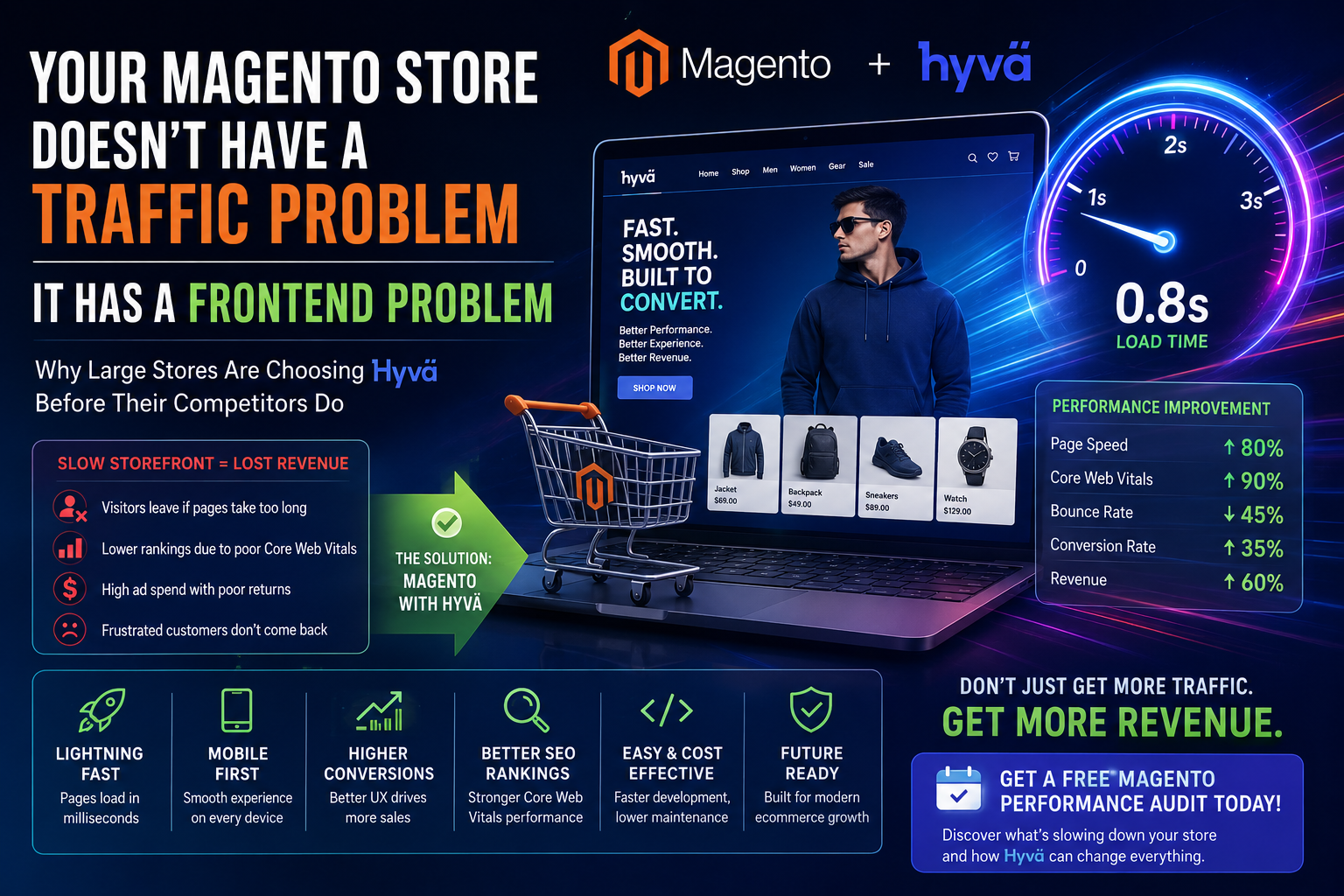
Your Magento Store Doesn’t Have a Traffic Problem — It Has a Frontend Problem

Why Large Ecommerce Brands Are Choosing Hyvä Before Their Competitors Leave Them Behind

A few months ago, a large ecommerce company approached our team after investing heavily in SEO, paid advertising, content marketing, and email campaigns.

On paper, everything looked healthy.

Their Magento store was attracting thousands of visitors every month.

Google Search Console showed growing impressions.

Product pages were ranking.

Advertising campaigns were generating clicks.

Yet revenue growth wasn’t matching the investment.

The management team had a simple question:

“If traffic is increasing, why aren’t sales increasing at the same pace?”

After a detailed Magento performance audit, the answer became clear.

The problem wasn’t traffic.

The problem wasn’t product pricing.

The problem wasn’t even marketing.

The real issue was something most ecommerce businesses overlook until it starts affecting revenue.

Their storefront experience had become a bottleneck.

Pages loaded slower than customer expectations.

Mobile shoppers abandoned product pages before they fully rendered.

Category pages felt heavy.

Navigation wasn’t as smooth as modern shoppers expect.

The website looked acceptable, but the shopping experience felt frustrating.

And in ecommerce, frustration is expensive.

Every visitor who leaves because a page takes too long to load is a potential customer lost.

Every delay in page rendering increases bounce rates.

Every extra second between product discovery and checkout creates another opportunity for customers to abandon the purchase.

This is not an isolated case.

It’s a challenge we regularly see with growing Magento stores.

The irony is that Magento itself is rarely the problem.

Magento remains one of the most powerful ecommerce platforms in the world for the large ecommerce store, and continues preferred choice for enterprises that need large ecommerce solutions with exceptional performance, flexibility, and security. Combined with the Hyvä Theme, it delivers faster storefronts, better user experiences, and stronger conversion opportunities. Our large ecommerce solution development expertise helps businesses build enterprise ecommerce solutions, custom ecommerce platforms, and high-performance ecommerce websites that improve search visibility, attract qualified traffic, increase online sales, and drive long-term business growth.

Major retailers, B2B brands, manufacturers, wholesalers, and enterprise businesses continue to rely on Magento because of its flexibility, scalability, and ability to handle complex ecommerce requirements.

The challenge usually sits elsewhere.

It sits in the frontend experience customers interact with every day.

And that is precisely why Hyvä has become one of the most discussed innovations in the Magento ecosystem.

For many store owners, Hyvä is not simply a new theme.

It is a way to unlock the full potential of Magento without rebuilding the entire ecommerce operation.

More importantly, it directly addresses several business problems that affect revenue, search visibility, customer satisfaction, and long-term growth.

Before discussing Hyvä itself, let’s address an uncomfortable truth that many ecommerce businesses discover too late.

The Hidden Cost of a Slow Magento Store

According to Google research, when page load time increases from 1 second to 3 seconds, the probability of a visitor leaving the website increases by 32%.

When loading time reaches 5 seconds, bounce rates can increase by over 90%.

For large ecommerce stores, this creates a serious business problem.

Every second of delay affects:

  • Organic traffic
  • Product page engagement
  • Shopping cart completion
  • Conversion rates
  • Average order value
  • Customer retention
  • Advertising ROI

Many Magento stores spend thousands of dollars every month on SEO and paid advertising while ignoring the frontend performance issues that are silently reducing conversions.

The reality is simple.

You cannot buy traffic profitably if your website cannot convert visitors efficiently.

Ecommerce Owners Must Know

Most ecommerce owners know that speed matters.

What many don’t realize is how much money slow performance quietly removes from the business every single day.

Imagine spending USD 3K, USD 5 K, or even USD 10+ K Per Month on digital marketing services.

Your team works hard on SEO.

Your agency runs Google Ads campaigns.

You publish blogs.

You create social media content.

You invest in email marketing automation.

Visitors finally arrive on your website.

Then the website disappoints them.

Not because the products are bad.

Not because the prices are high.

But because the experience feels slow.

Modern shoppers compare every website to the best experiences they encounter online.

They compare your store to Amazon.

They compare your store to leading D2C brands.

They compare your store to fast mobile applications.

Customer patience has changed dramatically over the last few years.

If product pages hesitate, customers notice.

If filters lag, customers notice.

If checkout feels sluggish, customers notice.

And when customers notice, many simply leave.

Research consistently shows that page speed has a direct impact on user engagement, conversion rates, and revenue generation.

For large ecommerce stores managing thousands of products, hundreds of categories, multiple store views, and significant daily traffic, the consequences become even more significant.

A small performance issue repeated across thousands of visitors becomes a major revenue problem.

This is where many Magento merchants reach a crossroads.

Continue investing in traffic while accepting lower conversion rates.

Or improve the storefront experience so existing traffic generates more revenue.

The most profitable ecommerce businesses focus on the second option.

Because increasing conversions is often more profitable than continuously increasing advertising budgets.

What Is Hyvä Theme?

Hyvä is a modern Magento frontend framework designed specifically to solve Magento’s performance and development challenges.

Instead of relying on heavy frontend technologies, Hyvä uses:

  • Tailwind CSS
  • Alpine.js
  • Simplified architecture
  • Lightweight codebase
  • Modern development practices

The result is a dramatically faster Magento storefront that provides better experiences for both customers and developers.

Hyvä removes much of the frontend complexity that has traditionally made Magento development expensive and time-consuming.

For large stores, this means faster development cycles, easier maintenance, lower costs, and significantly better performance.

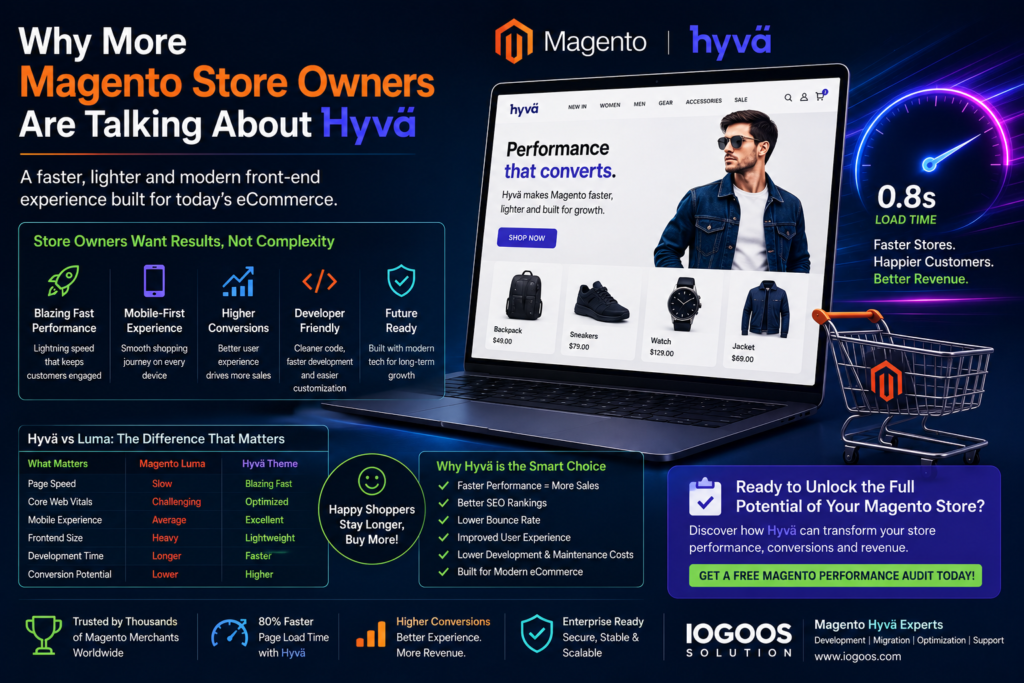
Why More Magento Store Owners Are Talking About Hyvä

Large ecommerce stores often struggle because product pages contain:

  • Large catalogs
  • Complex filters
  • Multiple third-party extensions
  • Heavy frontend scripts
  • Dynamic content

Traditional Magento themes frequently load unnecessary JavaScript and CSS files that slow down the shopping experience.

The Magento ecosystem has evolved significantly. Hyvä eliminates much of this frontend overhead.

Store owners today care about more than features.

They care about outcomes.

They want:

• Faster websites

• Better mobile experiences

• Higher conversion rates

• Improved Google rankings

• Lower development costs

• Better Core Web Vitals

• Easier maintenance

• Stronger return on investment

Hyvä was created to solve exactly these challenges.

Instead of adding more complexity, Hyvä simplifies Magento’s frontend architecture.

Instead of forcing merchants to choose between flexibility and performance, it helps achieve both.

The result is a Magento storefront that feels faster, cleaner, and more responsive to customers.

And in today’s competitive ecommerce landscape, that advantage matters more than ever.

Quick Reality Check for Store Owners

Ask yourself one question.

If Google doubled your organic traffic tomorrow, would your current Magento storefront convert that traffic efficiently?

Or would performance limitations prevent you from getting the full value from those additional visitors?

The answer to that question often reveals whether your ecommerce business needs Hyvä.

And for many large Magento stores, the answer is becoming increasingly obvious.

Hyvä Checkout Experience Means More Revenue

Cart abandonment remains one of the biggest ecommerce challenges.

Industry studies consistently show average cart abandonment rates above 70%.

Reasons include:

  • Slow checkout pages
  • Confusing user journeys
  • Mobile usability issues
  • Technical friction

Hyvä helps create streamlined checkout experiences that reduce customer frustration.

A smoother checkout process leads to:

  • More completed purchases
  • Higher customer satisfaction
  • Increased repeat business
  • Improved lifetime customer value

Even a small reduction in cart abandonment can produce significant revenue gains for large stores.


Magento with Hyvä vs Traditional Magento Themes

FeatureTraditional Magento ThemesMagento with Hyvä
PerformanceModerate to SlowFast
Core Web VitalsOften ChallengingSignificantly Improved
Mobile ExperienceVariableOptimized
Development ComplexityHighLower
Maintenance CostsHigherLower
User ExperienceAverageModern
SEO PerformanceLimited by Speed IssuesEnhanced
Conversion PotentialModerateHigher

Is Hyvä Worth the Investment for Large Magento Stores?

The Hyvä Theme license typically starts around €1,000 for a Magento store.

Compared with enterprise ecommerce budgets, this is a relatively small investment.

When evaluating cost, businesses should consider:

  • SEO improvements
  • Increased conversion rates
  • Reduced development costs
  • Better customer experience
  • Faster website performance

For many large stores, the return on investment can be realized much faster than expected through improved revenue and operational efficiency.

Real Business Benefits Beyond Performance

Many merchants initially adopt Hyvä for speed improvements.

However, the long-term benefits extend much further.

Businesses often experience:

Stronger SEO Visibility

Faster websites help search engines crawl and index pages more efficiently.

Better Advertising Performance

Landing pages convert more visitors from paid campaigns.

Increased Revenue Per Visitor

Customers engage with products more effectively.

Lower Bounce Rates

Visitors remain on the website longer.

Higher Customer Satisfaction

Shopping becomes easier and more enjoyable.

Improved Brand Perception

A modern website creates trust and credibility.

Why Choose IOGOOS Solution for Magento Hyvä Development?

Successfully implementing Hyvä requires more than installing a theme.

The real value comes from strategic planning, custom development, performance optimization, SEO alignment, and conversion-focused implementation.

At IOGOOS Solution, we help businesses transform Magento stores into high-performance ecommerce platforms that generate measurable business results.
Our Magento Hyvä services include:

  • Hyvä Theme Development
  • Magento Performance Optimization
  • Magento Store Migration
  • Custom Hyvä Development
  • Core Web Vitals Improvements
  • SEO-Focused Magento Development
  • Conversion Rate Optimization
  • Ongoing Magento Support

Our goal is simple:

Build Magento stores that attract more traffic, convert more visitors, and generate more revenue.

Ready to Upgrade Your Magento Store?

Your competitors are investing in faster ecommerce experiences.

Customers expect speed, convenience, and flawless shopping journeys.

Magento combined with Hyvä delivers exactly that.

If your store is losing traffic because of performance issues, poor Core Web Vitals, or lower conversion rates, now is the right time to modernize your Magento frontend.

Talk to the Magento Hyvä Experts at IOGOOS Solution

Discover how a faster Magento store can improve rankings, increase conversions, and create a stronger ecommerce foundation for future growth.

Contact our team today for a free Magento performance consultation and uncover opportunities hidden within your current store.

Hire SEO Expert

Ecommerce & Shopify – Awesome Combination Know How?

A Complete Guide to Building High-Converting Online Stores

If you’ve recently started exploring the best eCommerce platforms, chances are you’ve come across Shopify. It’s one of the most popular solutions for businesses looking to build scalable and revenue-driven online stores.

In this blog, we’ll explain what Shopify is, how it works, and how a Shopify developer can help you create a high-performing eCommerce website and apps that drive sales.

What Is Shopify?

Shopify is a cloud-based eCommerce platform (SaaS – Software as a Service) that allows businesses to create, manage, and grow their online stores with ease. It provides everything you need to sell products online, including website design tools, payment processing, inventory management, and marketing integrations.

With flexible pricing plans and powerful features, Shopify is suitable for:

  • Startups and small businesses
  • Growing brands
  • Large enterprises

Its extensive app ecosystem and integrations make it easy to scale your store as your business grows, without technical limitations.

Subsequently, new companies to big business measured that organizations can profit by utilizing Shopify as their online business platform. And in the same vein, there are a lot of reconciliations to help this product scale confined by your business’ development.

How Does Shopify Work?

Shopify is cloud-based programming with a month-to-month membership. It gives organizations admittance to an administrator board where you can enter store information, add items, and cycle orders.

Once you sign up, you get access to a user-friendly admin dashboard where you can:

  • Add and manage products
  • Customize your store design
  • Track orders and customer data
  • Manage payments and shipping
  • Analyze sales performance

One of Shopify’s biggest advantages is its ease of use. Even beginners can quickly set up a professional online store without advanced technical skills.

In short, the product is not difficult to utilize and accompanies small expectations to absorb information. Meanwhile, you can get your online store ready for action on the go.

What would you be able to sell on Shopify?

Subsequently, Shopify upholds various sorts of Web-based business organizations. That is to say, Shopify clients can sell actual items, computerized items, or outsource items on Shopify (since none of the items are prohibited). Shopify dealers utilize the product to advertise a wide assortment of items like:

  • Handmade products
  • Excellence supplies
  • Home products
  • Outside stuff
  • Garments
  • Computerized items
  • Online classes
  • Occasions
  • Gift vouchers
  • Digital books
  • And a lot more in the bag


Why Hire a Shopify Developer?

While Shopify is beginner-friendly, hiring an experienced Shopify developer can significantly improve your store’s performance and revenue potential. A developer can help with:

  • Custom Shopify theme development
  • App integration and customization
  • Conversion rate optimization (CRO)
  • Speed and performance improvements
  • SEO optimization for higher search rankings

With expert support, your Shopify store can become a powerful sales engine designed for long-term growth.

Why Do You Need a Shopify Expert?

Shopify is a simple to deal with the stage and accompanies a full scope of tools to help you in building and afterward developing your internet business store. In addition, it is feasible for even a novice to set up a record and assemble a primary store rapidly and effectively.

However, on the other hand, if you need to have a more expert brand. At that point, the best Shopify designers will be your most ideal choice.

Likewise, finding the privileged Shopify expert can help improve your online business store in a variety of ways. In any case, most importantly, your primary step should distinguish precisely what it is that you need, and assessing the expenses of that proficient advice.

Specialized information is one zone where most new Shopify vendors will require help, and that goes past the basic structure of your store. Likewise, if your store looks incompetent, or you don’t exactly comprehend what Search engine optimization is or how best to utilize it, at that point a Shopify Expert will be fundamental.

In conclusion, what you pay will be reliant on the zones that you need assistance with. So understanding your qualities and shortcomings will be significant.

“You can hardly wait for clients to come to you. You need to sort out where they are, go there and drag them back to your store.” 

– Paul Graham, Y COMBINATOR 

Shopify Developer

How much does it cost to hire a Shopify expert?

Before you focus on paying for help from an expert Shopify expert, you need to do a separate balance for your normal expenses. Moreover, this will rely upon the Shopify plan that you buy into.

While the sum of the best Shopify designers will have their value rundown and specialized topics. In the same vein, the more comprehensive part will offer alternatives concerning hourly rate or task rate.

A few experts will cost upwards of $1,500 for the improvement of a completely advanced internet business outlet.  Moreover, there are different experts with lower beginning projects for instance guarantee that you are managing genuine specialists who have been doing business and have conveyed with quality, on schedule, and in addition inside spending plan is viewed as the lower end of the range.

If your requirements aren’t that profound, at that point you may even have the option to employ a specialist to chip away at an hourly premise, with some contribution paces of just $$25+ each hour. This can help minimize your expenses, moreover, likewise, mirror the absence of full-time committed aptitude.

Who is an e-Commerce expert?

As an internet business-trained professional, e-Commerce is a specialist in online deal methodologies and the different stages used to direct computerized ventures or transformations on a site.

In addition, they execute advertisement campaigns on web crawlers and different sites. Likewise, examine and actualize the most recent advanced promoting techniques utilizing online media.

Shopify Developer

What is the role of a Shopify Web Developer/Designer?

Shopify Developer has practical experience in web development for Shopify sites. Meanwhile, this implies that they have remarkable bits of knowledge and likewise advancement experience contrasted with engineers that don’t have some expertise in chipping away at Shopify projects.

  • A Shopify Developer is answerable for the advancement of Shopify in addition to the stage, subjects, fluid programming language, and comparing applications
  • Plan UX based on our image standard and style control
  • Execute framework mixes that are critical to our prosperity
  • Contribute to the advancement of open-source programming, HTML5/CSS/JavaScript, and regular web innovations fundamental to building consistent multi-channel encounters
  • Learned in security/individual information insurance directors and GPDR
  • Creating testing plans and investigating issues identified with Online business issues
  • Directing underlying driver examination and deciding/creating comparing things to do
  • Execute progressed troubleshooting methods and use of program designer apparatuses

 How does Shopify handle its Customer Services?

Shopify offers its clients a choice to contact the help group quickly utilizing a live chat platform. In addition, this makes the client’s life much simpler insofar as help is given quickly. All things considered, what’s the advantage of having a live talk platform on your site if guests need to sit tight for a reaction through email? Moreover, this is actually what Shopify does, giving instant client support, without the need to hang tight for a reaction through email.

In conclusion, what’s fascinating about Shopify’s live chat is that it gives a day in and day out live visit uphold both for clients just as for its Shopify accomplices.
Shopify Development Services

How does a Shopify agency work and for what reason would you need them?

Shopify agency assists you with making your site on Shopify for your online store. Meanwhile doing that, they think about each possibility to help your quantifiable profit (return for money invested).
Subsequently, even though Shopify makes it simpler for a brand to manage a Web-based business, there are still activities to make an important brand and do a powerful substance the executive’s framework combination. In addition, you need to ensure your pages appeal to your purchaser persona for instance. For that, there are Shopify Agencies to take care of you.

Shopify Agencies are typically knowledgeable about computerized promoting in a wide scope of administration types. Above all, they realize which words can intrigue your intended interest group, which would mean substance promoting. The organizations would focus on the words utilized in the writings to help you rank in Google search, which is Web optimization.

Likewise, they would check if your site is easy to understand enough for your intended interest group, which is the UX plan. Notwithstanding all these, they would likewise think often about the plan, pictures, logos, and so on your site.

Certainly, they will see various things on a site with advanced involvement for their experience.

What are the best Shopify Agencies?

Here is the incorporated rundown of Shopify Agencies from the world to support your return for capital invested:

  • Meta Innovative
  • SEO plus+
  • Avex
  • Advanced Cake
  • Mobi team
  • Propeller
  • Ask Phill
  • First Page Computerized
  • Bunny Studio

What are e-Commerce development companies?

E-Commerce development company keep different focuses into view to convey the best online business web or application to suit your business prerequisites. Moreover, they are the specialists sponsored by long stretches of involvement and skill in this field to convey such complex tasks faultlessly. IOGOOS Solution is one of the Top and Affordable Web Design Company for complete website solutions and software development services. Hire a Top Web Designer and Developer in your budget.

  • Advantages of e-Commerce development companies
  • Accessibility of staff
  • Conveyance of item
  • Profound information
  • Responsible for all the conditions

Every year, there is a constant development in internet business bargains. In addition, the volumes of deals for the online store are a lot higher than the block and mortars. To the current day, web deals blast the establishment for radiant online business future.

Subsequently, to draw in more clients, proprietors won’t just need to build the number of administrations accessible to them yet additionally need to focus closer on such components like the plan, great introduction, and so forth.

Conclusion:

Shopify is a comprehensive web-based selling platform with a month-to-month membership, yet the question is how does Shopify work? When you pick your evaluating plan, you can make and build up an online store to advance, sell, and boat your items to clients.

To sum up, Shopify is famous because of its low startup cost and simple to-utilize interface. Shopify is an astounding solution for some vendors, even though it’s not grand. In addition, it continues to peruse for more data about what comes remembered for a Shopify membership, what items you can sell with Shopify and the benefits and burdens of the product.

Online business advancement organizations keep different focuses into thought to convey the best web-based business web or application to suit your business prerequisites. In conclusion, they are the specialists supported by long periods of involvement and ability in this field to convey such complex undertaking faultlessly.

IOGOOS Solution – Shopify Development Company

As a leading Shopify development company, we specialize in creating robust e-commerce solutions tailored to your business needs. Our team of skilled developers excels in custom theme design, app development, and overall store optimization. Trust us to transform your online presence, enhance functionality, and boost your sales with our expert Shopify development services.

Let’s have a quick call to discuss project scope in detail. You can also email us your requirement at info@iogoos.com

Conclusion

Shopify is a reliable and scalable eCommerce platform that empowers businesses to launch and grow online stores efficiently. Whether you’re just starting out or expanding your digital presence, Shopify provides the tools you need to succeed.

To truly maximize your results, partnering with a skilled Shopify developer ensures your store is optimized for performance, user experience, and revenue generation.


More Resources:

> Know how the website is better-established through WordPress Development Services

> Is SEO Services being good for all website platforms?

> Are you in dilemma in choosing a platform between Laravel Development Company and Shopify Agency for online store creation?

Magento Automotive eCommerce Development: Building High-Performance Auto Parts Stores That Scale

The automotive industry has rapidly shifted toward digital commerce. Auto parts buyers—whether B2B distributors or B2C customers—now expect fast searches, accurate part matching, seamless checkout, and mobile-friendly experiences. This is where Magento automotive eCommerce development becomes a powerful solution for auto parts retailers, manufacturers, and wholesalers aiming to grow online.

Magento (Adobe Commerce) offers the flexibility, scalability, and customization required to build complex automotive eCommerce solutions, including advanced product catalogs, year-make-model search, VIN lookup integration, and multi-warehouse inventory management. In this blog, we explore how Magento powers modern automotive stores and why it remains the preferred platform for serious growth.

Why Magento Is Ideal for Automotive eCommerce Websites

Automotive eCommerce is more complex than standard online retail. A single vehicle can have thousands of compatible parts, and accuracy is critical. Magento automotive eCommerce solutions are built to handle this complexity efficiently.

Magento supports large product catalogs, complex product attributes, custom filters, and advanced search functionality. For auto parts sellers, this means customers can easily find the correct part without frustration—reducing returns, improving satisfaction, and increasing conversions.

In addition, Magento’s open architecture allows seamless integration with ERP systems, CRMs, shipping providers, and automotive databases, making it ideal for both B2B and B2C automotive eCommerce development.

Magento Auto Parts Website Development for B2B and B2C Businesses

Whether you sell directly to consumers or operate as a distributor, Magento auto parts website development supports both models under one platform.

For B2C businesses, Magento enables:

  • Easy navigation and advanced search
  • Vehicle-based product discovery
  • Fast checkout and multiple payment options

For B2B automotive businesses, Magento offers:

  • Custom pricing and catalogs
  • Bulk ordering and quick reorders
  • Customer-specific discounts and workflows

These features make Magento automotive B2B eCommerce solutions highly effective for wholesalers, manufacturers, and enterprise-level auto parts businesses.

Advanced Year-Make-Model Parts Finder in Magento

One of the most critical features of an automotive store is the year make model parts finder. Magento allows full customization of this functionality, ensuring accurate part matching for every vehicle.

With a Magento auto parts finder development, customers can search products by selecting their vehicle’s year, make, model, engine type, and trim. This significantly improves user experience and reduces incorrect purchases.

A well-implemented Magento auto parts search by vehicle system increases engagement, lowers bounce rates, and improves SEO by creating structured, searchable data that search engines understand.

VIN Lookup Integration for Automotive Magento Stores

To further improve accuracy, many automotive retailers implement Magento VIN lookup integration. This feature allows users to enter a VIN number and instantly view compatible parts.

VIN-based searches are especially valuable for:

  • Professional mechanics
  • Fleet managers
  • B2B automotive buyers

By integrating third-party VIN databases through Magento API integration, store owners can offer unmatched precision and convenience—setting their automotive eCommerce platform apart from competitors.

Magento Automotive Product Configurator for Custom Parts

Many automotive products require configuration, such as wheels, accessories, or performance parts. A Magento automotive product configurator enables customers to customize products based on vehicle compatibility and preferences.

Magento’s flexible architecture allows the creation of advanced configurators that:

  • Dynamically update pricing
  • Validate compatibility
  • Improve conversion rates

These features enhance customer confidence and significantly reduce cart abandonment.

Magento Inventory Management for Auto Parts Businesses

Managing automotive inventory can be challenging due to SKU volume, warehouse locations, and real-time availability. Magento excels in automotive inventory management with support for multi-warehouse setups and real-time stock updates.

A Magento multi-warehouse auto parts store allows businesses to:

  • Fulfill orders faster
  • Reduce shipping costs
  • Improve customer satisfaction

When combined with ERP integration, Magento becomes a powerful backend system for large-scale automotive eCommerce operations.

Magento ERP Integration for Automotive eCommerce

Seamless operations are critical for automotive businesses. Magento ERP integration for auto parts ensures synchronized data across inventory, pricing, orders, and customers.

By integrating Magento with ERP systems, businesses can:

  • Automate inventory updates
  • Improve order accuracy
  • Streamline accounting and reporting

This level of automation is essential for scaling enterprise Magento automotive services without operational bottlenecks.

Magento SEO for Automotive Websites

SEO plays a vital role in driving organic traffic to auto parts stores. Magento SEO for automotive websites provides the technical foundation needed to rank higher on search engines.

Magento supports:

  • SEO-friendly URLs
  • Custom meta tags
  • Structured data
  • Fast page load speeds

When paired with Magento performance optimization services, automotive stores can improve Core Web Vitals, enhance crawlability, and increase organic visibility.

Performance Optimization and Conversion Rate Growth

Speed and usability directly impact conversions. Magento performance optimization services focus on improving site speed, server response, and frontend performance.

Optimized Magento stores benefit from:

  • Faster page loads
  • Higher engagement
  • Improved Magento conversion rate optimization

A well-optimized automotive store not only ranks better but also converts more visitors into paying customers.

Headless Magento for Automotive eCommerce Growth

Modern automotive brands increasingly adopt Magento headless automotive eCommerce to deliver faster, more flexible user experiences.

Headless Magento separates the frontend from the backend, allowing businesses to:

  • Use modern frameworks like React or Vue
  • Deliver faster mobile experiences
  • Scale across web, mobile apps, and marketplaces

This approach is ideal for businesses planning long-term growth and omnichannel expansion.

Scalable Magento eCommerce Development for Long-Term Success

Scalability is crucial in automotive eCommerce. Seasonal demand, new product launches, and market expansion require a platform that can grow with the business.

Magento scalable eCommerce development ensures:

  • High traffic handling
  • Flexible feature expansion
  • Secure upgrades

Magento’s modular structure allows businesses to evolve without rebuilding their entire store.

Choosing the Right Magento Automotive Development Company

Working with the right development partner is essential. A reliable Magento automotive development company understands both Magento technology and the automotive industry.

Experienced teams offer:

  • Custom Magento automotive solutions
  • Industry-specific integrations
  • Long-term support and optimization

Many businesses also choose to hire Magento automotive experts in regions like India for cost-effective, high-quality development.

Why Magento Auto Parts Developers in India Are in Demand

India has become a global hub for Magento development. Magento auto parts developers in India offer deep technical expertise, industry knowledge, and competitive pricing.

Businesses benefit from:

  • Skilled Magento 2 developers
  • Flexible engagement models
  • Enterprise-level delivery standards

This makes India a preferred destination for building and scaling automotive Magento stores.

Enterprise Magento Automotive Services for Growing Brands

Large automotive brands require robust systems capable of handling complex workflows. Enterprise Magento automotive services provide advanced security, scalability, and customization.

These solutions support:

  • Global operations
  • Multiple storefronts
  • High-volume transactions

Magento’s enterprise capabilities make it a trusted platform for automotive businesses aiming for long-term digital leadership.

Scalable Autoparts Store Development for Automotive Ecommerce Success

To stay competitive in today’s digital landscape, businesses must invest in specialized Autoparts store development that is tailored to performance, scalability, and user experience. Effective ecommerce store development for automotive industry requires not only robust platform capabilities like Magento but also deep industry understanding to manage complex catalogs, vehicle compatibility filters, and seamless navigation. By choosing the right development partner, businesses can ensure their online store is optimized for speed, search visibility, and conversions. You can hire expert developer to develop your automotive store from iogoos solution, ensuring a future-ready platform that supports growth, enhances customer experience, and drives long-term success in the automotive ecommerce space.

Conclusion: Magento Is the Future of Automotive eCommerce

From advanced product discovery to scalable architecture, Magento automotive eCommerce development offers everything needed to build high-performing auto parts stores. With features like year-make-model search, VIN lookup, ERP integration, and SEO-friendly architecture, Magento empowers automotive businesses to compete and grow online.

Whether you are launching a new auto parts store or upgrading an existing platform, investing in custom Magento automotive solutions ensures better visibility, higher conversions, and sustainable growth in an increasingly competitive digital marketplace.

Know-How E-commerce Website is A Boon for Your Business!

One of the most burning questions in today’s situation is how to run an e-commerce business online, and how to help a Shopify Developer run a compatible channel. E-commerce is often used to denote the sale of physical products online, but it can also be described as any kind of commercial transaction facilitated via the Internet. While e-business refers to all aspects of running an online business, e-commerce only refers to transactions in goods and services. Traders and consumers say that buying a rug from an online retailer leads to online sales. Dropshipping allows you to avoid any contact with the goods sold, as you are solely responsible for your e-commerce marketing tactics.

You can take help from the Shopify platform to target people who go online. There is no need to open a brick-and-mortar shop (roadside business), as you never need a security guard. An e-commerce store allows you to attract people like you who may have a strange work schedule or do not have the time to shop in person.

Automate your business by hiring Shopify Developer

If you want to automate your business and you have Shopify Experts, you can set up a website with the help of the best and professional web design services where small businesses can create their ads using templates. Now what I wanted to talk about is the design and layout of the homepage, which can really help make your online business a success. Even if it doesn’t fit your business’s positioning and profit margin, or if you’re not in an e-commerce business, it can still offer other things. An e-commerce expert or Shopify Developer provides guidance that will help you make essential design decisions to create a great e-commerce UX that is professional, attractive, and user-friendly which keeps visitors coming back.

Shopify Developer

First, an entrepreneur should decide what services they will offer and try to think about how you can develop an e-commerce strategy that rewards your existing customers and makes them come back. Once you have implemented your e-commerce strategy in your business, consider what you can offer your customers regularly. A professional Shopify Development Company has all plans and strategies. Do consult once.

Once you know how to improve your customer’s lives, this is the best way to start your online store. Identify the problems your product solves and if you can sell your personal products on your e-commerce site, which can make a visible difference in the lives of your customers, then you have a head start.

With drop shipping e-commerce, you can add new products to your business without worrying about shipping products or keeping an inventory, allowing you to grow quickly. Work with a trusted supplier who delivers items directly from the warehouse or sells through your own eCommerce website or social media.

Shopify Developer

Fringe advantages of Ecommerce website

Another advantage of e-commerce is the ability to capitalize on impulse purchases, as online shoppers are more inclined to participate. Customers have individual needs when it comes to payment methods and can cancel potential sales if they cannot pay as they wish on your e-commerce site. By informing themselves about sales and promotions and asking questions during the shopping experience, some customers may prefer online shopping because it is a little less invasive and makes it more convenient for them.

An eCommerce Expert create a website is a fairly straightforward and fast process, and you can develop an online site in just a few hours or even days with the help of an expert Shopify Developer.

You can start your online business this way, and the platform is simple and cheap to use, whether you use it yourself or hire an e-commerce Shopify Development Company. Another advantage of the website builder is that it provides you with tools to guide you in scaling your website and saving it. If your e-commerce site doesn’t respond to mobile web apps, you’re missing a great opportunity.

Hire Shopify Developer

If you have had an online store for some time or are just beginning your e-commerce adventure, you will succeed if you can attract customers to your e-business. Partnering with a Shopify Developer who understands your business, market, and customers is essential to the success of your website. Note the importance of the FAQ page when you are developing your own e-commerce site so that it can make your site more relevant to customers and their needs. FAQ pages increase sales, but the first step is that which one must not be glossed over.

Add great product photos and product descriptions to influence customer selection, and when buyers successfully find the product they want, they should find it. In an e-commerce store, you can target people who put products in your cart but don’t buy them, those who never buy them, and those who visit your blog posts. That’s why it is much essential to take a guide from the best Shopify Development Services Provider.

Each option has its own advantages and disadvantages, and while there is no single – size – fit that work perfectly for everyone, we believe that any company that is really serious about e-commerce should have its own website. We have collected the best tips and tricks for building web flow to show you that it is the right platform for your company’s websites, regardless of what products you offer. If you run a travel e-commerce company, we send you a list of our top 10 best travel website creation options each month.

Technology to develop ecommerce websites

We employ a diverse range of cutting-edge technologies to develop ecommerce websites, ensuring a comprehensive and adaptable approach to meet your specific business requirements.

More Resources: –
=> Complete WordPress Development Services in budget.

How to make Blurry Text with CSS

Its pretty easy to make some blurry text with CSS. We can do it by just making the text color transparent and adding some text shadow. Here’s the code for the same:

Blurry Text with CSS

To do it on the normal text we can create a class and use SPAN tag to make the text blurry.

Example: This text will be blurry!

HTML Code

<span >This text will be blurry!</span>

CSS Code

.blur{
    color: transparent;
    text-shadow: 0 0 3px rgba( 0, 0, 0, 0.5);
}

We can make the links blurry on hover by adding the blurry styles on a: hover pseudo-class.

<a href="" title="">This link text will be blurry on hover.</a>
a.blurry-links{
    color:red;
}
a.blurry-links:hover{
    color: transparent;
    text-shadow: 0 0 3px rgba( 0, 0, 0, 0.5);
}

You can always change the RGB values and the opacity for the text-shadow property and have the blurry text in a different colors.

Contact Us

Our Website Design Sevices.

Know-How E-commerce Website is A Boon for Your Business!

One of the most burning questions in today’s situation is how to run an e-commerce business online, and how to help a Shopify Developer run a compatible channel. E-commerce is often used to denote the sale of physical products online, but it can also be described as any kind of commercial transaction facilitated via the Internet. While e-business refers to all aspects of running an online business, e-commerce only refers to transactions in goods and services. Traders and consumers say that buying a rug from an online retailer leads to online sales. Dropshipping allows you to avoid any contact with the goods sold, as you are solely responsible for your e-commerce marketing tactics.


You can take help from the Shopify platform to target people who go online. There is no need to open a brick-and-mortar shop (roadside business), as you never need a security guard. An e-commerce store allows you to attract people like you who may have a strange work schedule or do not have the time to shop in person.

Automate your business by hiring Shopify Developer

If you want to automate your business and you have Shopify Experts, you can set up a website with the help of the best and professional web design services where small businesses can create their ads using templates. Now what I wanted to talk about is the design and layout of the homepage, which can really help make your online business a success. Even if it doesn’t fit your business’s positioning and profit margin, or if you’re not in an e-commerce business, it can still offer other things. An e-commerce expert or Shopify Developer provides guidance that will help you make essential design decisions to create a great e-commerce UX that is professional, attractive, and user-friendly which keeps visitors coming back.

Shopify Developer

First, an entrepreneur should decide what services they will offer and try to think about how you can develop an e-commerce strategy that rewards your existing customers and makes them come back. Once you have implemented your e-commerce strategy in your business, consider what you can offer your customers regularly. A professional Shopify Development Company has all plans and strategies. Do consult once.

Once you know how to improve your customer’s lives, this is the best way to start your online store. Identify the problems your product solves and if you can sell your personal products on your e-commerce site, which can make a visible difference in the lives of your customers, then you have a head start.


With drop shipping e-commerce, you can add new products to your business without worrying about shipping products or keeping an inventory, allowing you to grow quickly. Work with a trusted supplier who delivers items directly from the warehouse or sells through your own eCommerce website or social media.

Shopify Developer

Fringe advantages of Ecommerce website

Another advantage of e-commerce is the ability to capitalize on impulse purchases, as online shoppers are more inclined to participate. Customers have individual needs when it comes to payment methods and can cancel potential sales if they cannot pay as they wish on your e-commerce site. By informing themselves about sales and promotions and asking questions during the shopping experience, some customers may prefer online shopping because it is a little less invasive and makes it more convenient for them.


An eCommerce Expert create a website is a fairly straightforward and fast process, and you can develop an online site in just a few hours or even days with the help of an expert Shopify Developer.


You can start your online business this way, and the platform is simple and cheap to use, whether you use it yourself or hire an e-commerce Shopify Development Company. Another advantage of the website builder is that it provides you with tools to guide you in scaling your website and saving it. If your e-commerce site doesn’t respond to mobile web apps, you’re missing a great opportunity.

Hire Shopify Developer

If you have had an online store for some time or are just beginning your e-commerce adventure, you will succeed if you can attract customers to your e-business. Partnering with a Shopify Developer who understands your business, market, and customers is essential to the success of your website. Note the importance of the FAQ page when you are developing your own e-commerce site so that it can make your site more relevant to customers and their needs. FAQ pages increase sales, but the first step is that which one must not be glossed over.


Add great product photos and product descriptions to influence customer selection, and when buyers successfully find the product they want, they should find it. In an e-commerce store, you can target people who put products in your cart but don’t buy them, those who never buy them, and those who visit your blog posts. That’s why it is much essential to take a guide from the best Shopify Development Services Provider.


Each option has its own advantages and disadvantages, and while there is no single – size – fit that work perfectly for everyone, we believe that any company that is really serious about e-commerce should have its own website. We have collected the best tips and tricks for building web flow to show you that it is the right platform for your company’s websites, regardless of what products you offer. If you run a travel e-commerce company, we send you a list of our top 10 best travel website creation options each month.

More Resources: –
=> Complete WordPress Development Services in budget.

Ecommerce & Shopify – Awesome Combination Know How?

If you’ve lately started looking for some good shopping sites, odds are you might have run into Shopify. Read out the blog and know-how Shopify Developer assist in creating an Online Store and Apps that really work for the revenue generation in the business.

What Is Shopify?

Shopify is a cloud-based SaaS (programming as assistance) shopping site. It permits organizations/businesses to set up an online store and sell their items online easily. Above all, Shopify has different valuing plans and its list of capabilities fits organizations of any size.

Subsequently, new companies to big business measured that organizations can profit by utilizing Shopify as their online business platform. And in the same vein, there are a lot of reconciliations to help this product scale confined by your business’ development.

How Does Shopify Work?

Shopify is cloud-based programming with a month-to-month membership. It gives organizations admittance to an administrator board where you can enter store information, add items, and cycle orders.

In short, the product is not difficult to utilize and accompanies small expectations to absorb information. Meanwhile, you can get your online store ready for action on the go.

What would you be able to sell on Shopify?

Subsequently, Shopify upholds various sorts of Web-based business organizations. That is to say, Shopify clients can sell actual items, computerized items, or outsource items on Shopify (since none of the items are prohibited). Shopify dealers utilize the product to advertise a wide assortment of items like:

  • Handmade products
  • Excellence supplies
  • Home products
  • Outside stuff
  • Garments
  • Computerized items
  • Online classes
  • Occasions
  • Gift vouchers
  • Digital books
  • And a lot more in the bag

Why Do You Need a Shopify Expert?

Shopify is a simple to deal with the stage and accompanies a full scope of tools to help you in building and afterward developing your internet business store. In addition, it is feasible for even a novice to set up a record and assemble a primary store rapidly and effectively.

However, on the other hand, if you need to have a more expert brand. At that point, the best Shopify designers will be your most ideal choice.

Likewise, finding the privileged Shopify expert can help improve your online business store in a variety of ways. In any case, most importantly, your primary step should distinguish precisely what it is that you need, and assessing the expenses of that proficient advice.

Specialized information is one zone where most new Shopify vendors will require help, and that goes past the basic structure of your store. Likewise, if your store looks incompetent, or you don’t exactly comprehend what Search engine optimization is or how best to utilize it, at that point a Shopify Expert will be fundamental.

In conclusion, what you pay will be reliant on the zones that you need assistance with. So understanding your qualities and shortcomings will be significant.

“You can hardly wait for clients to come to you. You need to sort out where they are, go there and drag them back to your store.” 

– Paul Graham, Y COMBINATOR 

Shopify Developer

How much does it cost to hire a Shopify expert?

Before you focus on paying for help from an expert Shopify expert, you need to do a separate balance for your normal expenses. Moreover, this will rely upon the Shopify plan that you buy into.

While the sum of the best Shopify designers will have their value rundown and specialized topics. In the same vein, the more comprehensive part will offer alternatives concerning hourly rate or task rate.

A few experts will cost upwards of $1,500 for the improvement of a completely advanced internet business outlet.  Moreover, there are different experts with lower beginning projects for instance guarantee that you are managing genuine specialists who have been doing business and have conveyed with quality, on schedule, and in addition inside spending plan is viewed as the lower end of the range.

If your requirements aren’t that profound, at that point you may even have the option to employ a specialist to chip away at an hourly premise, with some contribution paces of just $$25+ each hour. This can help minimize your expenses, moreover, likewise, mirror the absence of full-time committed aptitude.

Who is an e-Commerce expert?

As an internet business-trained professional, e-Commerce is a specialist in online deal methodologies and the different stages used to direct computerized ventures or transformations on a site.

In addition, they execute advertisement campaigns on web crawlers and different sites. Likewise, examine and actualize the most recent advanced promoting techniques utilizing online media.

Shopify Developer

What is the role of a Shopify Web Developer/Designer?

Shopify Developer has practical experience in web development for Shopify sites. Meanwhile, this implies that they have remarkable bits of knowledge and likewise advancement experience contrasted with engineers that don’t have some expertise in chipping away at Shopify projects.

  • A Shopify Developer is answerable for the advancement of Shopify in addition to the stage, subjects, fluid programming language, and comparing applications
  • Plan UX based on our image standard and style control
  • Execute framework mixes that are critical to our prosperity
  • Contribute to the advancement of open-source programming, HTML5/CSS/JavaScript, and regular web innovations fundamental to building consistent multi-channel encounters
  • Learned in security/individual information insurance directors and GPDR
  • Creating testing plans and investigating issues identified with Online business issues
  • Directing underlying driver examination and deciding/creating comparing things to do
  • Execute progressed troubleshooting methods and use of program designer apparatuses

 How does Shopify handle its Customer Services?

Shopify offers its clients a choice to contact the help group quickly utilizing a live chat platform. In addition, this makes the client’s life much simpler insofar as help is given quickly. All things considered, what’s the advantage of having a live talk platform on your site if guests need to sit tight for a reaction through email? Moreover, this is actually what Shopify does, giving instant client support, without the need to hang tight for a reaction through email.

In conclusion, what’s fascinating about Shopify’s live chat is that it gives a day in and day out live visit uphold both for clients just as for its Shopify accomplices.

Shopify Development Services

How does a Shopify agency work and for what reason would you need them?

Shopify agency assists you with making your site on Shopify for your online store. Meanwhile doing that, they think about each possibility to help your quantifiable profit (return for money invested).

Subsequently, even though Shopify makes it simpler for a brand to manage a Web-based business, there are still activities to make an important brand and do a powerful substance the executive’s framework combination. In addition, you need to ensure your pages appeal to your purchaser persona for instance. For that, there are Shopify Agencies to take care of you.

Shopify Agencies are typically knowledgeable about computerized promoting in a wide scope of administration types. Above all, they realize which words can intrigue your intended interest group, which would mean substance promoting. The organizations would focus on the words utilized in the writings to help you rank in Google search, which is Web optimization.

Likewise, they would check if your site is easy to understand enough for your intended interest group, which is the UX plan. Notwithstanding all these, they would likewise think often about the plan, pictures, logos, and so on your site.

Certainly, they will see various things on a site with advanced involvement for their experience.

What are the best Shopify Agencies?

Here is the incorporated rundown of Shopify Agencies from the world to support your return for capital invested:

  • Meta Innovative
  • SEO plus+
  • Avex
  • Advanced Cake
  • Mobi team
  • Propeller
  • Ask Phill
  • First Page Computerized
  • Bunny Studio

What are e-Commerce development companies?

E-Commerce development company keep different focuses into view to convey the best online business web or application to suit your business prerequisites. Moreover, they are the specialists sponsored by long stretches of involvement and skill in this field to convey such complex tasks faultlessly. IOGOOS Solution is one of the Top and Affordable Web Design Company for complete website solutions and software development services. Hire a Top Web Designer and Developer in your budget.

  • Advantages of e-Commerce development companies
  • Accessibility of staff
  • Conveyance of item
  • Profound information
  • Responsible for all the conditions

Every year, there is a constant development in internet business bargains. In addition, the volumes of deals for the online store are a lot higher than the block and mortars. To the current day, web deals blast the establishment for radiant online business future.

Subsequently, to draw in more clients, proprietors won’t just need to build the number of administrations accessible to them yet additionally need to focus closer on such components like the plan, great introduction, and so forth.

Conclusion:

Shopify is a comprehensive web-based selling platform with a month-to-month membership, yet the question is how does Shopify work? When you pick your evaluating plan, you can make and build up an online store to advance, sell, and boat your items to clients.

To sum up, Shopify is famous because of its low startup cost and simple to-utilize interface. Shopify is an astounding solution for some vendors, even though it’s not grand. In addition, it continues to peruse for more data about what comes remembered for a Shopify membership, what items you can sell with Shopify and the benefits and burdens of the product.

Online business advancement organizations keep different focuses into thought to convey the best web-based business web or application to suit your business prerequisites. In conclusion, they are the specialists supported by long periods of involvement and ability in this field to convey such complex undertaking faultlessly.

More Resources:

> Know how the website is better-established through WordPress Development Services

> Is SEO Services being good for all website platforms?

> Are you in dilemma in choosing a platform between Laravel Development Company and Shopify Agency for online store creation?

Enquiry Now

When We Work Together

We can create something incredible

arrow
HQ INDIA
HQ INDIA
C-31, Milap Nagar,
Uttam Nagar, New Delhi,
Delhi 110059
USA
USA
6715 Backlick Rd Suite 202
Springfield,
VA 22150, USA
AUSTRALIA
AUSTRALIA
2/51, Lane Cres,
Reservoir, VIC
3037, Australia
CANADA
CANADA
61 Payzant Bog Road, Falmouth, NS, B0P 1P0, CANADA
UK
UK
3rd Floor, 131 City Road, London, EC1V 2NX, United Kingdom
UAE
UAE
Boutik Mall, Al Reem Island - Abu Dhabi, UAE
X

Let Us Call You Back

  • India+91
  • United States+1
  • United Arab Emirates+971

Your phone number is kept confidential
and not shared with others.