Ankit Kumar
Technical Head | Ecommerce Technology Leader | Technical SEO & AI Search Strategist
Ankit Kumar serves as the Technical Head at IOGOOS Solution, where he leads technology strategy, ecommerce solution architecture, technical SEO initiatives, and digital growth programs for clients across multiple industries.
With extensive experience in ecommerce technologies, website performance optimization, technical SEO, AI search optimization, and conversion-focused development, Ankit works closely with development teams, SEO specialists, designers, project managers, and digital marketing professionals to deliver scalable business solutions.
His primary focus is helping businesses build high-performing ecommerce websites that are technically sound, search-engine friendly, AI-search ready, and optimized for long-term growth.
Current Responsibilities
As Technical Head, Ankit is responsible for:
Leading ecommerce technology strategy
Guiding development teams on architecture and implementation
Supporting digital growth and marketing initiatives
Overseeing technical SEO strategy
Improving website performance and Core Web Vitals
Reviewing code quality and development standards
Evaluating new technologies and AI-driven solutions
Aligning technical execution with business goals
He works collaboratively with developers, SEO specialists, content teams, UX designers, and digital marketing professionals to ensure projects deliver measurable business outcomes.
Areas of Expertise
Ecommerce Technologies
Magento 2
Adobe Commerce
Shopify
Shopify Plus
WooCommerce
OpenCart
Headless Commerce
Technical SEO
Ecommerce SEO Strategy
Crawl Budget Optimization
Faceted Navigation SEO
Internal Linking Architecture
Structured Data Implementation
Core Web Vitals Optimization
Website Migrations
AI Search Optimization
AI Search Visibility
LLM Traffic Optimization
Generative Engine Optimization (GEO)
Answer Engine Optimization (AEO)
Entity SEO
Knowledge Graph Optimization
Digital Growth & CRO
Conversion Rate Optimization
Ecommerce User Experience
Customer Journey Analysis
Website Performance Strategy
Organic Growth Planning
Professional Approach
Ankit believes that successful digital growth requires more than rankings and traffic.
Modern websites must be:
Technically optimized
Fast and scalable
User-focused
Search-engine friendly
AI-search ready
Conversion-oriented
His approach combines technical expertise with business objectives, ensuring every project supports both visibility and revenue growth.
Technologies & Platforms
Ecommerce Platforms
Magento 2, Adobe Commerce, Shopify, Shopify Plus, WooCommerce, OpenCart
Development Technologies
PHP, JavaScript, MySQL, HTML5, CSS3, AJAX, REST APIs, GraphQL
SEO & Analytics
Google Analytics, Google Search Console, Google Tag Manager, Ahrefs, SEMrush, Screaming Frog, Looker Studio
Performance Optimization
Core Web Vitals, Lighthouse Audits, CDN Optimization, Caching Strategies, Image Optimization, Database Performance Tuning
Research & Thought Leadership Topics
Ankit regularly contributes insights on:
Ecommerce SEO
AI Search Optimization
LLM Traffic Strategies
Technical SEO
Magento Performance Optimization
Shopify Growth Strategies
Core Web Vitals
Conversion Rate Optimization
Ecommerce Architecture
Future Search Technologies
Author Philosophy
Search is evolving rapidly as AI-powered search engines and large language models reshape how users discover businesses online.
The future belongs to websites that combine technical excellence, genuine expertise, strong user experiences, and trustworthy information.
My goal is to help businesses build digital platforms that are not only visible in search results but also understood, trusted, and recommended by modern AI-driven search systems.
Affordable SEO Agency to Bring Results in Your Business
If you are looking for SEO Services, you will find many options. One can be expensive, or others may offer you cheap SEO packages. Alternatively, you can go with some of the affordable SEO Company. All of these have some bright and darker sides and bring changes to your Business.
You may think about the high-cost SEO packages, which may bring a huge volume to your business. Yes, it is somewhere correct, but sometimes they do not work for small businesses or startups. Else, if you have plans to go with cheap SEO services, it may not give you the results that you want, and it will completely be waste of time and money.
Just imagine the huge difference in price from an expensive SEO Service provider who offers SEO Services for $500 to a cheap SEO service company for just $50. How can they both be the same? Here, we will discuss how to choose the best SEO Company in Delhi, India, which can bring positive results.
What does “Cheap SEO Services” mean? It means something, which is poor quality, less worthy, not the value of money and all. Are you ready to put the future of your business into the hands of such companies? We will not advise you to go with such companies who offer you a cheap SEO service in Delhi, India, or anywhere. SEO involves many methods to follow. Website audit to backlink creation, making it internet perfect to beat the competition and make it top search engines. How can all of this involve 50 or 100 bucks?
We have mentioned some of the points, which will ring a bell for, not to go with the company:
Any SEO agency offering your services between $50-$200 per month.
A website without complete contact information, like phone number, email id, and physical address.
They don’t offer you a single point of contact for all your queries
Not good content or unorganized website.
Not good content or unorganized website.
Do not offer you a custom SEO Package as your requirement, and just stick to their pre-made SEO package.
No pre-work is getting done to understand your business and ways of working.
Poor customer rating, no customer rating or pre-work mentioned on the website.
Companies based in third world countries or counties which are notaries for cyber scamming
Any of the above activities can be an alarming bell for you to get alert.
Do You Need an Expansive SEO Company?
It is easy to search for a company that offers the best SEO services. However, that does not mean it should be expansive as well. Some companies only dream of investing in such services that up to charge $5K per month. Yes, some companies charge this much and promise to promote you to the top. Of course, this may boost your website to the top but really is $5k for a month. It is not at all within reach of many small businesses, startups, entrepreneurs, and even some medium-sized businesses.
The fact, such costly SEO services cannot be suited for all companies. It is only for some of the companies that are earning a lot and can afford to spend some good on SEO. However, is it that only an expansive SEO services company can bring business to you? The answer is NO!! There are many Best SEO Company in Delhi, India who offers you these services at a very reasonable price.
You are not required to spend a five-digit figure to get the best SEO services. An affordable SEO company in Delhi, India can help you to create your brand and bring change to your business. You may need to spend a lot on SEO if you are a big brand, large eCommerce, high growth business, or large publisher to beat a completion. However, for startups or mid-scale of businesses, cheap or expensive SEO, can be wrong.
The midway is the best, which is Affordable SEO services in Delhi, India. Invest as per your business budget, get it customized as needed, and secure a place on top.
To know more about how can SEO help to get business, read the previous blog.
How to Find an Affordable SEO company in Delhi? Are you still confused if a company you have selected is good for SEO Services or not? As the Best SEO Company in Delhi, we have listed some generic questions you can ask an SEO Agency. It will help you to judge if your search ends or not.
Ask questions related to their experience and past work – To begin with, ask if they do local SEO or country-specific SEO. What is the biggest website they have worked on till now based on traffic and website size?
Are they new to SEO Business? – Ask questions like, When a company starts SEO Services? How many SEO projects they have promoted as of now? how many websites currently promoting through SEO Services? What is their current ranking?
Find their ways of working – Find out if their services include social media marketing to target your specific customers, content marketing, and all. Ask what approach they will follow to make you popular, and brand on search engines.
Are you getting a dedicated person to support you with all your concerns? – As stated earlier, if you choose cheap SEO packages, you may hardly get a dedicated person to support you. Sometimes, there is a complete gap between what is going on with your SEO work. But if you are getting someone, make sure to ask about the experience of that person and see some previous work. Ask for a weekly update report on your project.
How much time will it take to make get the first-page ranking – Do not believe the company says that “we will make your top in a month”. SEO is a complex task and needs to be trusted by only selected companies that are known for offering the best SEO services. With most highly competitive keywords, it may take up to a year as well.
Read their customer’s reviews – Check online about their customer’s views. Ask that company for some of the referrals. You will find both, good and bad reviews, and filter out what you basically want to know.
These questions may seem just okay, but their answers can help you to find the best and affordable SEO company in Delhi and anywhere in the world. Thus, you can get the best SEO services at a better price.
Your store needs to be designed with your customers in mind. IOGOOS Solution helping eCommerce industries to boost website and mobile app traffic that makes a purchase, also known as a conversion.
While boosting your traffic can generate more sales, it’s just as important to focus on turning your current traffic into paying customers.
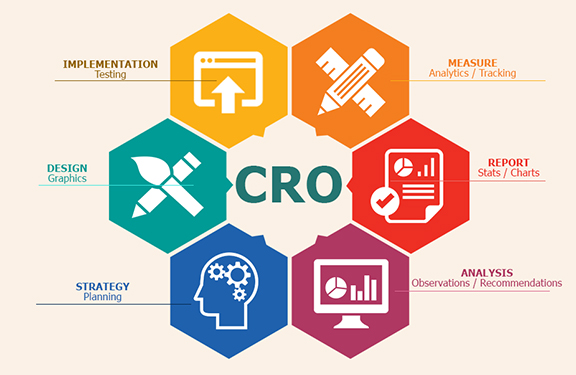
At every step of your customers’ purchasing journeys, there are new opportunities for you to make their paths shorter, easier, and more enjoyable. Through rigorous experimentation and analysis, you can fine-tune your website to push people closer to making a purchase. This process is called Conversion Rate Optimization or CRO.
Conversion Rate Optimization is a technique for increasing the percentage of your website traffic that makes a purchase, also known as a conversion.
Conversions are a big deal. They’re that great moment when a casual visitor to your store finally buys one of your products.
And, on a much smaller scale, conversions are happening all the time leading up to that moment, too.
For instance, a conversion on your homepage might mean having a visitor click through to a product. A conversion on a product page might mean a customer clicking ‘Add to Cart’. Conversions can be entirely dependent on the purpose that a specific part of your website serves.
To optimize your online store for conversions, both big and small, you need to be constantly testing each and every aspect of your website.
Is conversion rate optimization for you?
CRO is a crucial tool for business owners, but it isn’t right for everyone. In order for you to successfully optimize your online store, you first need to have enough traffic to properly conduct a test.
Without the right amount of traffic, your results won’t actually provide any real insight into how your customers are using your online store. To help you determine whether CRO is right for you, let’s take a quick look at its fundamentals.
If you don’t have enough traffic to run an A/B test, focus on getting more visitors to your store instead. Here are some tactics you can use:
The Basics of Search Engine Optimization for Your Online Store
6 Practical and Proven Ways to Drive Traffic to Your New Online Store
How Blogger Outreach Can Help You Grow Your Ecommerce Store
An Introduction to Facebook Ads for Ecommerce
An introduction to A/B testing
One of the foundational elements of CRO is a form of experimentation called A/B testing, also known as split testing.
A/B testing is a way of comparing two versions of the same webpage to see which produces better results. With A/B testing, two different versions of a page are shown to two similar sets of visitors at the same time. Eventually, the version that performs more effectively and produces a larger amount of conversions is declared the winner.
Before you conduct an A/B test, you’ll need to figure out if your website gets enough traffic to generate statistically significant results. If your sample size is too small, you won’t be able to learn anything from your results since they won’t accurately reflect how a larger population is using your site.
If you want to calculate how large of a sample size you’ll need to conduct an A/B test, you just need to drop your current conversion rate for the web page that you’d like to test into this calculator. If the traffic that the web page receives is less than the sample size required for the test, focus on driving more traffic to your website first rather than optimizing for conversions.
Finding the current conversion rate of a single page
To find your current conversion rate, you’ll first need to make sure that you have Google Analytics set up for your online store. With Google Analytics, you’ll be able to figure out the conversion rate for specific parts of your website, including the web pages that you’ll be testing.
Note: This method will just give you a glimpse of your current conversion rate and should not be used for measuring the outcome of your tests. Only use this piece of data for measuring whether or not you have enough traffic to perform a successful A/B test.
The quickest way to find the current conversion rate for specific pages of your website is by using the Landing Pages report in Google Analytics.
To get to Landing Pages, first go to the ‘Behavior’ section and then click ‘Site Content’. In the dropdown, click on Landing Pages. Make sure that the timeframe you’re looking at is the same amount of time that your test will be running. For the purpose of this part of the process, just use the past 30 days.
Now, select the web page that you’d like to test from the list of landing pages. For instance, if you’d like to test your home page, click on www.youronlinestorename.com.
In order to find the conversion rate for a specific goal that occurs on this page, you’ll need to add a secondary dimension to your report. Click ‘Add Secondary Dimension’ and type ‘Second Page’. The ‘Second Page’ dimension will tell us which pages visitors navigated to next and which percentage of visitors to your first page went to those pages.
For an example, let’s say that you’re interested in testing how many people navigate to the products page of your website from your homepage.
To find your current conversion rate for this action, simply choose your homepage as your initial page and then look for your products page under the ‘Second Page’ section of your report. The small grey percentage that’s listed in the ‘Sessions’ section will be your conversion rate for the action.
How to create Conversion Rate Optimization experiments
If your site has enough traffic to perform a successful A/B test, you can start experimenting on your online store.
In Google Analytics, goals are a way of measuring how your website guides visitors to completing a specific task or objective. Goals can be anything: From a product purchase to a newsletter subscription to a simple navigation. By setting up goals for your test, you’ll be able to track and analyze the data behind the decisions that customers are making as they move through your site.
There are five different types of goals in Google Analytics: Destination, duration, pages per session, event, and smart goals. For the purpose of CRO, destination goals and event goals are the ones to focus on.
These types of goals are used for tracking when a specific web page loads and track pageviews as conversion. You can use destination goals for tracking things like purchases or navigation.
If you want to track a purchase, simply set the ‘Thank You’ or order confirmation page as the destination and a conversion will be tracked every time a customer completes an order and is redirected to the ‘Thank You’ page.
To track navigation goals—like someone heading to a collection from your homepage—set the destination as your collection page.
Event goals can be used to track actions on your website that do not necessarily lead someone to a landing page.
For instance, if you want to track someone subscribing to your newsletter or adding an item to their cart, you can set the action of a customer clicking a specific button on your website as an event.
20 CRO Experiments to get you started
Optimizing your online store isn’t a one-and-done solution for ecommerce, it’s an ongoing process that will help you constantly learn more about your audience and how you can better serve them. It’s not a tactic with an endpoint—it’s something that you should always be doing to get better.
There’s no set rulebook for optimizing your website either. Tactics that work incredibly well for one store might have no effect on another. That’s why it’s important for you to start experimenting now, so that you can track your results and figure out how they can help you build a more successful store.
Be sure to keep a list handy of all the experiments that you’re planning on running in the future, so that you’re never without a new idea to explore.
To get your list started, here are some suggestions for different things you can potentially test throughout your online store.
Think about your homepage as a physical storefront. It’s the front window of your store: Capturing attention, igniting curiosity, and pulling people in.
Your home page needs to feel inviting and make it easy for people to enter and navigate your store. It needs to be a visually appealing and consistent experience that works towards achieving a single goal: Get people further into your store so that they can find products they want to purchase.
Just take a look at Province of Canada. For their homepage, they’ve used a large hero image that occupies most of the space above the fold. The copy is simple and straight to the point with a clear call-to-action that pushes visitors right to a collection.
2. Show off coupon codes, real time purchases, and more
As soon as your customers hit your homepage, you have the opportunity to start building excitement and driving them towards your products. If your goal is to get more traffic to your products, there are a bunch of great apps for Shopify store owners that can help drum up demand and incentivize purchasing:
Welcome Bars: Apps like Welcome Header Bar and Quick Announcement Bar let you share sales, coupon codes, promotions and more with your customers as soon as they arrive on your site. These apps add a non-intrusive floating bar to the top of your homepage that will instantly grab your customers’ attention and push them exactly to where you need them to be. Promo codes can be powerful tools: Build.com was able to increase conversions by 6% for their affiliate traffic with a custom promo code.
Popups: Popups and popunders are fantastic for building your email list. Try using an app like Privy or POWr Popup to add a quick popup to your home page offering a coupon code in exchange for a newsletter signup. Email marketing is incredibly effective: According to a 2014 study, 80% of consumers who signed up for emails from a brand over a six month period ended up making purchases based on what they’ve received.
Real Time Purchases: Apps like Yo, Recent Sales Notification, and Notify add a small notification to the bottom corner of your store, showcasing real time purchases being made by other customers. These apps incite a sense of urgency while also giving customers social proof that other people are out there buying your products right this minute. Behavioural psychology researchers at the University of Kentucky report that urgent situations cause people to act impulsively and quickly.
For example, take a look at Atelier New Regime. They’ve used the Free Shipping Bar app to show off their free shipping threshold right on their homepage.
After a few seconds, visitors to their online store also get served this gorgeous popunder encouraging them to join the Atelier New Regime mailing list for access to news and exclusive deals.
3. Add Testimonials to Build Trust
Have you been featured on major publications? Are your products used by any high-profile influencers? Add testimonials, reviews, and badges to your homepage beneath your main content to build trust and project credibility. After all, 88% of consumers trust online reviews as much as they trust recommendations from their friends and families.
Once customers are on your homepage, they need to be able to find the products that they’re looking for and discover new products that they might be interested in.
Your customers need to be able to navigate your website through a well-thought-out search function, smart category design, and engaging ways to discover products.
4. Use intelligent search
If your customers are looking for a product on your website, the chances are that they might not know exactly where to find it.
If your store has a large amount of products, you might want to considering featuring your search bar prominently on your homepage, giving your customers the opportunity to head directly where they want to be rather than digging through categories.
With apps like Findify and Instant Search +, you can power up your search bar with predictive results that help your customers find what they’re looking for. Intelligent search bars suggest results and products as users are typing while taking into account things like spelling errors and alternate product names.
Sigler Music uses the Instant Search + app to help their customers find exactly what they’re looking for. Even after entering just a few letters, the search bar already starts suggesting categories, products, and related results.
5. Organize your categories effectively
For your customers, navigating your website should be easy, simple, and—most of all—obvious. Try to avoid separating your products into too many different categories. Instead, opt for 4 to 6 broad categories that contain more specific subcategories as a dropdown.
Order your categories in your navigation bar based on their popularity, with your most popular category at the front.
6. Take advantage of your 404 pages
Are your 404 pages a dead end? Instead of leaving customers hanging when they hit a 404, try to guide them to other parts of their website that might be more useful. Customize your 404 page to feature links to your most popular collections, products, and promotions.
Instagram is an extremely useful tool for product discovery. Embedding a shoppable Instagram feed onto your website is a great opportunity to inspire your fans with gorgeous photos and show off your products in everyday scenarios.
If you own a Shopify store, you can embed your Instagram feed onto your online store using apps like Foursixty, Like2Have.it, Springbot, SocialPhotos, and Showcase, just like the one above created by MVMT. With these embeddable Instagram feeds, you can promote your top products and link out directly to their product pages, giving your fans a visually engaging way to find new products.
Product pages
Each and every one of your product pages needs to built around clearly communicating the value of your products to your customers. You need to build immersive experiences that cover every aspect of your products while removing any opportunity for doubt or frustration.
As a bonus, include a video that shows your product in action. For instance, if you’re selling t-shirts, add a video to your product page with a model walking around while wearing one of your t-shirts to give customers a better idea of what your shirts look like in motion. Customers are actually 85% more likely to make a purchase after watching a product video.
Bando has some great examples of well-executed product pages. Check out this page for a 17-month agenda, featuring a bunch of high quality photos and a fun, quirky video that really lets the product shine.
9. Be upfront about price, delivery time, and out of stock products
The worst thing that you can do is mislead your customers—28% of customers will abandon their cart if they get charged with unexpected shipping costs. Don’t be afraid to let them know the full extent of things like pricing, delivery time, and inventory. If you do an effective job of selling your products and communicating their value, your customers won’t mind paying a little extra for shipping or waiting a little longer for delivery.
If you own a Shopify store, you can also use apps like Restocked Alerts to give your customers the option to be notified when out of stock products are added to your store.
Positive product reviews can make all the difference in convincing shoppers that a product really works and is actually worth purchasing, along with helping them make more informed decisions in regards to sizing, colour, and more.
Shopify store owners can use apps like Product Reviews and Yotpo to embed customer reviews directly onto their product pages.
Product reviews can be especially helpful for business in the beauty and skincare industry. Beardbrand, for instance, uses Yotpo to showcase reviews on every one of their product pages.
Product page Instagram feeds are specially useful for beauty and apparel companies since they can show your customers how to style your products and give them a better idea of how they look and feel in real life.
To embed Instagram feeds on your product pages, try apps like Foursixty and Like2Have.it.
Checkout experience
The checkout experience is one the final steps of every customer’s purchasing process, so it needs to be as frictionless and flawless as possible to avoid having frustrated customers abandon their carts at the last moment.
At this point in their journey, your customers are display clear intent to make a purchase. You need to make that purchase happen quickly and conveniently without any stress or confusion.
In your Shopify admin, head to ‘Settings’ and then ‘Checkout’.
Under ‘Customer Accounts’, select ‘Accounts are optional’. With optional accounts, your customers will still be able to checkout as guests, but it also gives them the chance to save their information for next time after filling out their personal details.
If you want to invite your current customers to make accounts, you can use the Bulk Account Invite Sender app.
13. Send abandoned cart emails
Unfortunately, customers sometimes fill up their carts with products and then leave your store with no intention of returning. With abandoned cart emails, you can remind those customers of the items that they’ve already expressed interest in and give them a little nudge to return to your store to complete the purchase.
Abandoned cart emails can be set up in the ‘Settings’ section of your Shopify admin. Go to ‘Checkout’ and then scroll down to the ‘Order Processing’ section. You can choose to send abandoned cart emails either 6 or 24 hours after a customer abandons a cart.
You can customize your abandoned cart emails in your Shopify admin as well, so that they fit your brand’s image and tone. Go to ‘Settings’ and then ‘Notifications’. Under the ‘Template’ column, you’ll see one for ‘Abandoned checkout’.
14. Optimize your thank you/order confirmation emails
In the same ‘Notifications’ section of your Shopify admin, you can also customize your Order Confirmation emails.
After a customer has placed an order, there’s still an opportunity to put them back into your purchasing funnel by optimizing your Order Confirmation email to encourage them to sign up for your newsletter, link them to content on your blog, or offer them exclusive discounts and promotions for future orders as a token of appreciation.
Shipping and returns
Even after a customer has gone through the checkout process, you need to remember that the purchase isn’t over until the product is in their hands. Think of how you handle shipping and returns as yet another opportunity to delight your customers and turn all of those one-time shoppers into lifelong customers.
Waiting for a package is an anxiety-inducing experience. Receiving a product that you’re dissatisfied with is even worse. You need to do everything in your power to make shipping and returns enjoyable for your audience.
15. Offer free shipping
Expensive shipping costs can be a huge pain point for customers and potentially hold them back from making purchases. Try offering free shipping to encourage your customers to put in an order, regardless of how far it has to travel. Free shipping can have a major impact on conversions: In one case study by SitePoint, offering free shipping increased conversions by 50%.
16. Have a clear refund policy
It’s no surprise that some customers are hesitant about making purchases online. When it comes to ordering things like clothing, it can be difficult to know exactly how a piece will fit in-person. To help relieve your customer’s concerns, make sure that your business has a clear refund policy so that they know exactly what they can do if they aren’t satisfied with an order.
Although optimizing elements like your homepage, product discovery features, and product pages is crucial for pushing your customers through the conversion funnel, you also need to make sure that your website contains additional information like contact details and an about section.
17. Tell a story with your about page
Your About Page is so much more than a brief summary of your store. It should tell a story to your customers about your products and your brand’s mission. The goal of your About Page should be to build a lifestyle around your products that your audience will want to be a part of.
Try to build a story around both your products and your customers’ relationship with them. Ask yourself questions like: Where did your idea come from? What makes them special? What does an average day in your ideal customer’s life look like?
Endy has a comprehensive About page that sells their mattresses from a number of different angles. At the top, you’ll find a great hero image, a concise summary of their products and what sets them apart, and a link to some customer reviews.
As you scroll down, you’ll see details about their shipping and return policy as well as a charming story about the origin of their name.
18. Create a comprehensive contact page
If your customers want to get in touch with you, they should be able to do so easily. In fact, 44% of visitors will leave a website if there isn’t contact information or a phone number available.
For customers, not being able to share their thoughts and feelings—whether positive or negative—is an extremely frustrating experience. Your contact page should include ways for your customers to reach out when something goes wrong as well as opportunities for them to engage with your brand in fun and exciting ways.
Here’s a quick checklist of everything that your contact page should include:
An email address or contact form
Your physical location, along with a map and directions
Your retail store hours
Links to your social media profiles
Support-specific contact options, including a phone number or email
Website speed and performance
The performance of your website is closely tied to your success as a business. In fact, if a website takes longer than 3 seconds to load, 40% of visitors will automatically leave. That’s a huge amount of traffic that you could be turning away without even realizing.
Imagine you were waiting outside a store and you had to wait for the owner to come to the door to let you in. Sure, you might wait one or two seconds for them to come to the door. But fifteen? Thirty? Try counting those seconds out loud and you’ll soon realize what you could be putting your customers through.
19. Make sure your site is mobile responsive
Being mobile responsive should be a massive priority for your business. In fact, 40% of people will choose another result if the one that they land on is not mobile-friendly. Thankfully, if you own a Shopify store, every Shopify theme is automatically optimized to be displayed properly on every device.
The easiest way to check how long your online store takes to load is by using Google’s Pagespeed Insights tool. Pagespeed Insights will give you a detailed report of how fast your website loads, along with any issues that you can resolve to improve your load times. Alternatively, you can also use load time evaluation tools like WebPageTest and Pingdom.
While optimizing your store’s load times can be a complicated process, there are a couple things to always keep in mind. The size of your images can have a significant impact on how quickly your website loads. Try to compress and optimize every image using a tool like ImageOptim. ImageOptim strips away all of the unnecessary data in every image file, resulting in a much smaller file size with no noticeable visual difference.
Additionally, for Shopify store owners, try uninstalling any apps that you’re no longer using as these apps can still put an additional load on your website even if they’re disabled.
Start your first experiment
Now that you have some ideas, it’s time to start optimizing! Get out there, run experiments, and discover exciting new ways to increase your conversions.
Remember: Always be testing.
Have any more questions about Conversion Rate Optimization? Let us know in the comments below.
You already have it clear. You want to sell your products online. Today we are going to show you the advantages of creating an online store with one of the platforms that are making the most “noise”: Shopify eCommerce Development Services. And we are going to compare it with Laravel web development. From the basic to the most advanced: we will try to decode the comparison. And also guide you to choose the best Shopify Development Company and Laravel Development Company.
What is Shopify’s development?
Shopify is a platform with which to develop an online store and has proliferated since 2006. The speed with which it has penetrated the market is mainly due to the ease it gives the user to have their store ready quickly. The platform includes hosting, and you must buy a subscription directly with them, which means that you cannot install your store on any other server.
It is of no doubt that Shopify is the best platform to create and design algorithm friendly and responsive online store. However, instead of using existing design and templates, it is better to consult with a professional Shopify Development Company. If you are looking for such a professional Shopify web development company at an affordable price, contact IOGOOS solutions. It is one of the best and leading e-commerce development companies. It has professional experience, an expert team of designers and developers, and extended support.
What is Laravel Development?
Laravel is a PHP web framework for the development of web applications or e-commerce apps. It is an open-source and free web framework. For those people, who want to have maximum control and personalization of their web application, Laravel is one of the best alternatives. Taylor Otwell creates it. It follows the MVC pattern to develop web applications. As dictated by its slogan, Laravel is the PHP framework for artisans. If you need customization, Laravel development is ideal.
It would help if you remembered that Laravel development is not as flexible as Shopify Development Services. How and why, we will try to reveal them soon as we progress to the next step: Shopify or Laravel – which is better?
Shopify vs. Laravel – which is better?
Shopify wants to stand out for its ease of use and “create” your store with functions such as “drag and drop.” Besides, Shopify offers you a predetermined template from the beginning of the registration. It is better to choose Shopify web Development Services as it provides hundreds of in-built features. Now selling products directly from your website is possible.
With Laravel, you will need a little more training. But it allows you to personalize your eCommerce fully. If you want the ease of use, Shopify certainly has one more point in its favor than Laravel. If you are looking for customization, then it is Laravel development. Consult with the Shopify experts online, now.
Which is more functional – Laravel or Shopify?
When choosing a platform on which to develop an online store, it is essential to consider the functionality and scalability of the tool, since eCommerce involves the use of multiple payment methods, shipping options, offer management, etc. If you want to gain functionality with Shopify, you have to increase the plans contracted with the company. The basic Shopify plan includes a list of unlimited products and has up to two users. But it does not include processing payments through the platform.
With Laravel, you have access to all the functionalities from the beginning without any extra cost. The only thing that makes Laravel development vulnerable in the competition is that you need to hire a hosting company separately to host the website. Guess what, Shopify already includes it. You are free to sell services/products online across multiple social media sites and marketplaces.
Which one has better performance – Laravel or Shopify?
SEO – A website that does not flow, that does not load fast is a waste of money, why? Because no user will wait to see how your website stacks. You must understand the SEO factors that most influence positioning. So, worry about choosing the platform that allows you to offer your future clients an optimal loading speed.
SECURITY – When you have an online store, you should know that you are handling your customers’ information. So, one issue you should worry about is security. If your website is attacked and your customers’ data is leaked, you will be exposed to a lawsuit, but your reputation will also fall.
These are the two primary factors that a web developer must understand. However, there are other factors too. In this case, Shopify gains positive remarks. Shopify is the ideal choice when it comes to SEO and Security. Why? Although Laravel indeed offers a sound security system, Shopify has more security modules or extensions than Laravel development.
If you want to know more about this topic, consult an expert e-commerce web developer from IOGOOS solutions, one of the leading Laravel Company and Shopify Company.
We need to perform the following step to get more online traffic, leads, and sales:
On-Page SEO
On-page SEO is the foundation of any good digital marketing strategy. The business websites need to be optimized for both users and search engines that help to found and engaged visitors. This is one of the first things SEO Experts will tackle to get your website ranking.
The SEO experts will do keyword research on your products/services, optimise website titles and meta information, add internal/external links, content write and perform an SEO audit to see how perform benchmarking.
Off-Page SEO
Off-page SEO is more than just linking building & backlinking to websites. It also includes brand mentions, content marketing, citations, social media, reviews, and more. If you want your website to gain a competitive advantage in the Google search results, off-site SEO is the key task to perform.
This SEO service includes analysing your competitors for easy backlinks, sourcing guest post opportunities, finding unlinked mentions, paying for advertorial articles, and finding broken links among many other strategies.
Technical SEO
Technical SEO refers to website and server optimizations that help search engine spiders crawl and index your site more effectively (to help improve organic rankings).
There are many SEO consultants in world struggle with technical SEO, because they are not a technical person or don’t have developers on their team to handle the work. This then leads to outsourcing and poor quality results.
Another example of technical SEO would be building an XML sitemap for your website. The first major step in establishing a technical SEO strategy is setting up your website correctly so every page functions as it should. Google (and other search engines) crawls this file to understand your site better.
By following these guidelines, you can help to ensure that the security and structure of your site meets the expectation of search engine algorithms, and is rewarded in search results accordingly.
Use SSL
Website must be user & mobile friendly Speedup your website and must be load under 2 second. Fix duplicate content issues Create & regular update XML sitemap Consider enabling AMP Add structure data markup to your webite Register website with google search console and bing webmaster tools
Local SEO
Local SEO services are digital marketing services that help businesses appear in search results for location-related searches, such as for users in close proximity to the business. For example, local SEO can help a pizza shop rank for the search query “pizza near me” in searches by nearby users.
If your business has a physical location or services specific geographic areas, you can benefit greatly from this. Nearly 56% of all Google searches are for local products/services. This means if your business isn’t locally optimised by a professional, you could be missing out on those leads.
If you need any further assistment and our digital marketing services. You can drop a email at info@iogoos.com
This pandemic has shaken everyone in this entire world whether they are Top, mid, or low business entrepreneurs including the consumer psyche. Making business again the long-term success is too much difficult. At this time, IOGOOS Solution come out with many marketing strategies that boost and enhance revenue with low investment. It is in many forms: If your business is in an infancy stage, website designing services work. If it is an eCommerce business, then Shopify Development Company helps you to expand your store in an online world. In addition to this, if the business is already in peak stage but unable to reach customers, in that case consulting a professional Search Engine Optimisation Agency for getting the best affordable SEO Services works best.
We believe to work in ever-evolving techniques with high financial performance. Living in the 21st Century and working with traditional approaches is no longer enough. To maintain and sustain the dignity of your brand in the market must extend beyond traditional focus so that it works in this dynamic environment. It is best to go for Shopify Development Services for eCommerce acceleration to expand your business to the core.
Creating, enhancing, and maintaining an eCommerce website is not at all easy. Best Shopify Development Company in USA plays a major role in your business success. Hire an expert and professional Shopify Developer that can develop, upload catchy, make it user-friendly, give clear product details like FAQs, navigation tools, contact us, etc. Product range, data size, and online product listing are a few challenges faced by business owners. Being the best Shopify Development Company, IOGOOS Solution believes in and gives assurance to tackle all challenges.
With the high demand for Online Shopping, providing the best customer experience on your business product is a sign of a boost. Shopify Developer in India helps you out in managing eCommerce management with ease. It is fact that your business product is not only the one which is in the market. Customers are more focused on easy navigational sites, with the best offer, pricing, quality, promo codes, vouchers, coupons, etc. Consumers nowadays trust online reviews, ratings, and real product purchased images. These are only the points that can make your business stand out from the crowd.
Professional Shopify Development Agency analyzes and captures the market easily. But it is hard to find an expert Shopify Developer in this competitive world. Always go for Shopify Company which has expertise in all technologies and CMS, which has also core competencies in SEO. Getting Best and Affordable SEO Services in India helps in climbing up in search engines by analyzing demographic and target location. This is a bonus if you approach IOGOOS Services.
Over 15 years of experience in Website Designing Services, IOGOOS Solution is responsible for business growth and new customer approach through updated marketing techniques….
If you’ve been blogging for a while I am pretty sure you are not new to this term. For everyone else, I’ll take a few words to explain what it is and how to get it to save you valuable time and several hours of study and research.
In search engine optimization (SEO) terminology, Google Juice is a term that means the unique visitors coming to your website from search engines (primarily Google, because of its domination in the Search Engine market). This is also known as organic traffic which only stops by if your website is optimized for search engines like Google, Yahoo, MSN, etc.
Importance of Google Juice
The more you get, the better it is for you. As per the research done by forrester.com, 80% of Internet users find websites by searching for keywords on popular search engines like Google, Yahoo, MSN Live, Ask, etc. and it’s really important that your web pages are listed in the results. If for a particular search term, pages from your website are listed on the first page of the search results then you are going to have loads of visitors stopping by your website if they are looking for that search term or related stuff.
Pages from your websites stand a chance of getting some visitors even if they are listed on the second or even third page of the search results. Otherwise, you shouldn’t (actually, you can’t!) expect significant traffic coming in from Search Engines unless the person who’s looking for something is patient enough to dig a couple of pages of search results for some search term.
How well are you ranked in Search Engines?
Technically speaking what makes your web presence known is your search engine ranks. Simply put, how well you are known online is determined by the rank your website enjoys in search engines. Page Rank (PR) by Google is one such important metric assigned to websites listed in Google Search Results which webmasters and advertisers often use to judge the quality of a website. The higher it is (on a scale of 10), the better a website is considered, and the higher it is listed in Google Search Engine Results. Obviously, it enjoys more Google Juice than lower-ranked websites.
Get listed in Google within 30 minutes
All those SEO and Make Money Online websites next door will try to show you ways to scale the first page of Search Engine results once you’re listed but what they won’t tell you is how to get listed in Google search results within 30 minutes!
We’ll consider scaling the front page of search results in a later post in the SEO series but right now concentrate on how to get your web pages listed so soon.
This post is the first part of this series (Get Listed in Google within 30 minutes) and will be focused on websites and blogs built with WordPress as CMS. However, a lot of these tips apply to static websites as well. So, let’s start sharing best practices…
WordPress Plugins and SEO
With the popularity of WordPress and the contributions of the WP community, managing websites and implementing SEO has become a lot easier. There are various WordPress plug-ins that are available for SEO purposes but the 2 plug-ins I would like to recommend to you are:
1. Google XML Sitemaps This plug-in will create a Google sitemap compliant XML-Sitemap of your WordPress blog. It supports all of the WordPress-generated pages as well as custom ones. Every time you edit or create a post, your site map is updated and all major search engines that support the site map protocol, like ASK.com, Google, MSN Search, and YAHOO, are notified about the update.
Once you activate this plug-in go-to plug-in settings and create the sitemap for the first time. You can see the output with this URI: //www.your-domain.com/sitemap.xml. Now we have our sitemap ready so let’s tell Google about it. Type //www.google.com/sitemaps in your browser and log in with your Google ID and Password.
On this website you can submit your sitemap to Google and Google will start indexing your website. This process requires site verification where you need to add a Meta tag or upload an HTML file to your web server. It’s very easy to complete and you can get step-by-step instructions on the Google website.
2. All in One SEO Pack This plug-in optimizes your WordPress website/blog for Search Engines. It automatically optimizes page titles for search engines and generates META tags. This avoids the typical duplicate content found on WordPress blogs. For WordPress 2.7 (the latest version) you don’t even have to look at the options, it works out of the box. You can override any title and set any META description and any META keywords you want while writing the posts or pages. You can fine-tune almost everything related to search engine optimization. To get the most out of it, do a little keyword research for the content and use the best keywords while writing the posts and pages.
Tomorrow, I will further dig into SEO stuff relating to getting listed in Google within 30 minutes of updating your blog/website. The next thing I’ll talk about is services that your WordPress can automatically ping and notify them about updated content. I’ll also tell you how to fine-tune your link structure (permalinks) as they are not very search engine friendly by default. Stay tuned…
Hello again. So, after reading Part 1 do you still think getting that tasty Google Juice is all that difficult? No, it isn’t. You just need to be right with the basics. After talking about WordPress Plugins to assist you in SEO, today we’re going to talk about how to ping Site Update Services from your WordPress website and about tuning your web site’s link structure (permalinks).
Update Services are tools you can use to let other people know you’ve updated your blog. WordPress automatically notifies popular Update Services that you’ve updated your blog by sending a XML-RPCping each time you create or update a post. In turn, Update Services process the ping and updates their proprietary indices with your update. Now people browsing sites like Technorati or Sphere can find your most recent posts!
There are several site update services up and running which you can add in WP-admin >> Settings >> Writing, in the update services section. Add one service URI per line. Once you update your WordPress website with a new post or new page, these services will automatically be pinged. Then these pings are processed and associated indices (plural of index) are updated with your update.
You can have a list of active update services from this WordPress Codex page and copy them into your update services section (WP-admin >> Settings >> Writing). As easy as that!
Tuning your website’s permalink structure
Having title of the post or keywords from the post in the URI of your web page is obviously better than having numbers, question marks and other symbols. Not only humans can identify the subject of the page from its URI but search engines also find it easier to identify and assort web pages in this manner. A link like this: https://www.iogoos.com/using-social-networks-to-get-more-google-juice/ tells you and Google bots clearly what the page is going to be about. However the WordPress default, which for the same page is //iogoos.com/blog/ (click to see that it’s actually the same!), which is not at all intuitive.
You can easily figure it out that if you are Google’ing from a specific keyword then obviously the results will list URI with these keywords in the link higher than the URI containing numbers and/or symbols.
Note that this tip is very effective for static websites as well. Always name and link your website and web pages with the title of the page, or keywords relating to the subject of the page instead of serial numbers.
Customizing permalinks in WordPress
You can learn furthermore about what permalinks are and how to use them on Using Permalinks page of WordPress Codex. The WordPress default link structure, also known as the Ugly permalinks structure is the least SEO-friendly link structure. However, changing your permalinks is easy.
On logoos and my other websites, I am using /%category%/%postname% structure which has remained pretty fruitful for me. You can optimize your own links by following these steps:
Log in to WordPress Admin Area
Open the Settings Menu and Click Permalinks
Click Custom Structure and customize the link structure.
Refer to the Using Permalinks page to see various tags that you can use.
Please note that websites hosted on Windows-based hosts (Microsoft IIS Servers) experience issues setting up SEO-friendly pretty permalinks. So in case you’re on such a one, stick to the ugly or almost pretty permalinks to avoid issues, or migrate to a Linux-based host.
Pinging a maximum number of Site Update Services and tuning your link structure play a good deal to get you listed in Google search results or other search engines in less than 30 minutes! Try implementing these magic tricks on your website and let me know how well did they work out for you.
And for the next part of this series, we are going to discuss how to use various social networks to promote our websites and blogs. We’ll talk about what all services you can use and how they are important for you and your website. Till then, see you.
Hello readers, I hope you are benefiting from Part 1 and Part 2 of Google Juice: Hard to Get but Tasty to Drink Series. As promised, I am here with Part 3 of this Google Juice Series in which I am going to share with you a very effective trick to place your website quicker and higher up in Google Search results.
Are you wondering how promoting your pages on Social Networks can get you more Google Juice? Well, let me explain this with an example:
Search Google for the term Floral V/S Grunge, the first result will point you to one of my earlier posts. Now take a closer look at the other search results.
Did you notice something? Observe a bit carefully and be surprised! You’ll see that the Floral VS Grunge post is listed on almost all major services like Flickr, Digg, BlogCatalog, Twitter, Friendfeed, Facebook, and many more. And all of them are indexed in Google and on the very first page!
Wow! How does it all work?
This is no big secret! It’s only a technique for some Google Juice from various social networking websites. All the services that you saw in the search results are those communities-based social networks that I use to keep in touch with my friends, family, and lovely readers. All I did after publishing a post was to share the Post Title and the Permalink with all my contacts on different social networks. This way I get a lot of people to visit my posts on the website and the real magic is Google Juice that comes along. When you search for relevant terms, many of the listed results will point to your post/page either directly or indirectly. You get the point, right!!
But isn’t this spamming?
No. It is absolutely not. I just shared my post with only my contacts that have chosen to receive updates from me. People follow me on Twitter because they want to keep a track of whatever I do. Subscribers want me to update them with new posts and pages. If I set my Facebook, Orkut, or IM status to a link pointing to my blog posts, I am not spamming anyone’s social profiles or emails!
I am not sending anyone any emails to buy my services whatsoever. I just created something and I am sharing it. Sharing is caring, not spamming!
So, how do I go about with this?
Start using social networks. Create an account on MyBlogLog (Yahoo), BlogCatalog, Twitter, Friendfeed, Facebook, Twitter, StumbleUpon, Digg, Plurk, Del.icio.us, etc. There are hundreds of them all around the Internet. Find some time to read reviews and do research on which ones will be the most useful for you and how much time you can spare to spend on these. What I feel is that the few moments you can spare to spend on promoting your posts effectively for a little extra Google Juice. Worth it, man!
And, to make your life easier…
Now, I am going to recommend to you, an awesome service that will save you a lot of time and effort. It’s definitely going to make your life a lot easier! Ping.FM is a service that you can use to share your stuff and thoughts on multiple websites with just one click. It is exactly like the website puts it, “Ping.fm is a simple service that makes updating your social networks a snap.”
I know time is precious, and so here you go with Ping.FM, But some more icing on the cake is always nice. So I’d further go on to share this nifty Firefox Add-on – PingFire. PingFire is a Firefox add-on for Ping.FM service. It adds a tiny button in your browser which helps to use this service with great ease and comfort.
To use PingFire, you need to update your username and application key in the add-on options. You will find your application key at //ping.fm/key/ and you need to be logged in to Ping.fm to access this URI. So go ahead, implement these simple tips and extract some Google Juice out of social networks that you use.
I hope you enjoyed reading this post and learned something new! I’ve more in store for you but I’ll keep them for a later post. Please feel free to share some of your SEO tips. Drop us a comment using the form below. Your comments and feedback are valuable and much appreciated.
If you think WordPress is yet another blogging platform, take a quick look at other pages of iogoos.com (right from the homepage). Do you really think we could do this with “Just-Another-Blogging-Software”? Absolutely not!!
Custom Pages, Custom Widgets, Photo Galleries, Portfolio, eCommerce! What, out of these, and even more hasn’t been set up using WordPress.
Only recently, I updated my portfolio with more websites that I had finished, which were not under non-disclosure policy. After adding these projects in my portfolio, I realized that in accomplishing 90% of my work, WordPress plays the role of a CMS. With all the work done so far I am amazed by just how much of its capability I have discovered and how much of it is still unknown to me. Here are a few things that my clients ask when I recommend using WordPress, even for static websites, and what I’ve to say to back my recommendation.
Is it easy to use?
It is The Most Robust and Feature-Filled Platform, which is not only easy to use, but also, very much user friendly. So far all my clients are really happy with the decision to use WordPress as a backend. Moreover, WordPress.tv has made our lives much easier. I refer my clients to this website to learn the features and backend functionality while I am busy creating the best solutions for their requirements.
I need a blog as well…
I guess everyone has realized the value of blogging for their personal and professional web presence by now and most of my clients ask for a blogging platform with a unique and custom website design. It’s really easy to create a few custom pages within WordPress, rather than, creating a WordPress theme that matches the website design. And its really easy to embed WordPress features on these static web pages.
What about Search Engine Optimization?
I am pretty sure you are not new to this term and would want your website to be listed in top search results. With WordPress, you can use plugins like All in One SEO Pack, just to name some, that does most of the work without user intervention. SEO is a wide topic and there’s a lot that needs to be done to achieve good search engine rankings. However, a WordPress installation with a few plugins can help you get there without much hard work. You might want to check a few posts I have written on search engine optimization.
What all WordPress can do?
Honestly, I can’t deny that after using WordPress I haven’t even cared to search for any other CMS. WordPress is an amazing platform which can be customized to create Personal websites, Portfolio, e-Commerce, Galleries and Photo Blogs, Magazine or News websites, Article Libraries and a lot more. If you are comfortable with custom functions and template tags you can actually do wonders with just a single custom WordPress theme.
I don’t know programming?
While creating websites for my clients, I make sure they don’t have to spend their valuable time learning xHTML/CSS to update their websites. I have taken WordPress customization to next level where it provides a separate section in admin area to update the front end of our custom themes. It also has WYSIWYG capabilities where you can update and stylize the content which is not a part of WordPress post or page.
Moreover, these custom functions don’t save any data in core WordPress database tables (wp_options) so there’s no chance it won’t work with any other plugins and features.
Here’s a screenshot of Custom Theme Options I provide to make my client’s life a bit easier.
Theme settings
That’s not all, to add a few more features in the list…
WordPress is Free and Opensource
WordPress is easy to install and upgrade
WordPress is standard compliant
WordPress is Popular (CNET, Ford, ZDNET and various other popular sites has used WordPress as a CMS)
Free support from a vibrant and amazing community of developers and contributors
Huge amount of documentation is available
Plugins are available for almost everything you can think of
I bet no other CMS can compete with this master piece. If you are using WordPress as CMS please drop your website links in comments. Don’t try to spam as a very powerful spam protection plugin (Akismet) comes with its default installation 😀
“People count up the faults of those who keep them waiting” Seems like I kept them busy decoding this loading bar 😀
Recently, while browsing I landed on a page on StackOverflow.com where people were discussing how I implemented this loading bar on www.iogoos.com I could sense a lot of confusion in the discussion so thought I would take the mystery out as I love to share best practices. Here’s how you can create a loading bar in a few steps…
Things You’ll Need
A nice loading image: If you are good at creating animated GIF images that are nice, otherwise you can create a loading image with this cool Ajax Loading Gif Generator.